
Acupuncture Meridian Assessment, post-Lyme syndrome
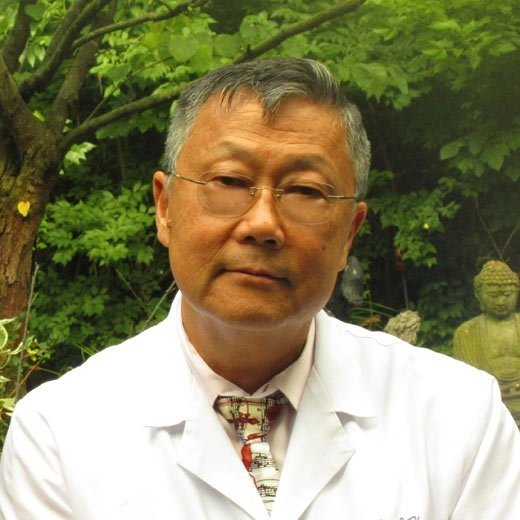
Barb, photo for Dr. Yu can be found at his website: www.preventionandhealing.com.
Who Else Committed the Crime of Post-Lyme? Can Forensics Help Diagnostics?
By Simon Yu, MD
Who else committed the crime of post-Lyme? How can we improve diagnosis, treatment, and outcomes for our patients? I am concerned about over-diagnosis of Lyme disease as a default mode based on clinical diagnosis, with too much focus on aggressive antibiotic approaches. This can be a dead-end treatment plan, especially if it misses other contributing factors.
Forensic science is the application of science to criminal and civil laws, mainly during criminal investigation, as governed by the legal standards of
admissible evidence
. Assuming the Borrelia is dead, mutated, transformed, or hiding as a cyst form; Lyme specialists look for co-infections as a culprit for persistent post-antibiotic Lyme symptoms, like Babesia, Bartonella, Ehrlichia, Anaplasmosis, Mycoplasma, and Rocky Mountain spotted fever (RMSF).
For the Integrative Medicine for the Treatment of the Tick-borne Diseases conference in Baltimore, April 2018, the DelMarVa Lyme Association asked me to give a lecture on parasites in the context of Lyme and tick–borne diseases. I do not treat Lyme disease; I am neither Lyme-literate nor specialized in Lyme disease or tick-borne disease. I am not a parasitologist, but I have written many articles on parasites based on 25 years of experience as a US Army Reserve Medical Corps physician. At the conference, I gave a lecture on parasites and on hidden dental infections that can mimic Lyme disease.
There is a clear indication to use antibiotics for acute tick bite incidents with associated classic skin lesion of a bull’s eye red rash (erythema migrans) and/or arthralgia and flu-like symptoms after a tick bite. What happens when the symptoms become progressive, and develop into even weirder symptoms after antibiotics? Using more powerful antibiotics may not solve the problem, which is now called post-treatment Lyme disease syndrome (PTLDS) by the US Centers for Disease Control (CDC), and chronic, complex or persistent Lyme disease by patients.
If Borellia burgdorferi spirochete and co-infections are treated with aggressive IV antibiotics and the patient still has symptoms of Lyme, can we solve the mystery of post-Lyme by applying the analogy of forensic science? Let us investigate what happened after aggressively eliminating Borellia spirochete infection. In other words, who else committed the crime?
Let me introduce 60-year-old Sharon, a college professor from upstate New York, a classic post-Lyme syndrome patient as a forensic case study. The patient had a tick bite in 2013 and was on doxycycline and initially felt better. In 2014, she was officially told she had seronegative Lyme disease. In 2016, she experienced vision loss with white clouding on her vision, but the eye exam was normal. Since then, she experienced right eye pain, pins-and-needles-like pain, and has seen 13 physicians. She needs to use an eye patch to read, but her eye exam has been completely normal per numerous ophthalmologists.
A spinal tap was done in January 2017 and was positive for Borrelia. She was officially diagnosed with CNS neurologic Lyme disease. An infectious disease specialist started her on a 28-day course of IV ceftriaxone, and there was no improvement. She was told her Lyme disease was treated, and she now had post-Lyme syndrome. She experienced persistent tingling in her arms and legs, incontinence, low back pain, fibromyalgia pain all over, severe fatigue, loss of appetite, weight loss, and severe insomnia.
She went to a Lyme clinic in Arizona and received a 10-week course of IV antibiotics and six weeks of insulin potentiation therapy (IPT), but developed pancreatitis during the course of treatment. Next she had oral surgery in Colorado for four cavitations, replaced two amalgams, and “crashed” according to her words. She also had a coffee enema and passed “two different kinds of parasites” – the admissible evidence – and came to see me for parasite problems.
Acupuncture meridian assessment (AMA) showed that eight out of 40 meridians were out of balance. Her gallbladder, allergy/immunology and small intestine meridians were the dominant problems. She was started on parasite meds (ivermectin, pyrantel pamoate, and praziquantel), followed by anti-fungal meds (fluconazole and itraconazole) and other support therapies.
On her second visit, she reported feeling much better, and all her 40 meridians were balanced. She will be on multiple rounds of alternating parasite/antifungal meds. She has embarked on a long process of eliminating several layers of infections – including Borrelia burgdorferi and coinfections – with IV antibiotics, dental cavitation (jawbone) infections with oral surgery, and finally, parasites and fungal infections with potent prescribed medications.
It may be premature for me to say she is healing from post-Lyme syndrome. Time will tell. From the forensic science of who committed the crime, her missing links between Lyme disease and post-Lyme syndrome were her dental infections (four jawbone cavitations), mercury and heavy metals, and parasites/fungal infections.
It is time to broaden knowledge and awareness of Acupuncture Meridian Assessment (AMA), which provides doctors and dentists an additional tool for connecting the dots of missing “forensic evidence” links, such as dental, parasites, and fungal problems. It combines acupuncture – a 5000-year-old disruptive technology, part of ancient energy medicine – with digital bioresonance technology that measures changes in frequency specific microcurrents.
Changes in these energetic pathways, or energy field flows, within the body are indicators of infection and inflammation along each meridian connecting a tooth and organs, which interestingly, correspond to morphological pathways of development. This adds an additional dimension – more “forensic evidence” – to precision diagnostics, and a pathway to precision health for patients facing complex chronic diseases, and the physicians who treat them.
BIO
Dr. Simon Yu, M.D. is a board-certified internist. He practices internal medicine with an emphasis on integrative medicine to use the best each has to offer. Before opening Prevention and Healing Clinic in St. Louis, Missouri, he was a medical center director for managed care and served as a US Army Reserve Medical Corps physician for 25 years, retiring as a full Colonel. For more information, articles, and Dr. Yu’s book, Accidental Cure: Extraordinary Medicine for Extraordinary Patients, visit his website at www.preventionandhealing.com. Dr. Yu also offers Acupuncture Meridian Assessment training to doctors, dentists, and other prescribing health professionals. To learn more or register for the August 24-26, 2018, session in St. Louis, Missouri, see AMA Training at his website.








0 Comments