
A New Method For Lowering Blood Glucose Levels While Satisfying Cravings for Sweets
by Brian Scott Peskin, BSc
There are over 29 million Americans with diabetes, and another 57 million are prediabetic (as of 2012).1 From 1997 to 2007, the number of diabetics increased by 48%.2 In the US, the incidence of diabetes is increasing approximately 1% per year with no end in sight.3 Pre-1940, there were no type 2 diabetics, and type 1 diabetes was rare. Diabetic complications can be significant. For example, diabetic foot ulcers (DFUs) alone cost the health-care system over $10 billion/year, and the chance of death within 5 years of DFU diagnosis is greater than that for many cancers.4
What caused the diabetic explosion? Over the last 50 years, the following events stand out: (a) The US government wanted to grow America’s farming industry. High-glycemic wheat products became king. So did fruit juices. (b) The US government embraced the notion of a high-fiber diet. Irish physician and surgeon Denis Burkitt postulated (guessed) in 1971 that Africans had less cancer and heart disease because they consumed more plant foods containing fiber. Heart researcher Dr. George Mann’s work documenting that a high-fat/animal source diet of the Masai tribe lacking plant-based (fiber) foods did not predispose them to heart disease, and was conspicuously absent from Burkitt’s Western diseases. With this vital information overlooked, America embraced the oat-bran fad whereby 60% of caloric content would be from grains. No one calculated that this would add a minimum – based on only a 2000 calorie/day diet – of 60 teaspoons of sugar (glucose) to the bloodstream each day, making existing diabetics’ blood sugars significantly worse. (c) Researchers wrongly focused on minimizing salt intake. Science was suppressed showing that natural salts (such as minimally processed sea salt) are active transports (via facilitated diffusion) for insulin – making existing insulin and injected insulin more effective (decreased insulin resistance).5–7 Most health practitioners believe that all salt elevates blood pressure. That is incorrect, and salt consumption is not the cause of elevated blood pressure in the vast majority of patients.8 The 10,000-patient INTERSALT Study concluded: “Salt has only a small importance in hypertension.”9 Lack of salt is now known to increase insulin resistance and increase the risk of CVD.10,11 (d) The next mistake made by medical researchers was advocating a supposed heart-healthful, low-fat “Prudent Diet” (promoted post-1957). This diet advocated replacing saturated fats from eggs, butter, cheese, cream, and lard with highly processed polyunsaturated vegetable oils such as margarine. It is now known that processed (nonfunctional) polyunsaturated linoleic (LA) acid-based cooking oils such as interesterified fats (the supposedly more healthful replacement for transfats) – sold in supermarkets and used in restaurants – significantly elevate blood glucose levels.12,13
There are three distinct components to insulin resistance:
Insulin Resistance
–
Phase 1: Pancreatic Overload
Let us now turn to the etiology of insulin resistance. First, humans were never meant to ingest the enormous numbers of carbohydrates so common in America today. For example, a 5-fold increase in plasma glucose, approximately just 5 teaspoons of sugar, causes a 20-fold increase in insulin output (Figure 1).14 Diabetic patients often consume more than 10 teaspoons of sugar at just one meal, and they often eat 4 to 6 times or more per day. Additionally, many diabetic patients consume 15 to 20 teaspoons of carbohydrate in a single sitting. Although blood glucose levels above 250 mg/DL are uncommon, they can occur as the Textbook of Medical Physiology illustrates (Figure 1).

Figure 1: Insulin secretion response to blood glucose. Image from Guyton AC, Hall JE. Textbook of Medical Physiology. 9th ed. W. B. Saunders Co.; 1996:977. Courtesy W.B. Saunders.

Every 20 calories/5 grams of carbohydrate = 1 teaspoon of sugar potentially in the bloodstream-raising BG levels.
Insulin Resistance
–
Phase 2: Impaired Insulin Clearance Rate (MCRI)
What is not so obvious is that there is often an additional problem – impaired clearance of excess insulin generated by supraphysiologic amount of glucose. This supraphysiologic carbohydrate-induced insulin response is often accompanied by a decreased insulin clearance rate – the metabolic clearance rate of insulin (MCRI).15 This abnormality allows blood glucose levels to potentially drop dangerously low.
Perfect Disaster
–
Glucose Overload + Impaired MCRI
This excess insulin production coupled with the impaired insulin clearance rate is a “perfect disaster.” Because of these simultaneous conditions, a corresponding yet abnormally dangerous “low” blood glucose levels always follow high levels of blood glucose. Therefore
–
in an attempt for homeostasis
–
the body will eliminate (destroy) pancreatic beta cells so that less insulin is produced. This will likely be termed an “autoimmune disorder,” but it is probable to be instituted as a protective mechanism at the tissue/organ level. Of course, with decreased beta cell functionality, blood glucose in these patients now remains elevated, but the body has no choice; elevated blood glucose levels are less dangerous than low blood glucose.
Insulin Resistance
–
Phase 3: Impaired Cellular Membranes
A Problem Unforeseen by Nature
The widespread use of processed linoleic acid (LA – also termed parent omega-6) in supermarket and restaurant cooking oils has caused havoc in human beings. Cellular fluidity and permeability is impaired with processed LA.16 Imagine how a plasticized cell membrane would work? At best, inefficiently. These nonfunctional oils impair the cell membrane so hormone transport into the cell is diminished; that is, insulin resistance at the cellular level. Clearly, functional LA is critical to maximizing cellular insulin activity as follows:
2016 Newsflash
–
LA and AA Decrease Risk of Type 2 Diabetes
-
It was recently reported (March 2016) that LA decreases insulin resistance in humans.17
-
It was also reported that high serum levels of LA are linked to both a decreased risk of CVD and to a “significantly decreased risk of type 2 diabetes.”18
It is important to understand that omega-3 series oils – such as flax or fish oils – are never used for cooking because, when heated, they are far too reactive with oxygen, becoming rancid quickly. The entire issue is the processed omega-6 oil.
Cellular Specifics
All 100 trillion cellular membranes comprise 50% lipid and 50% protein. The bilipid membrane contains a total of 25% to 33% LA and ALA with a fixed ratio of LA/ALA per organ.19 All cells have an abundance of LA (parent omega-6) – the LA:ALA ratio is highly in favor of LA (the brain’s LA/ALA ratio is 100:1; its DHA/AA is 1.4:1).20–23 Epithelial cells comprise nearly 100% LA. The typical organ cell has a 4:1 ratio of LA:ALA.24–26 Muscle tissue cells have even more – a ratio of 6.5:1.27
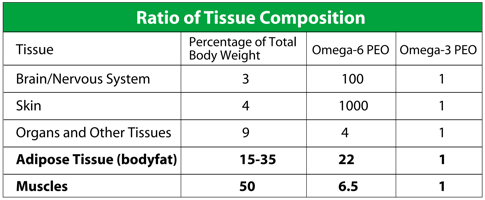
Diabetic Patients Develop Harmfully Modified Cell Membranes
The following example illustrates the physiologic stress that just a small amount of trans fats, interesterified fats, or other processed LA causes: A mere 0.5 gram of processed/adulterated oil – amounting to just 1% of the total oil – causes an overload of 100,000 defective molecules per cell.27 Does it matter? Yes, it does. Many of these defective substances become incorporated into the cell membrane and change its composition, leading to decreased permeability and insulin resistance.
Cell membranes are specifically regulated for fatty acid composition depending on species.19 However, there is an exception to this lipid regulation: When manmade oils not naturally occurring in Nature are consumed they become incorporated in the cell membrane because the body does not recognize them as nonfunctional. Nor will they get “oxidized away.” These nonfunctional lipids disrupt the functionality of the cell’s membrane.28 It is further known that the incorporation of these processed fats and oils into both cell membranes and tissues is in direct proportion to their consumption.29,30 Therefore, because most diabetic patients consume significant amounts of processed foods containing these processed oils, they must have significantly impaired cell membranes. This consumption of processed LA in cooking oils is one of the direct causal reasons for the epidemic of insulin resistance in type 2 diabetes.
All diabetic patients must have significantly impaired cell membranes.
Diabetic Patients Suffer Highly Impaired PGE1 Binding Activity
Inflammation negatively impacts the delta-6 desaturase pathway leading to decreased PGE1 production [LA→GLA→DGLA→PGE1]. This inflammatory condition is common in diabetic patients because of their elevated blood glucose levels. It is well known that inflammation is caused by glucose autoxidation.
Furthermore, the binding activity of PGE1 – the body’s most potent natural anti-inflammatory – is decreased by 58% in diabetic patients.31 LA and GLA directly improve this deficiency, allowing the diabetic patient to heal faster and suffer fewer inflammation-based pathophysiologic issues. Most importantly, the physiological concentration of insulin required to produce a given effect is lowered with the increase of PGE1 (best supplied from GLA supplementation – bypassing the impaired delta-6 desaturase pathway, maximizing PGE1 production.).31 Unprocessed LA is also known to decrease the cravings for carbohydrates and improve associated blood chemistry.32
Diabetic patients will improve their insulin sensitivity and lower blood glucose by supplementing with an organic plant-based LA/ALA/GLA formulation daily.
Night Snacking / Cravings for Sweets Solved… The Secret of the Right Fruits
The protein powder/fruit smoothie combo has the glycemic load of just 1/8 to ½ of cakes, candies, or pizza.
The worst time for a diabetic patient is the evening, when willpower disappears and snacking occurs. This leads to highly elevated blood sugars throughout the evening and into the morning, which is a self-imposed disaster.
Enter the Protein Powder/Fruit Smoothie Combo
.
I thank Doug Graham, DC, and Robert Rowen, MD, for their assistance in explaining that all fruits aren’t equally glycemic in raising blood sugars. My wife has been a type 1 diabetic for over a decade, so when Dr. Rowen introduced me to this secret, I “experimented” on her. The results astounded me. Debra drank an entire protein powder smoothie made with 10 oz. of frozen peaches. That’s over a half-pound of fruit, and with the water added – more than enough to expand anyone’s stomach to the maximum.
Before the experiment, I made sure that she hadn’t eaten anything for the previous 3 hours and that her blood sugars were on the high side (they were 150 mg/dL) to limit the effect of any possible endogenous insulin that she still produces. Less than ½ ounce of protein powder has negligible effect on raising blood glucose, but I calculated that with this amount of peaches, her blood glucose (BG) should have risen by at least 150 points. It rose 17 points as measured 2 hours after she was finished eating (with a highly accurate meter). I was dumfounded. By comparison, with the consumption of a half pound of cake/pie/ice cream, patient blood sugars would rise significantly higher. Of course, I redid the experiment the next day under the same circumstances. BG increased 15 points – the exact result within the accuracy of the meter. A teaspoon of glucose (from a soda, cake, or ice cream, etc.) raises blood sugar by 70 to 90 mg/dL. How did the fruit’s glucose from the fruit “disappear”? That will be answered shortly.
I call this great combo of protein powder and fruit, the “water diet” because so much of the fruit’s content is water. This special combination uniquely fills the patient’s stomach – both volume-wise and in satisfying the craving for sweets – the patient won’t want to eat anything else afterwards for many hours, if at all. Furthermore, your patients obtain protein and fully functional LA (from the fruit), too. Peaches, cantaloupe, watermelon, strawberries, and blueberries are a few good choices. For optimal effectiveness, I recommend 5 to 10 ounces of fruit per smoothie. I cut up the fruit, place it in a plastic bag, and freeze it, eliminating the need for ice. Just add water and blend for an ideal consistency.
No fruit juices, dried fruits, bananas, or pineapple are to be used. 33,34
Consuming whole fruit satisfies your patients much more than fruit juice, which significantly increases blood glucose levels while not fulfilling the appetite. (“Consuming whole fruit produces ratings of satiety more than fruit juice.”34)
What Makes Fruit Different?
Fruits are combinations of three different types of sugars:, glucose, fructose, and sucrose. Sucrose is a naturally occurring combination of 1 part glucose and 1 part fructose and is naturally very resistant to breakdown via hydrolysis: these molecules normally stay together. Glucose is blood sugar, so pure glucose is the benchmark against other insulin-response foods. Fructose is known as the “fruit sugar”; it is the most satisfying (sweetest) of all sugars, and the natural fructose from fruit does not cause a significant rise in blood glucose, or cause liver issues. Nature created an ideal food. Patients can perform their own individualized “fruit experiment” to determine the specific fruits for minimum BG rise.
Processed fructose such as “high-fructose corn syrup” (HFCS) is the problem, not natural fructose.
GLUTs: The Sugar Transporters
There are 14 glucose transporters (GLUTs); 7 can transport fructose, with GLUT5 being the sole specific fructose transporter. Physicians are familiar with GLUT4, regulated by insulin: with an improper insulin response, you get fat. But there are many other pathways the sugars in fruit utilize that don’t make you fat or increase BG levels. For example, GLUT1 / GLUT3 fuel the central nervous system – not adding to adipose tissue. They have kinetic and regulatory properties in both cellular and whole body glucose homeostasis. GLUT5 regulates fructose in the intestines, testis, kidney, skeletal muscles, and brain – not raising blood sugar. Physicians need to have their patients find specifically what fruits are best for them.
Success with LA/ALA/GLA and Protein Powder / Fruit Smoothie Combo
I have been vegetarian for many years. … Lately, I have noticed a rise in my blood sugar count to the high borderline, which means prediabetic. I have been asking myself what was I doing wrong. I have started using the unprocessed, organic omega-6 and -3 in the ratio as Prof. Peskin suggests.35
I also recommend it to my patients, friends, and family. Almost immediately, I felt a significant decrease in carb cravings … which was followed by losing weight, feeling energetic and satisfied.
– Nurit Nitzan, clinical psychologist/holistic health practitioner
Israel
I was born in 1961 and received the prediabetic diagnosis in 2009. When I was first diagnosed with prediabetes, I started a vegan diet based on a best-selling author known as an excellent resource for vegans. But it didn’t work for me. My sugars would skyrocket … it was frustrating to say the least. I then tried the ADA diet that was a “little” better but not ideal. I stayed away from juices, cookies, sugar, etc. and still had glucose meter readings of 125–180 after meals.
After adopting his [Peskin’s] recommendations, I quickly normalize my postmeal sugars to a range of 85–105. It was amazing. I also have a device that allows me to monitor my LDL, HDL, and triglycerides. Although my total cholesterol went up to 185 from 155, my HDLs went from 30 to 75 and my triglycerides went from 115 down to 70. The protocol works – my sugar has continued to stay in a range of 85–105 and morning fasting sugars typically stay in the 85–95 range. What a difference from the vegan and ADA diets.
-
Ed E.
Thank you for recommending the protein powder/fruit smoothie. Up until then, Paul has only had one strawberry a day for fear of raising his blood sugar. We were very surprised when the protein powder/fruit smoothie did not raise his blood sugar. Also, he has not awakened starving in the mornings like he had been.
-
Paul and Rhoda M.
Acknowlegement
Special thanks to pediatric endocrinologist Amid Habib, MD, for his technical assistance.
Brian Scott Peskin, BSEE, is a translational research scientist with a long-term interest in diabetes and its underlying pathophysiology. He specializes in lipids-based pharmacognosy – a class of drug derived from plant-based sources; specifically, seed oils. Consulting for numerous nutritional companies, including Your Essential Supplements (USA), BioAge Ltd. (UK), Pure Form Omega (Canada), Natural Bodz (Australia), and Succesboeken (Netherlands). He holds multiple patents regarding plant-based lipid formulations. Peskin earned his bachelor of science degree in electrical engineering from the Massachusetts Institute of Technology, founded the field of Life-Systems Engineering Science in 1995, and was appointed adjunct professor at Texas Southern University in the Department of Pharmacy and Health Science from 1998 to 1999. He is chief research scientist at Peskin Pharmaceuticals (prof-peskin@peskinpharma.com).

Notes
1. Statistics about diabetes [web page]. American Diabetes Association, June 30, 2014. http://www.diabetes.org/dia-betes-basics/statistics.
2. Cook JJ, Simonson DC. Epidemiology and health care cost of diabetic foot problems. In: Veves A, ed. The Diabetic Foot: Medical and Surgical Management. 3rd ed. New York: Springer; 2012:17–32.
3. Gibbons WG, Lower extremity bypass in patients with diabetic foot ulcers. Surg Clin N Am, 2003;83:659-669.
4. Peskin BS, Habib A, Matheson J. Chronic wound/diabetic ulcer healing/surgical healing: a new plant-based treatment clinically effective in just 30 days. Townsend Lett. April 2016:73–75.
5. Guyton AC, Hall JE. Textbook of Medical Physiology. 9th ed. W. B. Saunders Co.; 1996: 422.
6. Kolata G. Low-salt diet ineffective, study finds. Disagreement abounds. New York Times. May 4, 2011:A17.
7. Garg R et al. Low-salt diet increases insulin resistance in healthy subjects. Metabolism. 2011;60:965–968.
8. Dr. Laragh stated to me: “The majority of people with high blood pressure do not have a salt factor and do not need to avoid the normal range of salt intake which can promote good health. A minority of patients are salt sensitive, so that the avoidance or reduction of salt will reduce or normalize their high pressure. We always identify them and advise appropriate salt reduction or diuretic therapy.”
9. Peskin BS, Rowen RJ. PEO Solution. Houston: Pinnacle Press; 2015:421–425.
10. Garg R et al. Low-salt diet increases insulin resistance in healthy subjects. Metabolism. 2011;60:965–968.
11. Kolata G. Research questions benefit of low-salt diet, drawing criticism from CDC. New York Times. May 4, 2011:A17.
12. Asp ML et al. Time-dependent effects of safflower oil to improve glycemia, inflammation and blood lipids in obese, post-menopausal women with type 2 diabetes: A randomized, double-masked, crossover study. Clin Nutr. 2011 Aug;30(4):443–449.
13. Sundram K et al. Stearic acid-rich interesterified fat and trans-rich fat raise the LDL/HDL ratio and plasma glucose relative to palm olein in humans. Nutr Metab. January 15, 2007;4(3):1–12.
14. Guyton AC, Hall JE. Textbook of Medical Physiology. 9th ed. W. B. Saunders Co.; 1996:977.
15. Lee CC et al. Insulin clearance and the incidence of type 2 diabetes in Hispanics and African Americans. Diabetes Care. 2013 Apr; 36(4):901–907.
16. Hochgraf E et al. Dietary oxidized linoleic acid [parent omega-6] modifies lipid composition of rat liver microsomes and increases their fluidity. J Nutr. 1997;127:681–686.
17. Belury M et al. Erythrocyte linoleic acid, but not oleic acid, is associated with improvements in body composition in men and women Mol Nutr Food Res. 2016; Time to rethink your vegetable oil? [online article]. Science Daily. March 7, 2016. https://www.sciencedaily.com/releases/2016/03/160307092329.htm.
18. High serum omega-6 polyunsaturated fatty acid concentrations linked to lower risk of type 2 diabetes [Web page. 2016, March 24. http://medicalxpress.com/news/2016-03-high-serum-omega- polyunsaturated-fatty.html.
19. Hulbert AJ. Metabolism and longevity: is there a role for membrane fatty acids? Integr Comp Biol. 2010;50(5):808–817.
20. B. Alberts, et al., Molecular Biology of the Cell (3rd Edition, Garland Science, New York, 1994, p. 428.
21. R. K. Murray, D. K. Granner, P. A. Mayes and P. A. Rodwell, Harper’s Illustrated Biochemistry (26th Edition), McGraw-Hill, New York, 2003, pp. 191,193,415-422.
22. G. Heisenberg and W. H. Simmons, Principles of Medical Biochemistry, Mosby, Inc., St. Louis, 1998, pp. 219-226.
23. A. C. Guyton and J. E. Hall, Textbook of Medical Physiology, 9th Edition, W.B. Saunders Co., 1996, p. 12.
24. Andersson A, et al., Fatty acid profile of skeletal muscle phospholipids in trained and untrained young men, Am J Physiol Endocrinol Metab, 2000;279:E744-E751.
25. Chapkin RS, et al., Metabolism of essential fatty acids by human epidermal enzyme preparations: evidence of chain elongation, J Lipid Res. 1986;27:945-954.
26. Spector AA, Plasma free fatty acid and lipoproteins as sources of polyunsaturated fatty acid for the brain, J Mol Neurosci. 2001;16:159-165.
27. Peskin, BS and Rowen, RJ, PEO Solution, Pinnacle Press, Houston, Texas, 2015, pages 275-276.
28. Burns, C. Patrick, et al., Effect of Modification of Plasma Membrane Fatty Acid Composition of Fluidity and Methotrexate Transport in L1210 Murine Leukemia Cells, Cancer Research 39, 1726-1732, May 1979.
29. Abbott, SK, Membrane fatty acid composition of rat skeletal muscle is most responsive to the balance of dietary n-3 and n-6 PUFA, British Journal of Nutrition (2010), 103, 522–529.
30. Lands, WE, et al., Quantitative Effects of Dietary Polyunsaturated Fats on the Composition of Fatty Acids in Rat Tissues, Lipids, Vol. 25, No. 9, 1990, pages, 505–516.
31. Dutta-Roy, A, Effect of Evening Primrose Oil Feeding on Erythrocyte Membrane Properties in Diabetes Mellitus, Omega-6 Essential Fatty Acids: Pathophysiology and Roles in Clinical Medicine, Wiley-Liss, New York, NY, 1990, pages 505-511 (out of print).
32. Kasper, H., et al., Response of body weight to a low carbohydrate, high fat diet in normal and obese subjects, The American Journal of Clinical Nutrition, 26: February 1973, pages 197-204.
33. Peskin, BS and Rowen, RJ, PEO Solution, Pinnacle Press, Houston, Texas, 2015, pages 475-477.
34. Flood, JE and Rolls, BJ, The effect of fruit in different forms on energy intake and satiety at a meal, Appetite, April 2009, 52(2), 416–422.
35. Peskin, BS with Cavallino, Stephen, The 24-Hour Diet, Pinnacle Press, Houston, Texas 2014.








0 Comments