
A concept that provides a deep understanding and appreciation for the immense healing value of herbal medicine
“The Only Thing That Is Constant Is Change”- Heraclitus
Brian McLaren, wrote in his new book “Oneing” these reflections on change, “Sometime soon, I hope you can take a walk outdoors or find a place to sit and observe the created world. Seasons change. Trees grow. Rivers flow. Rocks roll downstream and go from rough and sharp to smooth and round. You can look in the mirror and sense the same reality in your own face: new wrinkles, new wisdom.”
All living organisms share several key characteristics or functions: order, sensitivity or response to the environment, adaptation, reproduction, growth and development, regulation, homeostasis, allostasis, protection, and energy processing. When viewed together, these characteristics serve to define life.
Just as everything around us is in motion and is changing, so is everything within us. Just has Nature has intelligence guiding ‘Life Force,’ so can be said for our internal self. The Life Force enlivens the physical mechanism to sustain the life and all its working parts.
For your body to develop properly and stay healthy, many things must work together at many different levels – from organs to cells to genes.
Despite notable advancements, we have greatly oversimplified the dynamic relationships between plants and humans, kept hidden the larger human narratives about these relationships, and overlooked potentially important research and discoveries into life-saving medicines. Medicinal plants and people should be viewed as partners in health (for the individual as well as for the world) whose relationship involves a complicated and poorly explored set of interactions.
Nature has evolved distinct strategies to modulate biological processes, either by selectively targeting biological macromolecules or by creating molecular promiscuity or polypharmacology (one molecule binds to different targets).
Evidence suggests that plants, and plant medicine, can behave intelligently by exhibiting the ability to learn, make associations between environmental cues, engage in complex decisions about resource acquisition, memorize, and adapt in flexible ways.
Traditional herbal medicine (THM), which consist primarily of herbal medicine, often exerts therapeutic effects by affecting multiple targets, not concept or understanding of medicine that fits into the current medical model.
Pharmacological effects of THM are achieved by their active ingredients that simultaneously modulate multiple biomolecules in the human body via an additive or synergistic manner. This multi-component nature of herbal medicine has been considered advantageous over single-target drugs for treating complex multifactorial disorders such as cancer and nervous system disease.
In general, pharmacological effects of herbal medicine are achieved both by their active ingredients and many secondary compounds as well that simultaneously modulate multiple biomolecules in the human body via an additive or synergistic manner. This multi-component nature of herbal medicine has been considered advantageous over single- target drugs for treating complex multifactorial disorders such as cancer, nervous system disease, and autoimmune diseases., Although therapeutic effects of THM have been clinically verified in traditional settings for thousands of years, its unknown mode of action on the human body hinders its application and development.
Complexity of herbs and healing
In the field of herbal medicine research, a single plant species may have great medical importance as it may contain a wide array of bioactive phytochemicals. These phytochemical components may act either alone or in a combination with other constituents to produce the wished pharmacological impacts. The beneficial effects of medicinal herbs come from their bioactive secondary metabolites comprising, alkaloids, steroids, triterpenes, and glycosides. Studying the pharmacologic impacts of plants is a challenge.
Every herb can have a multitude of active compounds, each one able to communicate with several target proteins with a high number of protein-to-protein responsive interactions (high biological network connectivity) and that these protein targets have higher network connectivity than disease genes. Proteins play a pivotal role in many biological processes.
Unlike synthetic drugs, Herbs and THM possess “multicomponent”, “multi-target”, and “multi-pathway” characteristics. Therefore, a complex network of herb component-target-pathway-disease, metabolites, and gut microbiota must be comprehensively explored to elucidate mechanisms of THM. This is a breakthrough concept in medicine and healing.
This understanding may facilitate disruption of essential biological pathways, resulting in competitor death. This result also suggests that additional sources of small molecules within THM can target root causes of human disease.
Biological Networks
From both inside and outside the body, cells are constantly receiving chemical cues prompted by such things as injury, infection, stress or even the presence or lack of food. “Cells can detect what’s going on around them, and they can respond in real time to cues from their neighbors and environment. At this very moment, your cells are sending and receiving millions of messages in the form of chemical signaling molecules!” To react and adjust to these cues, cells send and receive signals through biological pathways. The molecules that make up biological pathways within our cells, interact with signals, as well as with each other, to carry out their designated tasks.
Signal transduction pathways move a signal from a cell’s exterior to its interior. Different cells are able to receive specific signals through structures on their surface called receptors. After interacting with these receptors, the signal travels into the cell, where its message is transmitted by specialized proteins that trigger a specific reaction in the cell. For example, a chemical signal from outside the cell might direct the cell to produce a particular protein inside the cell. In turn, that protein may be a signal that prompts the cell to move.
Once a signaling molecule (ligand) from one cell has bound to a receptor on another cell, most of the time, the signal must be passed on through other molecules in the cell, in a sort of cellular game of “telephone.”

I often like to say that herbal or botanical medicine supports the molecular (nanomedicine), cellular and organic system networks, enhancing robustness, auto-regulation and auto-organization.
Our body’s respond on all levels and within any network response are singles that involve network to network communication as well. Take the nervous system and the endocrine system. The nervous system can respond quickly to stimuli, by action potentials and neurotransmitters. Responses to nervous system stimulation are typically quick but short lived. The endocrine system responds to stimulation by secreting hormones into the circulatory system that travel to the target tissue. Responses to endocrine system stimulation are typically slow but long lasting.
The nervous system responds rapidly to stimuli by sending electrical action potentials along neurons, which in turn transmit these action potentials to their target cells using neurotransmitters, the chemical messenger of the nervous system.
The endocrine system relies on hormones to elicit responses from target cells. These hormones are synthesized in specialized glands at a distance from their target, and travel through the bloodstream or inter-cellular fluid. Upon reaching their target, hormones can induce cellular responses at a protein or genetic level.
Biological pathways
Biological pathways can act over short or long distances. For example, some cells send signals to nearby cells to repair localized damage, such as a scratch on a knee. Other cells produce substances, such as hormones, that travel through the blood to distant target cells.
These biological pathways control a person’s response to the world. For example, some pathways subtly affect how the body processes drugs, while others play a major role in how a fertilized egg develops into a baby. Other pathways maintain balance while a person is walking, control how and when the pupil in the eye opens or closes in response to light and affect the skin’s reaction to changing temperature.
There are many types of biological pathways. Among the most well-known are pathways involved in metabolism, in the regulation of genes and in the transmission of signals.
Metabolic pathways make possible the chemical reactions that occur in our bodies. An example of a metabolic pathway is the process by which cells break down food into energy molecules that can be stored for later use. Other metabolic pathways help to build molecules.
Gene-regulation pathways turn genes on and off. Such action is vital because genes provide the recipe by which cells produce proteins, which are the key components needed to carry out nearly every task in our bodies. Proteins make up our muscles and organs, help our bodies move and defend us against germs.

What is a biological network?
Researchers are learning that biological pathways are far more complicated than once thought. Most pathways do not start at point A and end at point B. In fact, many pathways have no real boundaries, and pathways often work together to accomplish tasks. When multiple biological pathways interact with each other, they form a biological network.

Biological pathways do not always work properly. Metabolic processes that become derailed can lead to illness and disease. Rutter and Hicks say that shedding light on additional interactions in the network will lead to a better understanding of root causes of diseases.
The human organism comprises diverse organ systems. Each organ system has its own complex structural organization and regulatory mechanisms that lead to complex transient, intermittent and nonlinear behavior. There are basic rules that underlie the dynamics of network interactions among organ systems, and the hierarchical reorganization of organ network interactions in response to changes in physiologic state. There is nothing stagnant, there is nothing not communication and interacting within.
I prefer not to use the word function, and don’t really like it much as it relates to medicine in the natural sense of how things work in our bodies. Machine’s function, living organisms respond. Everything is in flux and responsive.
“All things are in flux; the flux is subject to a unifying measure or rational principle. This principle (logos, the hidden harmony behind all change) bound opposites together in a unified tension, which is like that of a lyre, where a stable harmonious sound emerges from the tension of the opposing forces that arise from the bow bound together by the string.” ― Heraclitus
DNA, RNA, proteins and metabolites have crucial roles in the molecular mechanisms of the cellular processes underlying life.
Kevin Hicks, Ph.D., developed a new technology, termed MIDAS, that reveals the enormity of the regulatory network that acts as an interface between environmental cues and cell metabolism, called the protein-metabolite interactome. DNA, RNA, proteins and metabolites have crucial roles in the molecular mechanisms of the cellular processes underlying life. The highly sensitive technique identified interactions that had never been seen. Given that there are thousands of proteins in the cell, the full scale of the network is predicted to be much larger. It is instrumental to determine how the output dynamics of one system can be affected by changes in the dynamics of other systems via the network of interactions. For example, there 33 human proteins involved in converting carbohydrates into fuel and 830 interactions with metabolites. Only plant intelligence can communicate with all of these interactions leading a helping hand throughout.
“It’s surprising how little we know about the extent of these interactions,” Hicks says. “We are pushing our understanding of the biological network in new directions.”
There is a direct association between network topology and physiologic function, and this dynamic process provide new insights into understanding how health and distinct physiologic states emerge from networked interactions among nonlinear multi-component complex systems.
For example, cancer, as well as cancer treatments affects multiple systems that interact to create symptoms and disruptions across these, and therefore, prescribing multi-herbal and nutritional formulations that interact, at the molecular, cellular and organ system levels and gentle supports the internal physiological networks is the approach I take and believe best serves the whole of the person through health optimization.
Understanding Genotype-Phenotype Effects in Cancer via Network Approaches
Cancer is now increasingly studied from the perspective of dysregulated pathways, rather than as a disease resulting from mutations of individual genes. A pathway-centric view acknowledges the heterogeneity between genomic profiles from different cancer patients while assuming that the mutated genes are likely to belong to the same pathway and cause similar disease phenotypes. Indeed, network-centric approaches have proven to be helpful for finding genotypic causes of diseases, classifying disease subtypes, and identifying drug targets.
Cancer heterogeneity poses a significant challenge for analyzing and interpreting cancer patient data. Cancer is now commonly understood as a disease of pathways rather than a result of defects in individual genes. Therefore, network-based approaches can be employed to find explanations for how different mutations result in similar disease phenotypes. Gene interaction networks have been used to identify defective pathways, classify subtypes based on subnetworks, and predict treatment and survival outcomes. In addition to gene networks, patient similarity networks are gaining importance and can offer different perspectives for understanding cancer.
Currently, networks used in cancer studies are typically static, and network topology remains fixed during the analysis while changes associated with diseases may be mapped as changes in properties of the nodes or edges of such network. However, interactions between biological entities may differ at multiple levels, depending on spatial and/or temporal conditions. Recently, there have been some efforts towards modeling and analyzing dynamic interactions in the context of multiple time points or tissue types.
Dynamic network analysis can help in deciphering fundamental mechanisms of diseases, such as increasing disease susceptibility with age. As a step in this direction, Faisal and Milenkovic exploited network dynamics to study age progression. By combining a protein-protein interaction network with aging-related gene expression data, they obtained age-specific networks and analyzed global and local changes in network topology at different ages. They observed a number of proteins with changes in local network structures that are predictive of genes related to aging.
One of the most widely acknowledged problems with currently available gene networks is their noisiness. Physical interaction networks obtained from large-scale experiments are not only noisy but also incomplete. Relative to physical interaction networks, functional interaction networks are more complete but may lose specific information about directly interacting pairs because these networks integrate many different functional relationships together. Studies that focus more on mechanistic aspects of signal propagation may benefit from leveraging physical interaction networks, but they need to be aware of the limitations that these networks currently have. In contrast, analyses that focus on identification of broadly related groups of genes typically utilize functional networks, which cover a wide spectrum of interactions between molecules.
One of the main advantages of network-based approaches is their capability to uncover cancer-related associations, including genotype-phenotype relationships, despite the heterogeneity of the disease. Such large-scale associations can suggest potential treatment options and can generate testable hypothesizes, but at present, they can rarely provide full explanations of observed relationships. Indeed, current interaction networks not only lack context dependency but also cannot usually provide accurate mechanistic interpretations. It is anticipated, however, that as the coverage and information encoded in these networks improves, the predictive and explanatory power of network-based cancer analysis will increase accordingly.
Systems pharmacology or network pharmacology approaches have been introduced to decipher complex mechanisms of action (MOAs) in networks of biomolecules to explore pharmacological effects of multi-component herbal medicine acting on multiple targets of disease from a holistic perspective.

From the molecular to the cellular to the organ, the whole organism network as it relates to human health and disease are driven by the regulatory information flow that propagates throughout this global autoregulatory network.

This figure presents a conceptualization of a patient’s autoregulatory status.
“(A) The concept of disease progression, adapted from the 1980 WHO ICIDH model. Blue-to-black lines indicate stages in which a given disease is progressing, and ♢ depicts principal milestones between stages. The dashed line indicates that there is no strict sequential order between stages or milestones. A linear structure is used for simplicity.
(B) A schematic conceptualization of disease progression as a four-quadrant map, disease progression is considered as the Patient’s Health-Disease Continuum. The arrowed dashed lines represent the hypothetical disease progression of patients X and Y. In contrast to a more simplified, linear approach of identifying disease stages in clinical decision-making, this map positions stages in relation to dysregulation parameters represented by the horizontal and vertical axes.”
Traditional Herbal Medicine-network pharmacology
Traditional Herbal Medicine (THM)-network pharmacology (THM-NP) studies are conducted by constructing an herb–compound–target (H-C-T) network by integrating the herbal constituent data and drug-target interactions (DTIs) information. Then, the target network is analyzed to interpret related biological functions, pathways, and diseases. Since there are no gold standard methods for THM-NP studies yet, researchers have developed and applied various tools and databases for each step.
The general framework of network pharmacology analysis of herbal medicine

The increased number of papers and of affiliations involved indicates that the THM-NP is continuing to grow.

Annual publication trends of traditional herbal medicine-network pharmacology (THM-NP) studies.
Currently, the medical establishment views herbs as a mixture of chemical ingredients and constructs with no real target or specificity. However, this approach is severely flawed, by the complexity of the herbal composition and can never be the way in which we view and even validate their actions and value. Alternatively, gene-expression profiles induced by herbal treatment reflect the overall biological effects of herbs and are suitable for studying the global effects of herbal medicine.
It is instrumental to determine how the output dynamics of one system can be affected by changes in the dynamics of other systems via the network of interactions. For example, there 33 human proteins involved in converting carbohydrates into fuel and 830 interactions with metabolites. Only plant intelligence and herbal (and dietary) medicine can communicate with all these network interactions leading a helping hand throughout.
Systems Network pharmacology, Traditional Herbal Medicine and those “Smarty Plants”
“The noblest foundation for medicine is love. It is love that teaches us the art of healing. Without love true healing can never be born.” – Paracelsus
Systems Medicine applies systems biology approaches, that understand illness in the context of altered regulatory circuitry. The paradigm: “disease → therapy → recovery” is not still suitable and superseded by the new one: “person → definition of the problems → quality of life.”
With the rise of new concepts in system medicine and bioinformatics, a new generation of pharmaceutical research paradigm characterized by network and system has attracted more and more attention in the era of biomedical big data and artificial intelligence. Network pharmacology is a Frontier research field that systematically illustrates an original interdisciplinary subject of pharmacology, system biology, bioinformatics, network science, and other related disciplines.
Synergy and network pharmacology—Establishing the efficacy of herbal medicine(s)
We have made a grave mistake in our depiction of herbs and herbal medicine has it relates to health and disease. We have attempted to utilize both the current system and understanding of health and disease, as well as the current terminology used to represent the methodology of disease and treatment mechanism.
Using single herbs as an alternative to drug therapies, and herbal medicine are two very different things, though we tend to think there not.
Herbal medicine(s) are botanical mixtures which present synergies of poly-pharmacological phyto-combinations. They modulate the activity of target networks of underlying disease phenotypes are efficient than purified compounds due to favorable “synergistic” interactions.
A holistic view of herbal medicine, as traditional herbal medicine (THM), coincides with a new generation of medical research paradigm, characterized by networks and systems. Numerous academics have explored the therapeutic mechanism of THM formulas by omics approaches, shifting THM research from the “one-target, one-drug” to “multi-targets, multi-components” paradigm, which has greatly boosted the digitalization and internationalization of THM.
At the foundation of the Mederi-Care approach to health and healing, is a focus on nourishing the root system, where we enhance and optimize robustness, auto-regulation, and auto-organization, at the molecular, cellular and organ system levels. Mederi-Care utilizes a body of practices, procedures, and systems, that together forms the Mederi-Care methodology.
Mederi-Care applies complex therapeutic formulations and interventions, which as single formulations and interventions, would have mild effects as soloist, but together, as a musical orchestra, are built into an effective individualized therapeutic regimen.
Mederi-Care as a Network-based Approach – A new emerging paradigm
The complex interactions in biological systems have been shown to affect the response to single-targeted therapies which were initially developed under the “reductionist paradigm” of cancer precision medicine.
Just like in all life forms (human, animal, and plants) there is nothing about our health that is reductionistic, functional or stagnant. There are numerous networks throughout the body, which include neuro-networks, immune-networks, endocrine networks; intra-cellular molecular networks, cell signaling pathways and their receptors, which also behave as a network, and organ system networks. These networks also communicate with each other and are orchestrated by an internal life-force, that is receiving information from everywhere within, as well as being influenced by the external environment. It is dependent on energy flow, is protective in nature, as well as adaptive.
Cancer is also a life force that operates is a similar fashion, and it is in a tug-of-war with our life-force striving to hijack and take control of the multitude of interacting networks. This presents great challenges for the medical philosophy and for drug therapies, and specific the trending hip medical term precision medicine,
To address these fundamental challenges, great efforts have been dedicated from a network perspective to explore the mechanisms underlying tumorigenesis and progression and to extend our understanding of cancer as a complex disease, which is exploiting new advances in cancer diagnosis, prevention, and treatment. Even, when a specific pathway has been identified as a driver mutation, and a drug in introduced to target that, like a sledgehammer, or bulldozer, you still need garden tools and to get your hands in the soil, if you want a garden. Drug therapies, act like a sledgehammer, and simply function, and would be perfect in every way if we were machines. They can great allies when used appropriately and can certainly be the hero because of their great impact and reduce the growth of cancer. However, this is not the goal, it can be part of the goal, but the goal is to improve overall survival and quality of life. We know quite well, a great response or even remission, with NED (No Evidence of Disease) doesn’t often hold. Cancer is often smart, adaptive, and evolving into newer, stronger, and more resistive forms.
My solution to this dilemma. Traditional herbal medicine (THM) serves to interact with host along with the cancer at all it’s moving parts, with the intent of strengthening the host, while auto-regulating and reprogramming the networks to serve the host rather than the cancer.
Applications in cancer medicine, include biomarker identification, cancer patient stratification and network target recognition, highlighting network-based systematic integrations of THM across macro and micro networks. This holds tremendous potential of this new emerging unitive network-based “systems paradigm” referred to as Mederi-Care, which would ultimately make substantial progress for fighting cancer.
THM is the soul or root system that serves as a primary toolbox in supporting patient care, and within the Mederi-Care system THM network pharmacology aims to understand the network-based biological basis of complex diseases at the molecular, cellular and organ system levels. Herbal treatment protocols, play a critical role in the origin and development process of Mederi-Care and network pharmacology.
THM network pharmacology methods have been created to prioritize:
- disease-associated genes,
- to predict the target profiles and pharmacological actions of herbal compounds,
- to reveal drug-gene-disease co-module associations,
- to screen synergistic multi-compounds from herbal formulations in a high-throughput manner,
- to interpret the combinatorial rules and network regulation effects of herbal formulations,
- To identify disease and syndrome biomarkers based on biological network.
The effectiveness of the network-based methods was demonstrated for the discovery of bioactive compounds and for the elucidation of the mechanisms of action of herbal formulations.,
Research published by Chamberlin et. al. from Oregon Health and Science University in Portland Oregon, studied known signaling pathways targeted by natural products and compared them with the target networks of conventional chemotherapy agents. They found an increase of 61% (725 pathways) covered by natural products as compared to FDA approved cancer drugs. The group found 24 pathways related to cancer drivers that had no available chemotherapy drugs at the potential for clinically relevant binding affinity threshold of less than 100 nM, but for each of these 24 pathways they found at least 1 natural product which addressed that pathway in the same concentration range (less than 100 nM).
Traditional Herbal Medicine (THM) in cancer therapies
The main herbs used to treat cancer patients are health-promoting/strengthening herbs and pathogen eliminating herbs. The key mechanism is regulating the immune system of cancer patients. Firstly, health-strengthening herbs are mainly functioned as immune regulatory effectors on cancer. Secondly, some of the compound formulations mainly strengthen the health of patients by regulating the immune system of cancer patients. One, ancient THM system, Traditional Chinese Medicine (TCM), includes many classic preparations that are widely used in China to treat cancer for their properties of spiriting vital energy and anti-cancer effects, mainly by improving immunity.
Immunotherapy is an emerging therapy that has completely transformed the therapeutic landscape of advanced cancers. However, not all patients respond to immunotherapy due to the immunological and molecular features of the tumors. THM provides a new perspective for cancer treatment and is considered to have the potential as promising anti-tumor drugs considering its immunoregulatory properties.

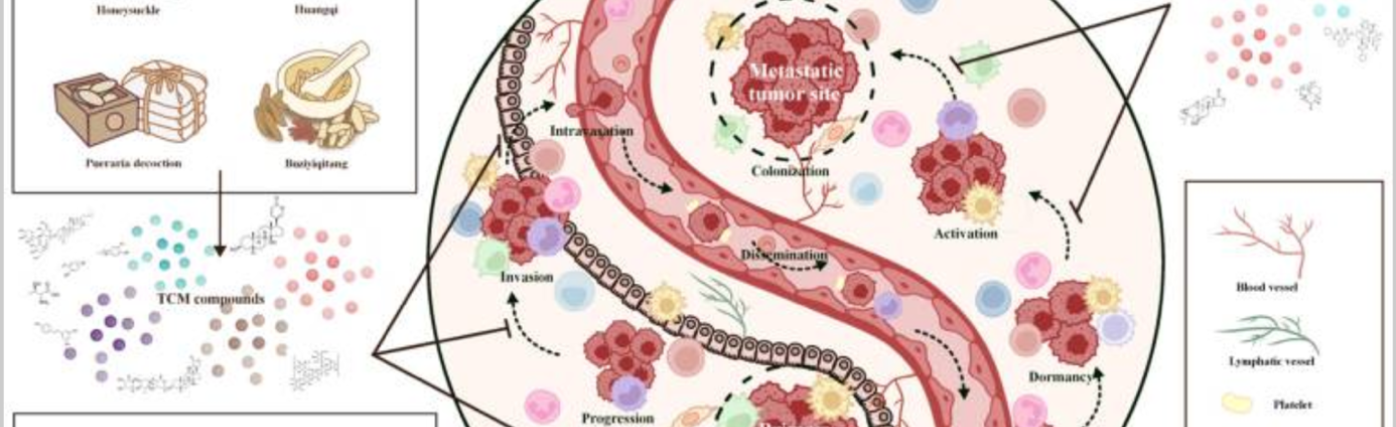
Inhibition of primary and metastatic tumor sites by virtue of traditional Chinese medicine (TCM) -insights into its therapeutic potential. (Presented in the form of Taiji).
TCM demonstrates a multifaceted impact on the suppression of primary and metastatic tumor sites. TCM restrains the growth and expansion of primary tumor cells by regulating cellular proliferation and apoptosis, impeding angiogenesis, and inhibiting tumor-promoting factors. Through its intricate network of bioactive compounds, TCM disrupts key signaling pathways implicated in tumor growth, progression, invasion, and metastasis, ultimately inhibiting tumor biological behaviors. TCM attenuates the formation of pre-metastatic niches by impeding the release of pro-metastatic factors, preventing the colonization and establishment of secondary tumor sites. By interfering with the epithelial-mesenchymal transition process, TCM hinders tumor cells from gaining invasive traits and reduces the likelihood of metastasis. By suppressing the invasive and migratory behavior of tumor cells, TCM curbs their ability to initiate metastasis and invade distant tissues. TCM exerts a modulatory effect on the tumor microenvironment, promoting immune surveillance and enhancing anti-tumor immune responses, which eventually hinders tumor development. These collective actions of TCM underscore its potential as an adjunctive therapy for combating primary and metastatic tumors, holding promise for the advancement of novel therapeutic strategies.
Notably, studies have indicated that TCM compounds can enhance the effectiveness of these treatments by sensitizing tumor cells to cytotoxic agents, modulating the tumor microenvironment, and mitigating treatment-associated side effects. Furthermore, the combination of TCM with emerging immunotherapies, such as cancer vaccines and chimeric antigen receptor (CAR) T-cell therapy, embraces a promising future in unleashing robust anti-tumor immune responses and ultimately improving patient outcomes. Finally, the combination of traditional wisdom and modern scientific advancements assumes paramount importance in propelling the progress of TCM within the realm of cancer immunotherapy.
This review concludes commonly used TCM monomers and compounds from the perspective of immune regulatory pathways, aiming to clearly introduce the basic mechanisms of TCM in boosting cancer immunotherapy and mechanisms of several common TCM. In addition, we also summarized closed and ongoing trials and presented prospects for future development. Due to the significant role of immunotherapy in the treatment of non-small cell lung cancer (NSCLC), TCM combined with immunotherapy should be emphasized in NSCLC.
THM has demonstrated in human and animal studies to enhance and regulate the immune system, including both innate immunity, such as macrophages, dendritic cells, natural killer cells and MDSCs, and adaptive immunity, including CD4+/CD8+ T lymphocytes, regulatory T cells and B cells.
THM research was transformed from traditional experiment-based approaches to a combination of experiment-based and omics-based approaches. Numerous academics have explored the therapeutic mechanism of THM formula by omics approaches, shifting THM research from the “one-target, one-drug” to “multi-targets, multi-components” paradigm, which has greatly boosted the digitalization and internationalization of THM.

Many plant compounds act in a pleiotropic and poorly specific manner, but, more importantly, they are able to tune the reactive oxygen species (ROS) signaling to activate a survival or a pro-autophagic and pro-apoptosis mechanism, depending on the oxidative stress-responsive endowment of the targeted cell.
Network pharmacology emphasizes the overall perspective of the biological networks by analyzing the molecular association between drugs and herbal medicine and their treatment objects. Network pharmacology tends to integrate computational, experimental techniques and clinical investigations, and create favorable conditions for exploring the pharmacological mechanism of THM.

The general framework of network pharmacology analysis of herbal medicine.
A typical network pharmacology approach starts from constructing a network in which a node represents either an herb, herbal ingredient, or target protein/gene and an edge indicates link between herb and its constituent compound or interaction between compound and its target.

Resources for network pharmacology in herbal medicine research.
Left shows typical forms of an herb-compound-target network (blue edges) and herb-gene or compound-gene network (pink edges) used in network pharmacology research.
By associating targets with biological functions or diseases, an herb compound-target-function/disease network is constructed and leveraged to study the mode of action of an herbal treatment. Protein-protein interaction network could be further employed to interpret the synergistic effect of herbal medicine by analyzing interactions among target proteins.,,

Systems biology-driven omics approaches have boosted TCM research from multiple perspectives.
(A) Prescribed ingredients of TCM formula recorded in Chinese Pharmacopoeia (2020 edition). (B) The TCM quality control (fingerprint-based chemical ingredients analysis methods and genomics-related biological ingredients analysis methods). (C) Multi-omics approaches including genomics, transcriptomics, microbiome, and metabolomics could be utilized for investigating the therapeutic mechanism of the TCM formula for treating various diseases. (D) Network pharmacology analysis for screening the bioactive compounds and potential targets for TCM formulas in treating various diseases. (E) The databases for TCM research. The current databases serve as a link across TCM formulas, ingredients, bioactive compounds, targets (proteins/genes), and various diseases.
Natural compounds, within THM, tend to target proteins more essential to an organism than are disease genes. This result is logical, as many natural compounds act as basic defense mechanisms against invaders in the absence of tissue specialization or an advanced immune response. This type of nonspecific defense often results in the death of the invading organism to ensure the producing organism’s survival. Natural compounds protein targets are more connected than disease genes.
Ganoderma lucidum extract (GLE) pharmacological mechanisms as it relates ton network pharmacology analysis of the anti-cancer of compounds: 12 active compounds of GLE were identified, including Ganoderic acid A, Ganoderenic acid A, Ganoderic acid B, Ganoderic acid H, Ganoderic acid C2, Ganoderenic acid D, Ganoderic acid D, Ganoderenic acid G, Ganoderic acid Y, Kaemferol, Genistein and Ergosterol.
Using the docking program, 20 targets were mapped to 12 compounds of GLE. There is at least 122 effective active compounds of GL and 116 targets. GLE effectively inhibited tumor growth in Hepa1-6-bearing C57 BL/6 mice.
THM, a multi-component treatment, has been extensively practiced for treating various symptoms and diseases for thousands of years. Traditional Chinese medicine (TCM), for example, has a history of more than 3000 years. The book The Devine Farmer’s Classic of Herbalism was compiled about 2000 years ago in China and is the oldest known herbal text in the world, though the accumulated and methodically collected information on herbs has been developed into various herbal pharmacopoeias and many monographs on individual herbs exist.
The network target refers to treating the biological network underlying diseases as a therapeutic target in order to decipher systematic mechanisms of action for multi-target drugs, particularly for THM.
From Polypharmacology to Network Pharmacology
Although healing may be magic to some, it does require to a certain extent an embracing of the unknown, the mystery, and sometimes the miracle. it is hard to believe that there is a therapeutic effect without a molecular mechanism of action. Botanical mixtures that contain hundreds of potentially bioactive natural products often do not reveal the desired molecular mechanisms of action. A major bottleneck in botanical drug research is the identification of the molecular targets of all bioavailable compounds within the extract (i.e., the overall mode of action). In many cases no feasible mode of action can be elucidated by using conventional biochemical methodologies.
THM formulas a composed of various kinds of herbs with specific therapeutic effects. THM prescriptions have curative effects and fewer side effects in the treatment of diseases. However, THM prescriptions contain various ingredients, resulting in a problem of unclear targets and mechanisms. Network pharmacology provides a new strategy and powerful methodology for revealing the mechanisms of action of herbal formulae. Most conventional network- based approaches collect associations of herb-compound, compound-target, and target-disease from individual databases, respectively, and construct an integrated network of herb-compound- target-disease to study the complex mechanisms underlying herbal treatment.
Fundamentally speaking, THM supports innate healing by enhancing robustness and autoregulation within the molecular/epigenic, cellular and organ system networks. For example, recently, rapid advances in high throughput omics technology have led numerous studies to exploring gene expression profiles induced by herbal treatments to elicit information on direct associations between herbs and genes at the genome-wide scale.
Herbal formulas, which is what I do, blends several herbs into a single formula; which forms a unique complex matrix, different than any one of the ingredients; but even single herbs are composed of a variety of bioactive chemical compounds.
Modern science, only views studying herbal medicine, as way to identify single compounds and turn them into a drug. Herbs have provided a fertile ground for modern drug development with therapeutic leads. Antimalarial quinine and artemisinin, antipyretic analgesic aspirin, and arsenic trioxide for leukemia are examples of modern drugs originally used in THM.

Three main application of network pharmacology in health biology for exploring the basic pharmacological effects of drugs on diseases and their mechanisms.
Adaptogens nourish the root system
Just like a tree has roots that nourish and support the tree so does our body’s. Adaptogens are our root medicines. They are herbs that enhance recovery, normalize, are non-specific, non-toxic, demonstrate global beneficial effects and have been extensively studied supporting these effects. The impact all of the networks of the body including both the endocrine and nervous system.
Extracts from Panax ginseng, Eleutherococcus senticosus, Rhaponticum carthamoides, Rhodiola rosea, and Schisandra chinensis are considered to be naturally occurring adaptogens and, in particular, plant adaptogens.
The use of natural adaptogens by humans has a rich history-they are used in recovery from illness, physical weakness, memory impairment, and other conditions. About 50 years ago, plant adaptogens were first used in professional sports due to their high potential to increase the body’s resistance to stress and to improve physical endurance.
Adaptogens are well-known for their ability to mitigate the effects of prolonged stress; stretching the dynamic range of healthy stability. Adaptogens enhance energy pathways, creating better efficiency within cellular energy transfer network, as it relates to oxygen, glucose, lipid, and amino acid metabolism. Adaptogens enhance adaptation, enabling both a better ability to adapt and more importantly protecting us from the stress and allostatic overload, induced from life-style and our environment. Adaptogens strengthen the neuroendocrine hub, the reservoir of our hormonal self, helping anabolic restoration, so that the reservoir has reserve and recovery from the catabolic effects of aging and stress.
Network Pharmacology of Adaptogens in the Assessment of Their Pleiotropic Therapeutic Activity
The reductionist concept, based on the ligand–receptor interaction, is not a suitable model for adaptogens, and herbal preparations affect multiple physiological functions, revealing polyvalent pharmacological activities, and are traditionally used in many conditions. This review, for the first time, provides a rationale for the pleiotropic therapeutic efficacy of adaptogens based on evidence from recent gene expression studies in target cells and where the network pharmacology and systems biology approaches were applied.

Flowchart showing the possible cellular and molecular targets for pharmacological intervention and the cell response after an active molecule binds its receptor at metabolomic, proteomic, transcriptomic, and genomic levels of regulation. Reprinted from Reference 5.

The molecular mechanisms and modes of the pharmacological action of red ginseng. Effects of red ginseng and ginsenosides on key mediators of neuro-endocrine immune complex, cardiovascular and detoxifying systems involved in the regulation of adaptive stress response to stressors/pathogens in stress and aging-induced diseases and disorders. CRH- and ACTH-induced stimulation of GPCR receptors activates the cAMP-dependent protein kinase (PKA) signaling pathway in the regulation of energy balance and metabolism across multiple systems, including adipose tissue (lipolysis), liver (gluconeogenesis, glucose tolerance), pancreases, and gut (insulin exocytosis and sensitivity), etc. The key molecules involved in the PI3K-Akt signaling pathway are receptor tyrosine kinase (RTKs). Activating the PI3K-Akt signaling pathway promotes cell proliferation and growth, stimulates cell cycle progression, metabolism, glycolysis, gluconeogenesis, proteins synthesis, energy storage, angiogenesis, vasodilatation, vascular remodeling, cell survival, and inhibits cell apoptosis in response to extracellular signals. Nonspecific antiviral action of ginseng is associated with activation of innate immunity by upregulation of the expression of the pathogen’s pattern recognition receptors, specifically toll-like receptors TLR-mediated signaling pathways. The protein kinase C (PKC) family of protein kinase enzymes with 15 isoforms plays an essential cell-type-specific role, particularly in the immune system through phosphorylation of CARD-CC family proteins and subsequent NF-κB activation. Three stress-activated MAPK signaling pathways playing important roles in cell proliferation, differentiation, survival, and death have been implicated in the pathogenesis of many human diseases, including Alzheimer’s disease, Parkinson’s disease, and cancer. (1) The stress factors inducing the activation of the c-Jun N-terminal kinase (JNK)/stress-activated protein kinase (SAPK) mediated adaptive signaling pathway are heat shock, irradiation, reactive oxygen species, cytotoxic drugs, inflammatory cytokines, hormones, growth factors, and other stresses. The activation of the JNK/MAPK10 signaling pathway promotes cell death and apoptosis via the upregulation of pro-apoptotic genes. (2) The activation of the extracellular-signal-regulated kinase (ERK) pathway is initiated by hormones and stresses to trigger endothelial cells proliferation during angiogenesis, T cell activation, long-term potentiation in hippocampal neurons, phosphorylation of the transcription factor p53, activation of phospholipase A2 in mast cells, followed by activation of biosynthesis leukotrienes and inflammation/allergy, etc. (3) The third major stress-activated p38 signaling pathway contributes to control of inflammation, the release of cytokines by macrophages and neutrophils, apoptosis, cell differentiation, and cell cycle regulation. Activation is shown in red, while the inhibition is in blue color cycles/ellipses (effect of ginseng/ginsenosides), arrows, and clouds. BDNF, brain-derived neurotrophic factor; cAMP, cyclic adenosine monophosphate; CREB, cAMP-responsive element-binding protein; ERK, extracellular signal-regulated kinase; GSK-3β, glycogen synthase kinase-3β; JNK; the c-Jun N-terminal kinase (JNK)/stress-activated protein kinase (SAPK MAPK, mitogen-activated protein kinase; NF-κB, nuclear factor-kappa B; Nrf2, nuclear factor E2-related factor 2; PI3K, phosphatidylinositol 3-kinase; PKA, protein kinase A; PKB, protein kinase B; PLC, phospholipase C.

The rationale of specific and nonspecific pleiotropic actions of adaptogens
The specific molecular targets and adaptive stress response signaling mechanisms involved in nonspecific modes of action of adaptogens are identified.
The mechanism of action of the plant adaptogens is complex and is recognized as being pleotrophic, producing a multitude of effects. Recent studies report that the intake of plant adaptogens like extracts of Eleutherococcus senticosus root, Schisandra chinensis root, Rhodiola rosea root is associated with affecting the hypothalamic—pituitary—adrenal axis (HPAA) and some stress mediators., An example would be the much-studied adaptogen Panax ginseng.
The mechanism of Panax ginseng
The exact mechanism of Panax ginseng is believed to be through the hypothalamic-pituitary-adrenal axis as well as the red/antioxidant effect.


Chemical structure of the stress hormone cortisol and the Compound K, the primary active metabolite of ginsenosides.
Adaptogens: Network Pharmacology in the Assessment of Their Pleiotropic Therapeutic Activity
The reductionist concept, based on the ligand-receptor interaction, is not a suitable model for adaptogens, and herbal preparations affect multiple physiological functions, revealing polyvalent pharmacological activities, and are traditionally used in many conditions. This review, for the first time, provides a rationale for the pleiotropic therapeutic efficacy of adaptogens based on evidence from recent gene expression studies in target cells and where the network pharmacology and systems biology approaches were applied.
Overall, adaptogens trigger pleiotropic genes, molecular mechanisms, and cellular signaling pathways that mediate adaptive and defense responses, resulting in multitarget modes of action simultaneously and, therefore, in nonspecific pleiotropic pharmacological activity.
Pleiotropy is the result of the effect of adaptogen on a single gene that impacts multiple signaling pathways, biological processes, physiological functions, and phenotype characteristics. Various cells use the gene transcription mechanism that triggers numerous downstream signaling pathways and molecular networks that collectively affect multiple molecular targets, resulting in many pharmacological activities (nonspecific effect).

The rationale of specific and nonspecific pleiotropic actions of adaptogens.
The specific molecular targets and adaptive stress response signaling mechanisms involved in nonspecific modes of action of adaptogens are identified.
A recent paper highlighted the beneficial effects that adaptogens have on stress and depression. According to this meta-analysis review paper, there was significantly better performance of adaptogens over placebo, and this may be due to the reduction of allostatic load via the action of secondary metabolites on brain-derived neurotrophic factor (BDNF) regulation.
BDNF is considered an important protein that influences brain response as well as the peripheral nervous system. BDNF influences a variety of functions including: preventing death of existing brain cells, inducing the growth of new neurons (neurogenesis) and synapses, and supporting cognitive function.

Adaptogens as an antidepressant non-pharmacological strategy. The core of depression is a disorder of metabolism and energy regulation (i.e., allostasis overload) with sensory consequences of that regulation (i.e., altered interoception) which results in a relatively ‘locked-in’ depressed brain.
Depression is associated with dysfunction of different neurotransmitters, such as serotonin, noradrenaline, and dopamine, and it is now believed by many leading researchers that the core of depression is a disorder of metabolism and energy regulation (i.e., allostasis overload) with sensory consequences of that regulation (i.e., altered interoception) which results in a relatively ‘locked-in’ depressed brain. This seems to be a valid integration under the paradigm of interoception as modelling and allostasis as control., In fact, previous studies have shown that the greater the allostatic load, the more severe the depressive symptoms in older adults.
A recent meta-analysis of randomized clinical trials, the assessed the efficacy and safety of St. John’s wort (Hypericum perforatum) extract in depression compared to Selective serotonin reuptake inhibitors (SSRIs) in adults.
Fourteen clinical trials with a total of 2270 depression patients were included in accordance with the inclusion criteria. All analyzed papers were published between 2000 and 2022.

The use of St. John’s wort extract was highly effective at reducing the number of depressive patients according to the Hamilton Depression Rating Scale score rating system, while having fewer risks and side effects than conventional medications.
St. John’s wort extract contains many biological compounds, such as flavonoids, hyperforin, and hypericin, and no one compound is superior to the whole plant extract.
A recent experiment found that a combinations of herbal extracts including Hypericum perforatum (Serratula coronata, and Valeriana officinalis), exhibited a more pronounced effect in reducing cytokine (TNF-α, IL-6 and IL-10) levels in stressed animals compared to the individual plant extracts.
Active Compound verse Whole Herb
Even a single herb, itself, is made up of a multitude of interactive synergistic compounds, and though identifying, so called, active compounds and assuring there present in a herbal extract, is valid; isolating them as signal medicines, which is often done, may not offer near the global benefit of the whole plant extract.
For example, the herb Rabdosia rubescens vs. oridonin. Genomic and in vivo evidence of synergy of a herbal extract compared to its most active ingredient. Rabdosia rubescens is an herbal root extract of traditional Chinese medicine (TCM) used to treat inflammatory diseases and oral cancers. A key principle of TCM is that multiple ingredients in a plant extract are more effective and less toxic than a single purified active ingredient or a purified drug derived from a plant product. Rabdosia rubescens extract (RRE) contains terpenoids and flavonoids, but the most active ingredient within the extract attributed to the inhibition of cancer is the kaurene diterpene, oridonin.
Andrographis paniculata in esophageal cancer treatment
Network pharmacology reveals potential functional components and underlying molecular mechanisms. Antitumor and antimetastatic effects of the medicinal herb Andrographis paniculata (AP) in esophageal cancer (EC) have been previously reported. In this study, we aimed to uncover the potential functional components and the underlying molecular mechanisms of AP in EC treatment using network pharmacology and experimental validation.
Twenty-two potential active AP compounds against EC were revealed. Analysis revealed the enrichment of multiple cancer-related pathways and signaling pathways. AP water extract significantly reduced the mRNA expressions of Epidermal growth factor receptor (EGFR), and AKT in human EC-109 cells.
This study has comprehensively revealed for the first time the potential functional components of AP in EC and explored the underlying molecular mechanisms.
Andrographolide: beyond one molecule one target
Andrographolide, the main active compound in AP, is the most widely studied plant secondary metabolites, known to display diverse pharmacological actions. Current literature has documented a sizeable list of pharmacological targets for andrographolide, suggesting its multi-targeting nature. Many of these targets are central to the pathophysiology of highly prevalent diseases such as cardiovascular diseases, neurodegenerative disorders, autoimmunity, and even cancer.

In order to research synergy within the whole plant extract, the effects of RRE on the inhibition of prostate cancer cell proliferation were compared to the effects of pure oridonin alone in vitro. Three groups of 8 mice bearing human prostate cancer xenografts (LAPC-4) were administered either RRE containing 0.02 mg/g oridonin, pure oridonin at a dose of 0.02 mg/g, or pure oridonin at a dose of 0.1 mg/g, by gavage for 5 days/week for 4 weeks. RRE and pure oridonin at 0.1 mg/g inhibited tumor growth to a similar extent, while oridonin at a dose of 0.02 mg/g did not. Therefore, in comparison to RRE, five times more pure oridonin was required to obtain equivalent prostate xenograft growth inhibition. Since the nuclear factor-κB signaling pathway and inflammation are implicated in prostate carcinogenesis, gene microarray analysis was conducted and demonstrated activation of genes by RRE that was not evident with oridonin treatment alone.

This study demonstrated that genomic methods and xenograft studies are capable of demonstrating the benefits of the synergy of whole plant extracts rather than active ingredients isolated and purified as drugs.
Paeonia root (PR), a root of the plant Paeonia lactiflora, is a key material in many herbal treatments. It is known to supply blood, prevent sweating, regulate menstruation, and relieve pain. Recently, a novel anticancer mechanism has been identified and activity of PR by analyzing transcriptome data derived from lung cancer cells treated with PR extracts or its ingredients.
Bitter melon extract – Exploring the mechanism of action in the treatment of breast cancer by network pharmacology
Bitter melon has been used to stop the growth of breast cancer (BRCA) cells. However, the underlying mechanism is still unclear. To predict the therapeutic effect of bitter melon against BRCA using network pharmacology and to explore the underlying pharmacological mechanisms.

The active ingredients of bitter melon and the related protein targets were taken from the Indian Medicinal Plants, Phytochemistry and Therapeutics and SuperPred databases, respectively. The GeneCards database has been searched for BRCA-related targets. Through an intersection of the drug’s targets and the disease’s objectives, prospective bitter melon anti-BRCA targets were discovered.
Gene ontology and kyoto encyclopedia of genes and genomes enrichment analyses were carried out to comprehend the biological roles of the target proteins. The binding relationship between bitter melon’s active ingredients and the suggested target proteins was verified using molecular docking techniques.
Three key substances, momordicoside K, kaempferol, and quercetin, were identified as being important in mediating the putative anti-BRCA effects of bitter melon through the active ingredient-anti-BRCA target network study.

Heat shock protein 90, proto-oncogene tyrosine-protein kinase, and signal transducer and activator of transcription 3 were found to be the top three proteins in the protein-protein interaction network study.
The several pathways implicated in the anti-BRCA strategy for an active component include: phosphatidylinositol 3-kinase/protein kinase B signaling, transcriptional dysregulation, axon guidance, calcium signaling, focal adhesion, janus kinase-signal transducer and activator of transcription signaling, cyclic adenosine monophosphate signaling, mammalian target of rapamycin signaling, and phospholipase D signaling.

Overall, the integration of network pharmacology, molecular docking, and functional enrichment analyses shed light on potential mechanisms underlying bitter melon’s ability to fight BRCA, implicating active ingredients and protein targets, as well as highlighting the major signaling pathways that may be altered by this natural product for therapeutic benefit.
Pleotropic anti-cancer mechanisms of plant compounds

Synergy of herbal formulation
Network-based methods have been most widely applied to predict potential targets of herbs or herbal formulae. For example, a well-known TCM formula demonstrates synergistic targets of the four herbs, astragalis root, pueraria root, ophiopogon japonicus root, and salvia miltiorrhiza root, in cardiovascular diseases.
The results show that the structural properties of molecules in these four herbs have substantial differences, and each herb can interact with significant target proteins related to CVD. Moreover, the bioactive ingredients from different herbs potentially act on the same molecular target (multiple-drug-one-target) and/or the functionally diverse targets but with potentially clinically relevant associations (multiple-drug-multiple-target-one-disease).

Drug-target interaction networks bioactive molecules from Radix Salviae Miltiorrhiza (RSM), Radix Astragali Mongolici (RAM), Radix Puerariae lobatae (RPL), and Radix Ophiopogonis Japonici (ROJ). (a) 40 bioactive compounds (blue circles) from RSM and 28 ones from RAM (green circles) predicted to have 23 potential protein targets (squares).
The black squares (17) are the common targets of both herbs. The blue (4) and green (2) squares are the specific targets of RSM and RAM, respectively. (b) 40 bioactive compounds (blue circles) from RSM and 11 ones from RPL (red circles) predicted to have 22 potential protein targets (squares).
The black squares (12) are the common targets of both herbs.
The blue (9) and red (1) squares are the specific targets of RSM and RAM, respectively. (c) 40 bioactive compounds (blue circles) from RSM and 17 ones from ROJ (yellow circles) predicted to have 24 potential protein targets (squares). The black squares (14) are the common targets of both herbs.
The blue (7) and yellow (3) squares are the specific targets of RSM and RAM, respectively.
The mechanisms underlying synergistic therapeutic actions of herb medicines are:
- different agents may regulate either the same or different target in various pathways, and therefore cooperate in an agonistic, synergistic way;
- regulate the enzymes and transporters that are involved in hepatic and intestinal metabolism to improve oral drug bioavailability;
- overcome the drug resistance mechanisms of microbial and cancer cells; and
- eliminate the adverse effects and enhance pharmacological potency of agents by “processing” or by drug-drug interaction.
In theory, three apparently ineffective scaffolds combined could yield one effect. Maybe a deeper analysis of the scaffold frequencies found in medicinal plants could shed light on pharmacologically important classes of phytochemicals.
Synergistic multi-target effects
When an extracellular signaling molecule activates a cell surface receptor, signal transduction occurs, and this process involves the numerous actions of cellular messengers. Though different compounds of an herb, and herb formulation, may affect various cellular messengers, the same response may appear in a cell. On the other hand, different compounds may regulate the same target, and therefore cooperate in an agonistic, synergistic way.

Shuxin decoction (SXT), a TCM compound is based on a modification of “Wu-tou-chi-shi-zhi-wan” recorded in the medical classic “Jin Gui Yao Lue” written by Zhongjing Zhang in the Eastern Han Dynasty. “Wu-tou-chi-shi-zhi-wan” was used to protect the cardiovascular system from various injuries in TCM. SXT was a modification of “Wu-tou-chi-shi-zhi-wan” into seven herbs: Astragalus, Zanthoxylum, Rhizoma zingiberis, Cinnamon, Salvia miltiorrhiza, Panax notoginseng, and Ligusticum wallichii.
The pharmacological network of SXT indicated relationships among all the herbs, compounds, and corresponding targets. 92 active compounds and 237 targets of SXT were identified as the predicted targets.
Relationship network among herbs, active compounds, and targets of SXT
In the network, blue rectangle indicates targets. The colored ellipses represent respectively the main components of six herbs: Astragalus (orange), Zanthoxylum (light purple), Rhizoma zingiberis (green), Salvia miltiorrhiza (yellow), Panax notoginseng (deep purple), and Ligusticum wallichii (red). Grey lines indicate the interrelationships among the herbs, active compounds, and targets.

The top three pharmaceutical compounds of SXT based on degree of value were quercetin, beta-sitosterol, and kaempferol.
Conclusion
Plants have been an essential source of human medicine for millennia. I believe we are ready for a new holistic, interdisciplinary approach to the study of medicinal plants that combines methods and insights from various disciplines, including evolutionary ecology, molecular biology/biochemistry, ethnopharmacology, and bio-regulatory network medicine. This may then facilitate a new breakthrough in science and healing that would in turn lead to rapid advancements in the promotion of human health and well-being. THM views medicinal plants and people as partners in healing. It is time to that we see plant medicines as symbiotic partners that can reshape modern medicine, improve human health, and extend human lifespans.








0 Comments