

The Paradox That Changes Everything
What if I told you there’s a single, accessible strategy that could make chemotherapy both more effective at killing cancer cells AND dramatically less toxic to your healthy tissues? It sounds too good to be true—the kind of claim that sets off alarm bells. Yet this is exactly what emerging research on short-term fasting around chemotherapy is demonstrating. We’re not talking about starvation or deprivation that weakens patients. We’re talking about strategic, time-limited caloric restriction that exploits a fundamental metabolic difference between healthy cells and cancer cells—a difference that can be leveraged to optimize treatment outcomes while preserving quality of life.
The Clinical Challenge: When the Cure Causes Harm
Every oncologist faces the same frustrating dilemma: chemotherapy drugs are powerful tumor-killers, but their toxicity to healthy tissues limits how much we can give, how often we can give it, and whether patients can even complete their treatment courses. Nausea, fatigue, immune suppression, neuropathy, and organ damage aren’t just uncomfortable side effects—they’re dose-limiting toxicities that force us to choose between aggressive treatment and patient safety.1
The consequences are profound. Patients may need dose reductions that compromise efficacy. Treatment delays allow tumors time to recover and potentially develop resistance. Quality of life plummets, with chemotherapy-induced fatigue alone affecting up to 80% of patients and persisting long after treatment ends.2 Some patients, facing the prospect of debilitating side effects, choose to forgo potentially life-saving treatment altogether.
For decades, we’ve approached this problem by developing less toxic drugs or adding supportive medications to manage side effects. These strategies help, but they don’t address the fundamental issue: chemotherapy is inherently non-selective. It damages rapidly dividing cells—both cancerous and healthy. What if, instead of accepting this collateral damage as inevitable, we could selectively protect healthy cells while leaving cancer cells vulnerable? This is where the science of fasting enters the picture.
The Science: Differential Stress Resistance
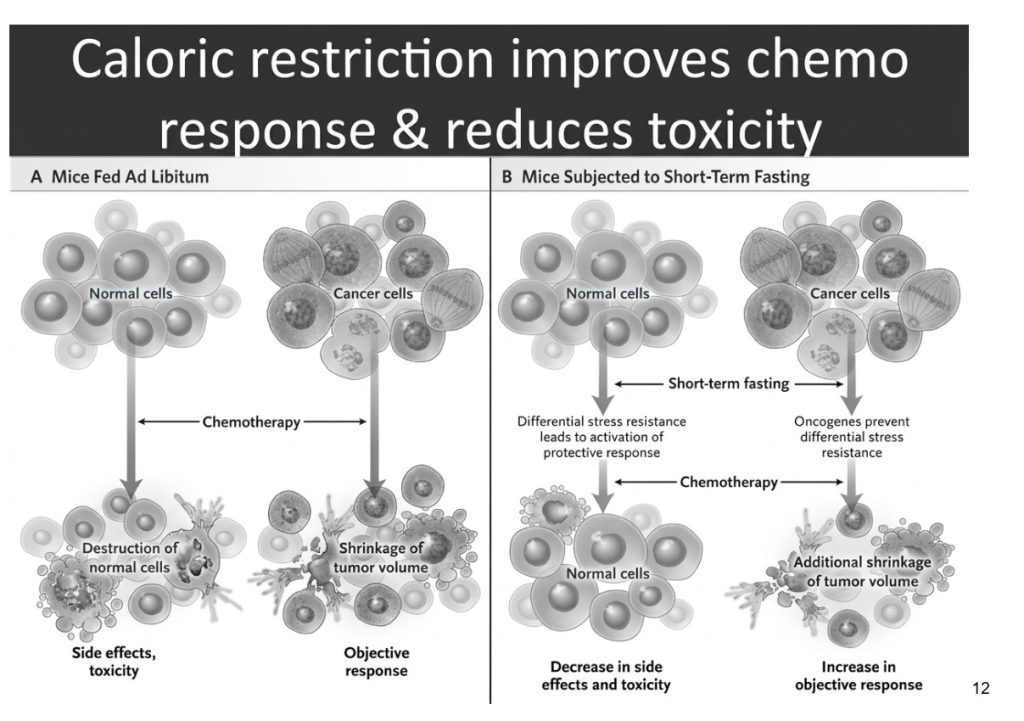
The key to understanding how fasting enhances chemotherapy lies in a concept called “differential stress resistance”—a term coined by researchers at the University of Southern California led by Dr. Valter Longo.3 The principle is elegantly simple: when you deprive cells of nutrients, normal healthy cells respond by entering a protective state, while cancer cells cannot.
Think of it this way: imagine two houses facing an incoming storm. The first house (your normal cells) has a sophisticated early warning system. When sensors detect the storm approaching, shutters automatically close, the structure reinforces itself, and everything valuable moves to a protected vault. The second house (cancer cells) has disabled its warning system because it interferes with the house’s aggressive expansion project. When the storm hits, the first house weathers it beautifully while the second sustains massive damage.
At the cellular level, here’s what happens: When you fast or severely restrict calories, normal cells receive signals that nutrients are scarce. They respond by downregulating growth pathways, entering a maintenance mode, and upregulating stress resistance genes. They essentially batten down the hatches. This protective response is ancient and conserved across species—from yeast to humans—because it’s been essential for survival during periods of food scarcity throughout evolutionary history.4
Cancer cells, however, have lost this ability. Their oncogenes—the mutated genes driving their malignant behavior—keep growth pathways locked in the “on” position. They’re metabolically inflexible, unable to shift into protective mode even when nutrients disappear. As Dr. Longo’s research demonstrated, when you expose fasted normal cells and cancer cells to chemotherapy, the normal cells survive while cancer cells die at higher rates. The chemotherapy becomes more selective—exactly what we’ve been trying to achieve with targeted therapies, but through a completely different mechanism.
The research validating this concept is compelling. In laboratory studies, Lee and colleagues showed that restricting glucose and growth factors for just 24 hours before and after treatment with doxorubicin and cyclophosphamide made 15 out of 17 different cancer cell lines more sensitive to these drugs.5 In animal models, mice that fasted for 48-60 hours before chemotherapy showed the same tumor shrinkage as fed mice, but with dramatically reduced toxicity to healthy tissues. Even more remarkably, the combination of fasting plus chemotherapy was more effective than either intervention alone, extending survival in models of melanoma, glioma, and breast cancer.6
How It Works: The Metabolic Difference
To understand why fasting creates this differential effect, we need to look at the metabolic signals that govern cell behavior—particularly insulin, insulin-like growth factor 1 (IGF-1), and glucose.
When you eat normally, especially foods containing carbohydrates and proteins, your body releases insulin to help cells absorb glucose and amino acids. Insulin and IGF-1 are powerful growth signals. They tell cells: “Nutrients are abundant. Grow, divide, reproduce.” For normal cells with intact regulatory systems, this is fine—they grow when appropriate and stop when they receive signals to do so.
Cancer cells, however, are addicted to these growth signals. Many tumors have upregulated receptors for insulin and IGF-1, and these pathways are often hyperactivated by oncogenic mutations.[6] These growth factors don’t just feed cancer cells—they also activate survival pathways that help tumors resist chemotherapy. High insulin and IGF-1 levels can activate the PI3K/Akt/mTOR pathway, which promotes cell survival and inhibits apoptosis (programmed cell death). Essentially, these growth factors throw cancer cells a lifeline when chemotherapy tries to kill them.
When you fast, insulin and IGF-1 levels drop dramatically—by 50-70% or more depending on the duration and degree of caloric restriction.7 Glucose levels also decline. For normal cells, this triggers the protective response described earlier: they enter maintenance mode, reduce their metabolic rate, and activate stress resistance pathways mediated by genes like SIRT1 and FOXO. They become resilient.
Cancer cells, lacking this metabolic flexibility, find themselves in a crisis. The growth signals they depend on have vanished. Their hyperactive growth pathways are now a liability, consuming resources that aren’t being replenished. When chemotherapy arrives—drugs that work primarily by inducing oxidative stress and DNA damage—cancer cells are metabolically vulnerable and unable to mount effective resistance. Meanwhile, normal cells in their protected state can better withstand the same chemotherapy-induced stress.
This isn’t starvation weakening the body. It’s strategic metabolic manipulation that exploits a fundamental difference between healthy and malignant cells.
Clinical Evidence: From Laboratory to Patients
The preclinical evidence was compelling enough to warrant human trials, and the results have been striking across multiple cancer types.
Ovarian Cancer: Enhanced Response and Survival
In a phase 2 randomized trial involving 36 patients with stage III-IV high-grade ovarian cancer, researchers compared two groups: one that fasted for 36 hours before chemotherapy and 24 hours after (consuming only vegetable juices providing approximately 200 calories per day), and a control group that ate normally.8 The fasting protocol was repeated with each chemotherapy cycle.
The results were remarkable. The fasting group showed substantially stronger pathologic responses—meaning more complete tumor destruction visible under the microscope. Even more importantly, progression-free survival was significantly longer in the fasting group. These weren’t marginal improvements; they were clinically meaningful differences in outcomes that matter most to patients.
The mechanism appears to involve the reduction in insulin and IGF-1 mentioned earlier. By removing these growth-promoting factors during the critical window when chemotherapy is administered, the treatment becomes more effective at eliminating cancer cells while they’re metabolically vulnerable.
Breast Cancer: Quality of Life Transformation
Perhaps the most impressive patient-centered evidence comes from a randomized trial of 106 women with early-stage breast cancer receiving standard chemotherapy regimens (adriamycin or epirubicin followed by taxanes). Patients were randomized to either short-term fasting (approximately 200 calories per day via vegetable juices and broths for 60-72 hours around each chemotherapy cycle) or a plant-based diet control group.
Quality of life was assessed using the validated FACT-G (Functional Assessment of Cancer Therapy-General) scale at baseline, after each of four chemotherapy cycles, and at follow-up. At baseline, both groups had similar scores. But by day 7 after the first cycle, the fasting group showed significantly better quality of life scores (78.3 vs. 69.5 for the control group). This advantage didn’t just persist—it accumulated across all four cycles.
By the fourth cycle, the difference was both statistically significant and clinically meaningful. The fasting group maintained quality of life across physical, emotional, social, and functional domains, while the control group experienced the expected decline that typically accompanies chemotherapy.
But the most striking finding involved fatigue—one of the most debilitating and persistent side effects of chemotherapy. Using the FACIT-Fatigue scale, researchers found that short-term fasting essentially prevented the development of chemotherapy-induced fatigue. The control group developed significant fatigue by cycle 4, as expected. The fasting group remained in the normal range with no clinically significant fatigue.9
Think about what this means for patients: the ability to continue working, caring for family, maintaining social connections, and preserving the activities that make life meaningful—all while receiving full-dose chemotherapy.
Colorectal Cancer: Eliminating Toxicity While Preserving Efficacy
Irinotecan is a highly effective chemotherapy drug for colorectal cancer, but it has a narrow therapeutic window—meaning the difference between an effective dose and a toxic dose is small. Side effects including severe diarrhea, weight loss, reduced activity, and dangerous drops in white blood cell counts often limit its use.10
Researchers using a mouse model of spontaneous intestinal tumors tested whether a 3-day fast before high-dose irinotecan could protect against toxicity while maintaining anti-tumor effects.11 The results were unequivocal: fasting completely eliminated the severe toxicity seen in fed mice—no weight loss, no diarrhea, no activity reduction, no leukopenia. Yet tumor size reduction was equivalent in both groups (2.4 mm reduction in fasted mice vs. 3.0 mm in controls receiving lower, less toxic doses).
Detailed analysis revealed that fasting reduced cell proliferation in normal tissues (protecting them from the drug’s effects on rapidly dividing cells), decreased blood vessel formation in tumors, and increased cellular senescence in cancer cells—all beneficial anti-tumor effects. The fasting didn’t compromise efficacy; it selectively protected healthy tissues while allowing full anti-tumor activity.
This study suggests that fasting could allow oncologists to use higher, more effective doses of chemotherapy drugs that are currently limited by toxicity—potentially improving cure rates without increasing side effects.
Practical Implementation
Based on this research and decades of clinical experience working with cancer patients, I’ve developed a specific protocol that makes fasting around chemotherapy both practical and nourishing. This isn’t about deprivation—it’s about strategic nutritional support timed to optimize your body’s response to treatment.
The Medicinal Smoothie (24-48 Hours Before Chemotherapy)
Beginning 24-48 hours before your scheduled chemotherapy, I recommend transitioning to a nutrient-dense medicinal smoothie that provides approximately 200-300 calories while delivering concentrated phytonutrients, antioxidants, and compounds that support cellular protection.
The goal is caloric restriction sufficient to trigger the protective metabolic response while providing targeted nutritional support. You’re not starving your body—you’re giving it specific tools while removing the growth signals that protect cancer cells.
Light Eating Strategy Around Chemotherapy
On the day of chemotherapy and the day after, continue with very light eating: primarily vegetable-based broths, herbal teas, and if needed, small amounts of easily digestible foods like steamed vegetables or small portions of the medicinal smoothie. Total caloric intake should remain around 200-400 calories per day during this 48-72 hour window.
The timing is critical. You want insulin and IGF-1 levels low when chemotherapy is administered and during the immediate period when the drugs are most active in your system. This is when cancer cells are most vulnerable and when protecting your healthy cells matters most.
Immune-Enhancing Bone Marrow Soup (Day After Chemotherapy)
Beginning the day after chemotherapy, I recommend introducing my immune-enhancing bone marrow soup. This nutrient-dense broth provides:
The soup serves multiple purposes: it’s easy to digest when appetite is low, it provides building blocks for immune cell production (critical as chemotherapy suppresses bone marrow), and it begins the transition back to normal eating while continuing to support your body’s recovery.
Gradual Refeeding
Over the next 24-48 hours, gradually increase food intake, focusing on whole, plant-rich foods with adequate protein to support tissue repair and immune recovery. The refeeding phase is as important as the fasting phase—you want to rebuild strength and support your body’s natural healing processes.
Individualization
This protocol should be tailored to individual needs, cancer type, chemotherapy regimen, nutritional status, and overall health. Some patients may need modifications based on their specific circumstances. This is why working with a qualified healthcare practitioner experienced in integrative oncology is essential.
What the Research Shows: Measurable Benefits
When we look across the clinical trials and preclinical studies, several consistent benefits emerge:
Improved Quality of Life: Using validated assessment tools, multiple studies show that patients who fast around chemotherapy maintain significantly better quality of life scores across physical, emotional, social, and functional domains compared to those who eat normally.2 These aren’t subjective impressions—they’re measurable differences in validated instruments.
Prevention of Fatigue: Perhaps most remarkably, short-term fasting appears to prevent the development of chemotherapy-induced fatigue entirely.2 In the breast cancer trial, fasted patients remained in the normal fatigue range throughout treatment while control patients developed the expected significant fatigue. For patients, this could mean the difference between maintaining normal activities and being bedridden.
Enhanced Tumor Response: The ovarian cancer trial demonstrated better pathologic responses and longer progression-free survival in fasting patients.13 Animal studies consistently show that fasting plus chemotherapy is more effective than chemotherapy alone at shrinking tumors and extending survival.14,15
Reduced Toxicity Without Compromising Efficacy: Across multiple studies, fasting protects normal tissues from chemotherapy damage—reducing side effects like nausea, immune suppression, and organ toxicity—while maintaining or even enhancing anti-tumor effects.9 This is the holy grail of cancer treatment: a wider therapeutic window.
Potential for Dose Intensification: By protecting healthy tissues, fasting may allow oncologists to use higher or more frequent doses of chemotherapy drugs currently limited by toxicity, potentially improving cure rates.16
Metabolic Improvements: Fasting reduces insulin, IGF-1, and glucose levels—metabolic changes that not only enhance chemotherapy but may also reduce cancer risk and recurrence through effects on the tumor microenvironment.17,18
Safety and Who This is For
Short-term fasting around chemotherapy is remarkably safe for appropriate patients, but it’s not for everyone. The research has established clear parameters:
Appropriate Candidates: Patients who are not malnourished, who have adequate body weight and nutritional reserves, and who are receiving chemotherapy with curative or life-extending intent are generally good candidates. Most patients in the clinical trials tolerated the fasting protocols well with minimal adverse effects.
Who Should Not Fast: Patients who are already malnourished, underweight (BMI < 18.5), or experiencing cancer cachexia should not fast. Fasting is also not appropriate for patients with certain metabolic conditions, eating disorders, or those whose cancer treatment goals are purely palliative comfort care. Children and adolescents require special consideration.
Fasting around chemotherapy should always be done under medical supervision. Blood sugar monitoring may be appropriate for some patients, especially those with diabetes or metabolic conditions.
Hydration: Adequate hydration is essential during fasting periods. Water, herbal teas, and vegetable broths help maintain fluid balance and support the body’s detoxification processes.
Listening to Your Body: While the research shows fasting is generally well-tolerated, individual responses vary. Some patients experience mild lightheadedness, headaches, or irritability during the first fasting cycle as their body adapts. These symptoms typically resolve with subsequent cycles. However, severe symptoms warrant medical evaluation and potential protocol modification.
Action Steps: Implementing This Strategy
If you’re interested in incorporating fasting around your chemotherapy treatments, here’s how to proceed:
Discuss with Your Oncology Team: Share the research with your oncologist and get their support. Most oncologists, when presented with the clinical evidence, are open to this approach for appropriate patients.
Work with a Mederi-Trained Practitioner: Partner with a healthcare provider experienced in integrative oncology who can design a personalized protocol based on your specific cancer type, treatment regimen, nutritional status, and health history.
Start with One Cycle: Consider trying the fasting protocol with one chemotherapy cycle to assess tolerability before committing to the full treatment course.
Prepare Your Kitchen: Stock up on ingredients for medicinal smoothies, bone marrow soup, and herbal teas before your treatment cycle begins.
Plan Your Schedule: Arrange your work and personal commitments to allow for rest during the fasting period, especially during your first cycle as your body adapts.
Track Your Experience: Keep a journal noting energy levels, side effects, and quality of life indicators. This information helps refine your protocol and provides valuable feedback to your healthcare team.
Build Your Support System: Let family and friends know about your approach so they can provide appropriate support and avoid well-meaning but counterproductive encouragement to “keep your strength up” by eating during fasting periods.
If you are underweight, you can modify this and eat a bit, but mostly I prefer to try to make up the difference by eating more after these couple of days.
Conclusion: Biology as Ally
For too long, we’ve accepted chemotherapy’s collateral damage as inevitable—the price that must be paid for a chance at cure or extended survival. We’ve told patients to “stay strong” and “push through” debilitating side effects, offering supportive medications that help at the margins but don’t address the fundamental problem.
The research on fasting and chemotherapy offers a different paradigm. Instead of accepting non-selectivity as inherent to cancer treatment, we can exploit the metabolic differences between healthy and malignant cells. Instead of choosing between efficacy and tolerability, we can potentially enhance both. Instead of patients suffering through treatment, we can support their quality of life while optimizing outcomes.
This isn’t about adding another burden to patients already facing the challenges of cancer treatment. It’s about working with your body’s ancient, conserved protective mechanisms—mechanisms that have been refined over millions of years of evolution. When implemented thoughtfully, with proper medical supervision and individualized to each patient’s needs, short-term fasting around chemotherapy represents a practical, accessible, and evidence-based strategy that puts biology on your side.
The medicinal smoothie, the immune-enhancing bone marrow soup, the strategic timing—these aren’t arbitrary recommendations. They’re applications of solid science translated into practical protocols that real patients can implement. They represent a bridge between cutting-edge research and clinical practice, between the laboratory and the kitchen, between understanding mechanisms and improving lives.
As more research emerges and more oncologists become aware of this approach, I believe fasting protocols will become standard supportive care for appropriate cancer patients receiving chemotherapy. Until then, patients and practitioners willing to engage with the evidence can begin implementing these strategies now, potentially transforming the chemotherapy experience from an ordeal to be endured into a treatment that can be tolerated while maintaining the activities and relationships that make life worth living.
Your body has remarkable wisdom. Sometimes the most powerful intervention is simply creating the conditions that allow that wisdom to express itself.
Optimizing Chemotherapy Tolerance Through Strategic Hydration
One of the most effective yet underutilized strategies for improving chemotherapy tolerability is optimal hydration. When patients are well-hydrated, they often experience fewer side effects, better drug clearance, and improved overall comfort during treatment. I routinely recommend that patients request extra saline infusion before receiving their chemotherapy—this simple step can make a significant difference in how they feel during and after treatment.
To complement this medical hydration protocol, I’ve developed a therapeutic beverage called Schi-Zam that patients can prepare ahead of time, keep chilled, and sip throughout their infusion and in the hours following chemotherapy. This drink combines adaptogenic herbs, electrolyte-rich coconut water, and carefully selected botanicals to support the body’s stress response, maintain hydration, and provide gentle immune support during treatment.
The Schi-Zam Protocol
Schi-Zam serves three primary purposes:
Chemotherapy support: To be consumed before, during, and after infusions as part of a comprehensive hydration strategy
Daily energy and endurance: As a nourishing beverage for anyone seeking sustained vitality
Athletic performance: For those requiring enhanced stamina and recovery
Understanding the Therapeutic Herb Blend
The foundation of Schi-Zam is a synergistic blend of 13 organic herbs, each chosen for specific properties that support patients through the challenges of chemotherapy:
Schisandra berries: A powerful adaptogen that helps the body manage stress and supports liver function during drug metabolism
Lemon grass: Provides gentle digestive support and a refreshing flavor
Green tea: Offers antioxidant protection without excessive caffeine
Rooibos Chai blend: Caffeine-free, mineral-rich, with anti-inflammatory properties
Red clover blossoms: Traditionally used for gentle detoxification support
Hibiscus: Rich in vitamin C and anthocyanins; supports cardiovascular health
Rose flowers: Calming and anti-inflammatory; aids emotional well-being
Nettles: Exceptionally mineral-dense; supports blood building
Licorice: Soothes digestive tract and supports adrenal function
Lycium berries (Goji): Immune-supportive and nourishing to blood
Orange peel: Aids digestion and provides uplifting aromatics
Ginger: Reduces nausea and supports circulation
Lo han (Monk fruit): Provides natural sweetness without sugar
This carefully balanced formulation works synergistically—the herbs support one another’s actions while addressing multiple systems that need support during chemotherapy: immune function, liver detoxification, digestive comfort, stress response, and cellular protection.
How to Prepare Schi-Zam (32 oz batch)
Ingredients:
1 Tbsp Power Adapt by Natura (adaptogenic supplement)
16 oz coconut water (I recommend Taste Nirvana brand for its electrolyte content and clean taste)
16 oz herbal tea infusion (see preparation below)
Tea Blend Preparation:
The organic herbal tea blend is prepared with equal parts of all thirteen herbs listed above. This blend is available pre-mixed from Mederi Center, or you can prepare your own by combining equal amounts of each dried herb.
To brew the tea infusion:
Bring water to a boil
Measure your tea blend and place in a heat-safe container
Pour 16 oz of boiling water over the herbs
Steep for 6-8 minutes (no longer, to avoid bitterness)
Strain thoroughly and allow to cool completely
Final Assembly:
Combine the cooled tea infusion with the coconut water
Add 1 Tbsp Power Adapt and stir or shake well until fully dissolved
Refrigerate until cold
When and How to Use Schi-Zam
For chemotherapy patients:
Prepare your batch the day before or morning of your infusion
Bring it with you to your appointment in a sealed container with ice
Request extra saline hydration from your oncology team before treatment begins
Sip Schi-Zam slowly throughout your infusion
Continue drinking it in the hours and days following treatment
Many patients find that 32 oz lasts them through infusion day and the following morning
For general energy and endurance:
Consume 8-16 oz in the morning or before activities requiring sustained energy
The adaptogens work cumulatively, so regular use provides the most benefit
For athletes:
Drink 8-16 oz 30-60 minutes before training or competition
Use as a recovery beverage post-workout for its electrolytes and anti-inflammatory herbs
Storage: Schi-Zam keeps well refrigerated for up to 48 hours. The herbs may settle; simply shake before drinking. Mix all ingredients together and serve cold.
References
1. Laviano A, Seelaender M, Sanchez-Lara K, et al. Beyond anorexia-cachexia: Nutrition and modulation of cancer patients’ metabolism. Clin Nutr. 2015;34(6):1024-1030.
2. de Groot S, Pijl H, van der Hoeven JJM, Kroep JR. Effects of short-term fasting on cancer treatment. J Exp Clin Cancer Res. 2019;38(1):209.
3. Safdie FM, Dorff T, Quinn D, Fontana L, Wei M, Lee C, Cohen P, Longo VD. Fasting and cancer treatment in humans: A case series report. Aging (Albany NY). 2009 Dec 31;1(12):988-1007. doi: 10.18632/aging.100114. PMID: 20157582; PMCID: PMC2815756.
4. Longo VD, Mattson MP. Fasting: molecular mechanisms and clinical applications. Cell Metab. 2014;19(2):181-192.
5. Lee C, Raffaghello L, Brandhorst S, et al. Fasting cycles retard growth of tumors and sensitize a range of cancer cell types to chemotherapy. Sci Transl Med. 2012;4(124):124ra27.
6. Raffaghello L, Lee C, Safdie FM, et al. Starvation-dependent differential stress resistance protects normal but not cancer cells against high-dose chemotherapy. Proc Natl Acad Sci USA. 2008;105(24):8215-8220.
7. Brandhorst S, Choi IY, Wei M, et al. A periodic diet that mimics fasting promotes multi-system regeneration, enhanced cognitive performance, and healthspan. Cell Metab. 2015;22(1):86-99.
8. Marchetti C, et al. Fasting before and after chemotherapy in patients with ovarian cancer: A randomized phase 2 trial. Cancer Network DIRECT Trial. Presented at ESMO 2019.
9. de Groot S, Pijl H, van der Hoeven JJM, Kroep JR. Effects of short-term fasting on cancer treatment. J Exp Clin Cancer Res. 2019;38(1):209.
10. Marchetti C, et al. Fasting before and after chemotherapy in patients with ovarian cancer: A randomized phase 2 trial. Cancer Network DIRECT Trial. Presented at ESMO 2019.
11. Huisman SA, Bijman-Lagcher W, IJzermans JN, Smits R, de Bruin RW. Fasting protects against the side effects of irinotecan but preserves its anti-tumor effect in Apc15lox mutant mice. Cell Cycle. 2015;14(14):2333-2339.
12. Laviano A, Rossi Fanelli F. Toxicity in chemotherapy–when less is more. N Engl J Med. 2012 Jun 14;366(24):2319-20. doi: 10.1056/NEJMcibr1202395. PMID: 22694004.
13. Marchetti C, et al. Fasting before and after chemotherapy in patients with ovarian cancer: A randomized phase 2 trial. Cancer Network DIRECT Trial. Presented at ESMO 2019.
14. Zhang J, Deng Y, Khoo BL. Fasting to enhance Cancer treatment in models: the next steps. J Biomed Sci. 2020 May 5;27(1):58. doi: 10.1186/s12929-020-00651-0. PMID: 32370764; PMCID: PMC7201989.
15. de Gruil N, Pijl H, van der Burg SH, Kroep JR. Short-Term Fasting Synergizes with Solid Cancer Therapy by Boosting Antitumor Immunity. Cancers (Basel). 2022 Mar 9;14(6):1390. doi: 10.3390/cancers14061390. PMID: 35326541; PMCID: PMC8946179.
16. Huisman SA, Bijman-Lagcher W, IJzermans JN, Smits R, de Bruin RW. Fasting protects against the side effects of irinotecan but preserves its anti-tumor effect in Apc15lox mutant mice. Cell Cycle. 2015;14(14):2333-2339.
17. Brandhorst S, Choi IY, Wei M, et al. A periodic diet that mimics fasting promotes multi-system regeneration, enhanced cognitive performance, and healthspan. Cell Metab. 2015;22(1):86-99.
18. Buono R, Longo VD. Starvation, stress resistance, and cancer. Trends Endocrinol Metab. 2018;29(4):271-280.








0 Comments