

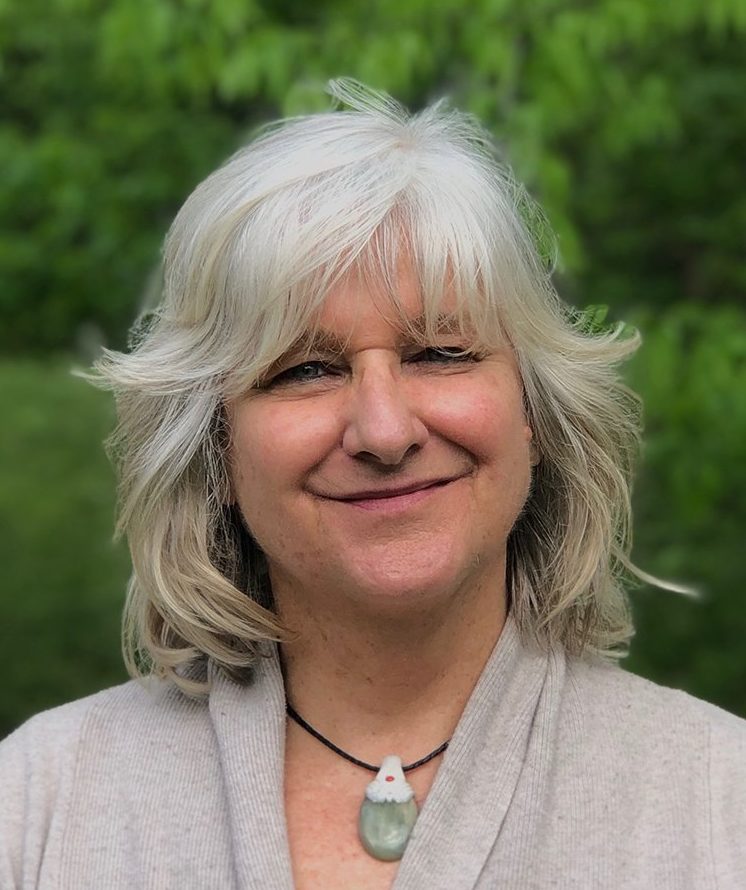
by Kat Maier
This excerpt is from Kat Maier’s new book Energetic Herbalism: A Guide to Sacred Plant Traditions Integrating Elements of Vitalism, Ayurveda, and Chinese Medicine (Chelsea Green Publishing, November 2021) and is reprinted with permission from the publisher.
I can still picture her. My client was hovering on the edge of her seat, face flushed and foot tapping incessantly. My efforts to calm this client had seemed only to aggravate her. I excused myself and went to my apothecary to recruit help. Returning, I asked my client, I’ll call her Maria, if she felt comfortable taking an herb so we could better assess her needs. She agreed, and I gave her 10 drops of motherwort (Leonurus cardiaca) tincture. After a few minutes, Maria visibly relaxed. She sat back, loosening her jaw a bit, and made a joke about how anxious she was and asked, could she have another sip? After the second sip, she shifted position, planted both feet on the floor, and then tears welled up in her eyes. “I knew I had come to the right place,” she said.
That magic elixir, motherwort, is a common garden plant. In fact, as a member of the mint family, it can be a bit intrusive in the garden. The profound effect Maria experienced was not elicited by some rare and exotic plant from the Amazon or Tibet. It was a common garden plant, motherwort, that allowed this client to experience profound changes. Maria presented with heat and tension that had been present for so long she was barely aware of her fidgeting and spastic movements. My client had recounted her many visits to practitioners, which brought her little to no relief. A few symptoms had improved at times, but truth be told, she was getting worse. Maria described her cracking joints and stiffness, cold hands and feet, sluggish bowels, and dry skin and eyes. Her most distressing symptom, she said, was the insomnia. And by the way, what was that herb that she had just taken, and could she have another sip?
The energy of motherwort directly affected the energy of Maria. As a bitter herb, motherwort is cooling, so it chilled the heat from her anxiety. As a bitter relaxant, motherwort allowed Maria to settle into herself with a little more ease. Cracking of the joints can signify dryness, and when tension relaxes for extended periods of time, fluids flow easier to lubricate tendons and bowels. Pretty magical that this wild and weedy plant could have such a profound effect on Maria’s energy, physical being, and even state of mind! Maria’s immediate ability to relax allowed her to self-correct and thereby better access her senses, emotions, and, ultimately, her true nature.
This is energetic herbalism. Its elegance lies in its simplicity and its sensuality: reading patterns of the person and matching the patterns to those found in plants. Maria’s pattern of long-term tension led to a pattern of dryness, which in turn possibly led to a pattern that energetic practitioners call wind, or internal, changing patterns. Obviously, treating the needs of clients—and even ourselves—is not always so simple and clear-cut. Yet I can say I have journeyed with a multitude of “Marias” to reach greater health through the lens of energetics.
Generally, energetics in herbalism relates the energetics of the plant (cooling, moving motherwort) to a current imbalance or condition (anxiety, tension), then lastly to the energetics of the person or constitution (sensitive, dry). The underlying foundation is the energetics of the spirit (unconditional support) of the plant and the sacred relationship an herbalist develops with the land and these sentient beings, the plants.
Honoring Roots of Energetic Models
The word energetic may conjure images of New Age crystals, and the term is sometimes misapplied to any and all new healing modalities. In truth, though, energetic herbalism is as old as the Earth herself. This mode of healing is based on the truth that the vital force of nature and the vital force of an individual human are one and the same. Indigenous cultures the world over call this force spirit in their native language. Ancient Greeks called this force vitality, the Chinese call it Qi (chi), Iroquois nation calls it Orenda, Ayurveda calls it Prana, West Africans call it Ashe.
The goal of energetic herbalism is to enhance our terrain, which is our inner landscape—our tissues, organs, vessels, and all the forces that are engaged to maintain our health. The aim is to create an environment where we optimize nutrition from food, breath from air, and joy from our surroundings so our vitality flows with the least hindrance. To be in the flow is the goal of these traditions.
In the late 1960s, chemist James Lovelock and microbiologist Lynn Margulis proposed the theory that the Earth is endowed with an ability to communicate across species in effort to provide homeostasis. The well-known Gaia hypothesis or Gaia theory states that the biota communicates with organic as well as inorganic material to ensure evolution as well as feedback systems for an elegant self-regulating balance to occur. This theory is named after the Mother Earth goddess from Greek mythology. Margulis and Lovelock described planet Earth as a self-regulating being who automatically adjusts the temperature, salinity of the ocean, and atmospheric content in response to changes in the ecosystem. In this respect, the living system of Earth is identical to the workings of our bodies. We are constantly regulating temperature, fluids, and the tone of organs and tissues. Vitalism is a teaching that states there is an invisible force governing our health, lives, and planet that is unseen and unmeasurable. This force has the intelligence to be not only self-directing but brilliantly self-correcting.
Of course, this is what Indigenous teachings have been saying for millennia in describing the sacred connections of all forms of Nature. Amazonian tribes still work with plants according to the stories and dreams that have been sung through ancestral wisdom keepers, as do many First Nation peoples. Creation stories can seem incomprehensible to Westerners, yet they provide meaningful direction and patterns for peoples who experience Nature and time in a sacred and nonlinear fashion. Vitalist traditions, Ayurveda, Traditional Chinese Medicine, Unani Tibb, and North American Eclectic medicine represent the organization of elements of Nature. These systems describe the patterns of energy present in humans as well as in the plants themselves. Throughout history, there have been translations and modifications of energetic models, whether from within a culture or from outside it, in attempts to appeal to the politics of the day or to be more accessible to other cultures. For example, folkloric, Taoist, shamanic traditions in China were being practiced for centuries before the beginning of the beautiful cosmology of Classical Chinese Medicine. The Classical model then was adapted after the Cultural Revolution of the 1960s, which attempted to modernize and standardize this system, thus birthing Traditional Chinese Medicine, or TCM. This is the nature of systems; there is adaptation and conformity, but still, bodies of knowledge are preserved that can be shared through the ages.
Reading Patterns
Energetic herbalism is a framework that matches the pattern or spirit (warming, cooling, moving, sedating) of an herb to that of the imbalance (tension, stagnation, dryness) in the body in an effort to gently nudge the body back into balance via the path of least resistance. This is accomplished by removing impediments to the body’s natural state of relaxation. A relaxed person is a highly functioning one because all systems are able to communicate and support each other with optimum efficiency and spirit. As mechanical as that may sound, the less resistance there is in our beings, whether mentally, physically, or spiritually, the brighter our life force and spirit will shine.
My training as a practitioner in allopathic medicine gave me an awe of the articulation of our bodies through the language of biomedicine. In practice, though, I was allotted only fifteen minutes per patient, and I realized that such a rigid system could not allow for the grandeur of medicine/healing to play out. It would be impossible to treat a person in a truly holistic sense in such a brief encounter. I also found myself wondering why preventable diseases such as diabetes and hypertension were on the rise at exponential rates. These diseases have become the dreaded comorbidity factors in this time of pandemics. In my training as a physician’s assistant, I seemed to spend all my time chasing numbers and trying to control symptoms rather than restoring a person’s healthy terrain or ecology so that the numbers would take care of themselves.
Wide-angle vision is a technique I use to teach the art of pattern recognition. It involves allowing the gaze to transition from a hard focus to a softer, more expansive contemplation of a scene with the full range of peripheral vision. As you make this shift, your consciousness drops from sympathetic mode (fight or flight) and enters the parasympathetic world of sensing environs from a more holistic vantage point. The body relaxes and awareness is heightened because the analytical mind is put aside. Patterns emerge and sounds that were inaudible can be heard as you release the mental gyrations that were drowning out the present moment. Trackers, gardeners, hunters, wildcrafters, and those gifted with a natural acumen for high awareness live in this state of being in which many levels of the world can be perceived simultaneously.
This level of perceptiveness is critical in energetic medicine, where the goal is to treat the whole person and not just superficial symptoms. The mantra is to treat what you see, but this “seeing” must include all the senses, not just the eyes. We listen to the client’s history, feel their pulse, smell their scent, and observe (with the heart as well as the eyes) their movements and spirit.








0 Comments