
Acetaminophen (Paracetamol) and Neurodevelopment
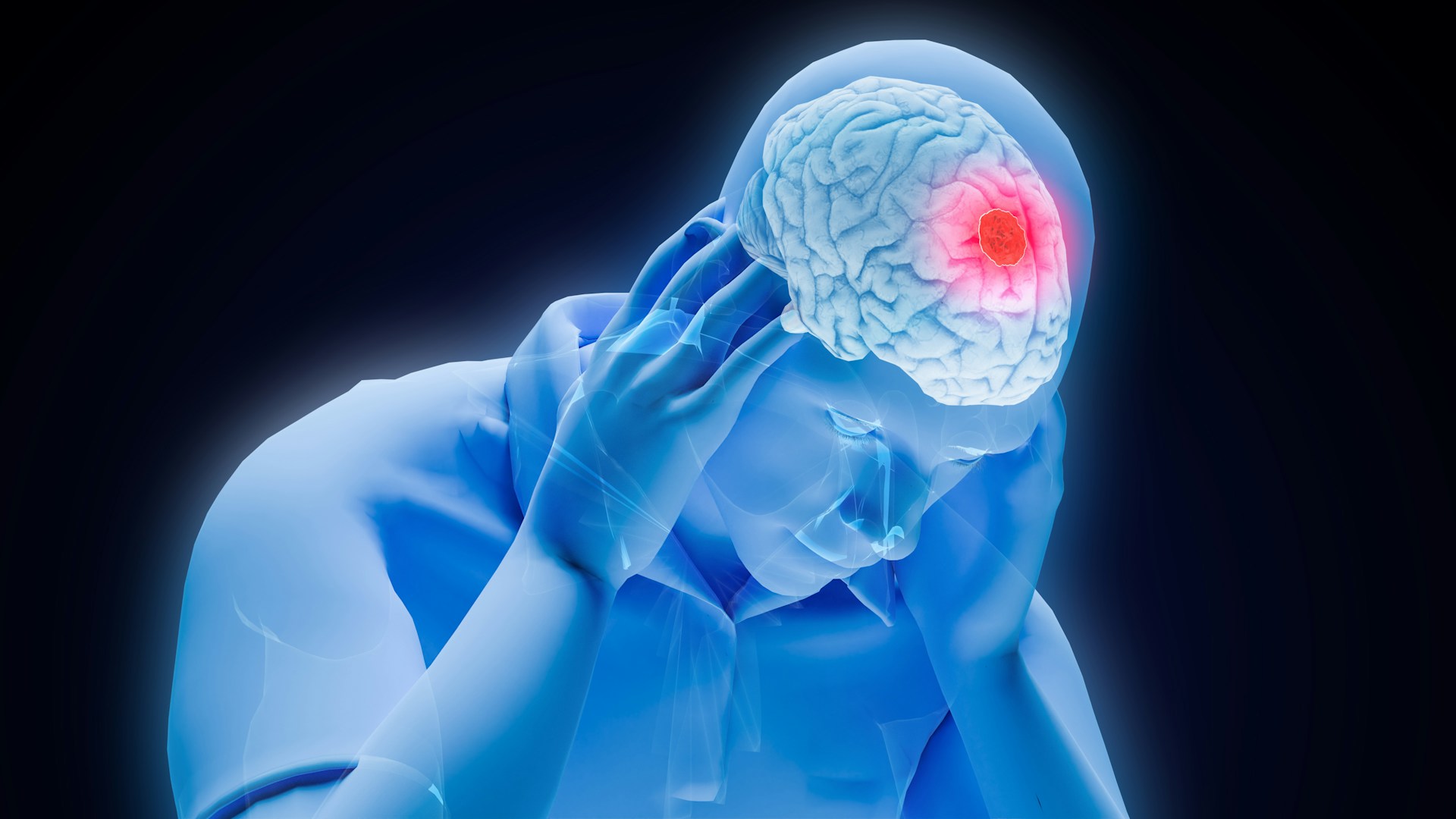
For over four decades, acetaminophen (paracetamol), a fever reducer and pain reliever used in Tylenol and many other over-the-counter products, has been promoted as safe for infants and children. Two recent reviews from senior author William Parker (Duke University; Durham, North Carolina) and colleagues tracked down early safety studies and reviewed more recent evidence that show this drug affects adults and children differently: “Paracetamol is known to cause liver damage in adults under conditions of oxidative stress or when used in excess, but increasing evidence from studies in humans and in laboratory animals indicates that the target organ for paracetamol toxicity during early development is the brain, not the liver.”
In the 2022 review, led by Jasmine Cendejas-Hernandez, the Duke researchers say a 2008 case-controlled study, led by Stephen T. Schultz, was the first to indicate acetaminophen’s adverse effect on neurodevelopment. Using an online parental survey, Schultz et al found that children with autistic disorder (n=83) were far more likely to have received acetaminophen after measles-mumps-rubella (MMR) vaccination than healthy control children (n=80). Ibuprofen use was not associated with autism. As Cendejas-Hernandez and colleagues found, this 2008 study is one of the rare few that looked at the drug’s effect on children’s neurodevelopment.
Cendejas-Hernandez et al conducted a systematic review with citation tracking. They searched PubMed for articles in English, published between 1974 and 2017, that made claims about acetaminophen being safe for children and found 218 studies, 103 of which were considered “sources of authority for the safety claim.” Fifty-two of the 103 gave experimental evidence to support the claim: “Although several of those 52 studies provided measures of liver function… none of the studies provided any assessment of neuropsychiatric function.” Moreover, the median follow-up time in these studies was 48 hours—far too short to observe neurological effects even if they were looking for them. The longest follow-up was one year and simply looked at re-admission for pediatric surgery.
At least 14 cohort analyses of acetaminophen use in pregnant women indicate that it adversely affects neurodevelopment in the fetus. As authors of the second Duke review article, led by Esha Patel, state: “Based on these studies, it can be concluded that prenatal exposure to paracetamol causes statistically significant risks of developmental delays, attention deficit hyperactivity disorder, and a subtype of autism spectrum disorder (ASD) associated with hyperkinetic behavior.” The effects on children after birth appear to be even greater.
In their 2022 narrative review of direct and indirect evidence, Patel et al point out that the body can convert a portion of the drug to a toxic metabolite called N-acetyl-p-benzoquinone imine (NAPQI), which can be neutralized if enough glutathione is present. “NAPQI reacts with a wide range of proteins, permanently damaging those proteins and resulting in toxicity to the associated cell.” Animal studies show that acetaminophen is “more deadly in young pups than it is in older animals.” What produces acetaminophen death in young animals has not been investigated, but “even at doses that are lethal, young pups suffer no statistically significant liver damage
.”Animal experiments have also shown that even a couple doses of acetaminophen given to young pups has “eliminated” their ability to learn how to run a maze and produces asocial behavior later in life. Interestingly, adult human studies have shown that acetaminophen “temporarily blunts social trust and awareness, emotional response to external stimuli and the ability to identify errors, indicating that the drug targets regions of the brain affected in patients with ASD.” Animal studies have also shown that male brains are more sensitive to the drug than female brains—which corresponds to the higher incidence of ASD in human males.
In addition to prenatal human and animal studies, Patel et al present “overwhelming circumstantial evidence for harm.” The researchers point out that ASD began to rise in the early 1980s when physicians began to recommend that parents use acetaminophen for their children instead of aspirin, which was associated with Reye syndrome. Direct-to-consumer advertising in the US, which began in the 1990s, further contributed to drug’s increased use—and a parallel rise in ASD. “Although it is well known that association does not indicate causation, it is also correct that causation cannot occur without association,” the authors write.
According to Cendejas-Hernandez et al, the American College of Obstetricians and Gynecologists (ACOG) has refused to caution against acetaminophen use during pregnancy: “’ACOG’s clinical guidance remains the same and physicians should not change clinical practice until definitive prospective research is done.’” The Duke researchers respond:
..it is difficult to rationalize the need for such a high level of certainty regarding a drug never demonstrated to be safe or life-saving, where judgment should presumably err on the side of caution and avoidance of harm….the drug would not meet current safety standards during preclinical testing due to adverse, long-term neurological effects in laboratory animals, and thus would never reach phase 1 testing under the current regulatory system.
Patel et al conclude: “The scientific community may disagree on how strong the evidence is. But there should be no disagreement that (a) the evidence is very concerning, (b) physicians and the public should be notified of the current evidence, and (c) the gravity of the issue demands rapid resolution.”
Cendejas-Hernandez J, et al. Paracetamol (acetaminophen) use in infants and children was never shown to be safe for neurodevelopment: a systematic review with citation tracking. European Journal of Pediatrics. 2022;181:1835-1857.
Patel E, et al. The safety of pediatric use of paracetamol (acetaminophen): a narrative review of direct and indirect evidence. Minerva Pediatrics. July 13, 2022.
Schultz ST, et al. Acetaminophen (paracetamol) use, measles-mumps-rubella vaccination, and autistic disorder: the results of a parent survey. Autism. 2008;12(3):293-307.
California Medical Board Sued
On July 29, 2022, Richard Jaffe, Esq., filed an amended complaint in federal court against the Medical Board of California on behalf of plastic surgeon Douglas MacKenzie, MD, and the not-for-profit organization Physicians for Informed Consent. The medical board opened a “misinformation” investigation against Dr. MacKenzie in December 2021, because of covid-related comments he made in a Zoom meeting of the Santa Barbara Unified School District four months earlier. During that meeting, he spoke out against over-testing, masking, and vaccine mandates for children and criticized the drive to reach “zero covid”: “…It’s time to realize, like some countries are, that SARS-CoV2 is endemic. We are not going to get to Zero Covid ever,” he said. At least two other California doctors have also been under investigation for “misinformation.”
The medical board closed its investigation against Dr. MacKenzie six days after Jaffe filed the original lawsuit—a move that would allow the Board to claim the lawsuit was moot. In the amended complaint, Jaffe argues that a statement by the Board’s president in the February 2022 minutes indicates that the Board intends to target physicians who “spread Covid misinformation.” As a result, Dr. MacKenzie, other unnamed doctors, and members of Physicians for Informed Consent (PIC) are under continuous threat of investigation, which has a “chilling” effect on free speech. As Jaffe writes: “PIC’s educational mission depends entirely upon protected speech by physicians and is directly thwarted by the Board’s unlawful conduct targeting that protected speech by physicians.”
California’s Assembly is considering a bill that would require the state medical boards to take action against any MD or DO who “disseminates misinformation or disinformation related to covid-19” (See “Shorts,” Townsend Letter. July 2022). The definitions of “misinformation” and “disinformation” are vague. Bill 2098 focuses on communication between doctors and patients, not public speech and has not passed into law (as of August 8, 2022).
The plaintiffs are asking the Court to order the Board to stop all “misinformation” investigations against physicians who engage in constitutionally protected public speech as well as damages and attorney’s fees. Jaffe writes:
There is nothing wrong with government agencies or established medical science changing their positions as new information is assimilated. In fact, it is a good thing. The problem, especially acute, in a fast-changing public health situation like Covid, is the governmental arrogance that physicians who challenge the accepted science are dishonest and need to be censored, sanctioned and reeducated for expressing their opinions in public. That is something the courts should not tolerate.
In his July 11, 2022, blog post, Rick Jaffe says this is a 100% community-funded lawsuit. If you want to support this effort to protect physicians’ free speech, please click on the “donate” link at https://rickjaffeesq.com/. Updates on the lawsuit are also posted at that site.
The Serotonin Theory of Depression
In a July 20, 2022, review article, European researchers report finding “no support for the hypothesis that depression is caused by lowered serotonin activity or concentrations.” The researchers conducted an ‘umbrella’ review of the most recent systematic reviews, meta-analyses, and database studies found in PubMed, EMBASE, and PsychINFO until December 2020. The quality of each study was rated independently by at least two of the researchers. Seventeen articles met their inclusion criteria. Only half of these studies “adequately accounted for risk of bias when interpreting the results of the review.”
The researchers sought reviews and studies that addressed the following areas related to the hypothesis.
Evidence of lower levels of serotonin and 5-HIAA in body fluids in depression. Two meta-analyses (totaling 12 different studies) found no association between 5-HIAA concentration in cerebrospinal fluid and depression. A third meta-analysis of three large observational cohort studies found lower 5-HT in plasma in postmenopausal women with depression, but it was not statistically significant. However, antidepressant use, independent of depression, was strongly associated with lower serotonin levels.
Serotonin receptor levels in people with depression. The authors explain, “…if depression is the result of reduced serotonin activity caused by abnormalities in the 5-HT1A receptor [inhibits the releases of serotonin pre-synaptically], people with depression would be expected to show increased activity of 5-HT1A receptors compared to those without.” The meta-analyses ‘suggested either no difference…between people with depression and controls, or a lower level of these inhibitory receptors…” Both meta-analyses included studies in which patients were taking or had recently taken antidepressants or other psychiatric medications.
Higher levels of the serotonin transporter protein (SERT) in people with depression would support the serotonin hypothesis. SERT transports serotonin out of the synapse, lowering its availability. Data from three “overlapping” meta-analyses “indicated possible reductions in SERT binding in some brain areas, although areas in which effects were detected were not consistent across the reviews.” Again, the 40 studies in these meta-analyses included people who were taking antidepressants. The European researchers comment that animal studies have shown that antidepressants reduce SERT.
Tryptophan depletion (which can lower serotonin) is believed to promote depression. Studies in which healthy volunteers or people with a history of depression were given amino acid drinks without tryptophan (as a way to reduce tryptophan levels) showed no effect on mood when compared to controls.
Higher levels of the SERT gene (5-HTTLPR), resulting in less synaptic serotonin, would be expected in people with depression. Two recent studies and a high-quality meta-analysis found no association between the SERT gene polymorphism and depression.
Moreover, two recent high-quality studies found no association between the SERT gene and stress and/or maltreatment in people with depression.
The researchers note that the less-than-ideal quality of the studies in the reviewed studies are a limitation: “Most of the included studies were rated as low quality on the AMSTAR-2, but the GRADEW approach suggested some findings were reasonably robust.” They conclude:
This review suggests that the huge research effort based on the serotonin hypothesis has not produced convincing evidence of a biochemical basis to depression. This is consistent with research on many other biological markers. We suggest it is time to acknowledge that the serotonin theory of depression is not empirically substantiated.
Moncrieff J, et al. The serotonin theory of depression: a systematic umbrella review of the evidence. Molecular Psychiatry. July 20, 2022.
One More Lawsuit
Association of American Physicians and Surgeons Education Foundation has filed a complaint against three certification boards: American Board of Internal Medicine (ABIM), American Board of Obstetrics & Gynecology (ABOG), and American Board of Family Medicine (ABFM). ABIM and ABFM have sent letters to doctors who have publicly spoken about alternatives to government-sanctioned covid measures. The letters threaten to suspend or revoke their board certification. Peter McCullough, MD, Pierre Kory, MD, and Paul Marik, MD—all of whom have advocated early covid treatment with repurposed drugs—are among the doctors who received letters from ABIM. According to the lawsuit, a AAPS member-doctor received a similar threatening letter from ABOG due to the doctor’s views on abortion.
The lawsuit, filed in the United States District Court for the Southern District of Texas, says that these certifying boards, which conduct written multiple-choice examinations in specific fields of medicine, have no authority to discipline doctors because of their public statements. The lawsuit states:
Although only official state medical boards have the proper authority to regulate the practice of medicine, certifications by the Board Defendants constitute a de facto essential credential for practicing in most hospitals and participating in most networks. By threatening to revoke board certification of physicians, the Board Defendants improperly chill speech by physicians without the political accountability of official state medical boards.
Lawsuit to Stop Retaliation by Medical Specialty Boards Filed by AAPS Educational Foundation. July 12, 2022. https://aapsonline.org/lawsuit-to-stop-retaliation-by-medical-specialty-boards-filed-by-aaps/.








0 Comments