
Bioregulatory Ophthalmology: Aa Paradigm Shift in Eye Health Care,
b Dr. Tatyana Bosh, MD
The healthy scientific paradigm promotes integration. … Systems biology provides a scientific paradigm for a personalised bioregulatory treatment.
Dr. Damir Shakambet
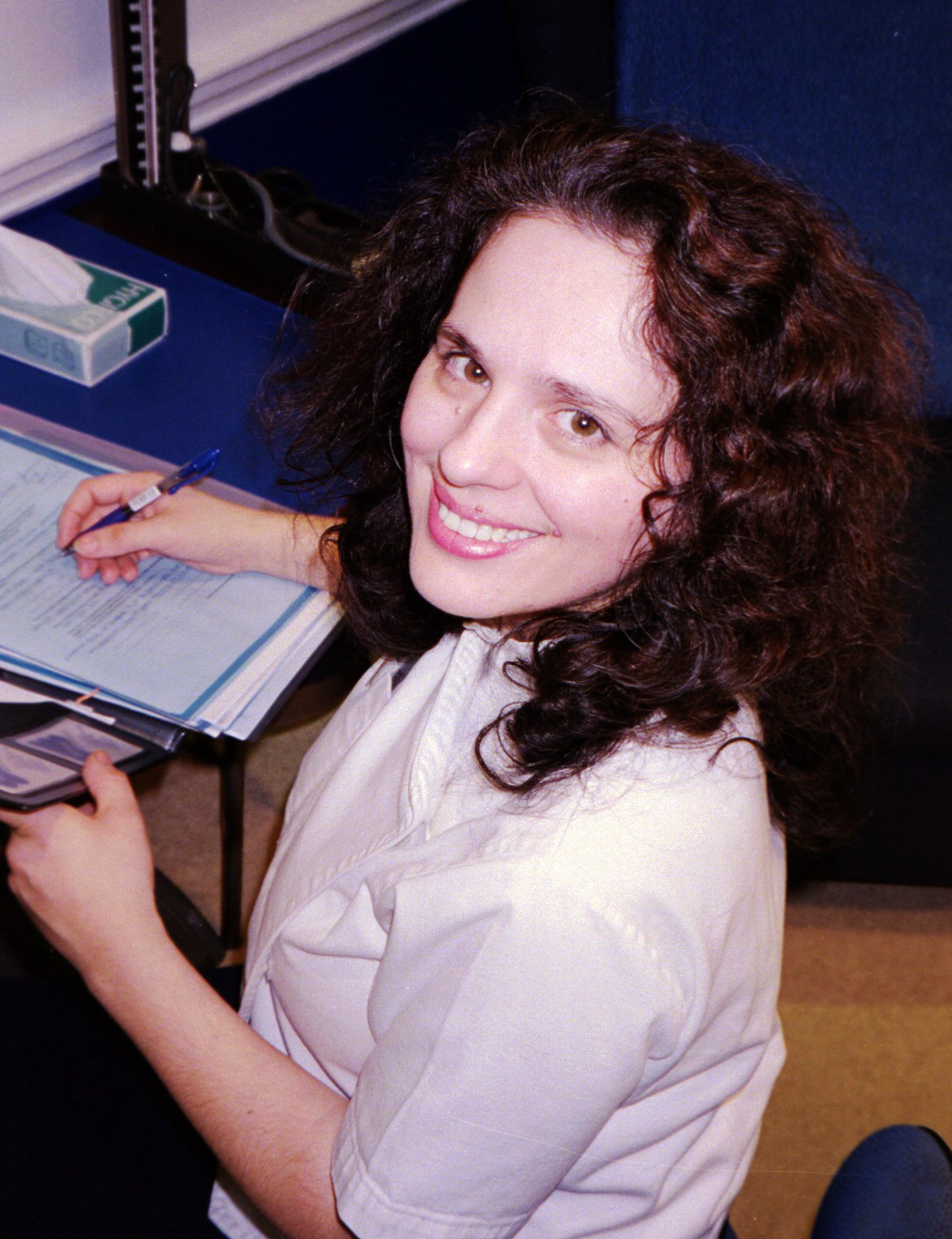
Illness-oriented conventional medicine is strongly challenged by increasing demands for a health-centered medical approach. To improve health, we need a new system of genuine health care that is therapeutically effective, scientifically sound, and financially viable. Bioregulatory medicine was born from this challenge. It was formulated in the mid-1980s by Dr. Damir Shakambet and me, two medical doctors frustrated by the limitations of allopathy, and aware of the need for a paradigm shift in conventional medicine.
While respecting the undoubted achievements of modern medicine, we started to explore, practice, integrate, and further research teachings of pioneering doctors and therapists, who had the courage to challenge the conventional medical dogmas of their time in search of unknown territories. The full-hearted contribution to the art of medicine from Hippocrates, Avicena, Paracelsus, and Drs. Constantine Hering, Samuel Hahnemann, Hans H. Reckeweg, Edward Bach, W. H. Schuessler, Milton H. Erickson, Erich Berne, Arthur Janov, Wilhelm Reich, Alexander Lowen, John Lilly, Rudolph Steiner, William H. Bates, Randolph Stone, William G. Sutherland, Felix Mann, Max Gerson, Michio Kushi, Ryke Geerd Hamer, and many other medical pioneers, remains breathtaking and continues to illuminate. Unfortunately and unjustly, their medical knowledge and wisdom are largely missing from the official medical curricula. bioregulatory medicine has solved this injustice. It offers integrated teachings of medical genius throughout the ages back to both, the general public and to mainstream medicine.
Bioregulatory Medicine
One does not discover new lands without consenting to lose sight of shore for a long time.
Andre Gide
Bioregulatory medicine integrates Eastern, Western, ancient, and contemporary medical methodologies under a unified scientific umbrella. It upholds Hippocratic medicine and aligns it with a new millennium understanding of quantum reality and system theory, while preserving holism, innovative spirit, and vitality – which have always characterized the art of medicine.
This new approach to public health incorporates modern diagnostic technology, but regarding preventative and curative therapeutic measures, it is more characterized by the drug-free, rather than the technopharmaceutical approach. Bioregulatory medicine offers solutions for detrimental consequences of contemporary civilization, namely stress, psychosomatization, pollution and toxicity, while fully matching the incidence of morbidity in modern society. Being an interdisciplinary medical approach that restores homeostasis primarily by means of natural therapeutic methodologies, bioregulatory medicine puts the healing power of nature and Hippocrates’s “vis medicatrix naturae” principle, back where it belongs – into clinical practice.2
Ophthalmology Bioregulated
In the science of ophthalmology, theories, often stated as facts, have served to obscure the truth and throttle investigation for more than a hundred years. … In making this statement I am well aware that I am contraverting the practically undisputed teaching of ophthalmological science for the better part of a century, but I have been driven to my conclusions by the facts, and so slowly that I am now surprised at my own hesitation.1
Dr. William H. Bates (1860–1931)
Ophthalmology is the medical specialty that diagnoses and treats diseases of the eye by means of using modern technology, pharmacology, and surgery.
Bioregulatory ophthalmology integrates the conventional ophthalmology with various natural CAM therapies, in order to improve ocular function and enhance the vision – without the use of corrective lenses, drugs, or invasive surgical procedures. Bioregulatory ophthalmology is simply based on bioregulation of ocular homeostatic mechanisms.
Since bioregulatory ophthalmology explores and teaches physiology and pathophysiology of the eyes also from the psychosomatic point of view, it offers the nonconventional methodology for treatment of visual disturbances. It introduces a new concept of extended etiology that stretches the conventional allopathic etiopathogenesis of the eye diseases further into the bioenergetic and psychological realms.3
Bioregulatory ophthalmology approaches any pathology of the eye as a single evolving process, where dis-ease is considered a verb, and not just a noun. It explains the visual entropy as the process that evolves through time and different clinical expressions; when it also evolves through different conventional diagnosis.4 No wonder it has been seen by conventional ophthalmologists only as a variety of often unrelated diseases, such as conjunctivitis, myopia, or macular degeneration – which are than treated in isolation, as if they are unrelated pathological entities.
Bioregulatory ophthalmology attempts to bioregulate this process of progressing “ocular lack of ease” in its totality. Early presomatic dysregulation of the eye (e.g., bioenergetic, nutritional, or structural weaknesses) are detected and bioregulated to prevent or treat edysfunctional stage of a dis-ease process – typically manifested as a refractory anomalies. Since uncorrected refractory errors further facilitate manifestation of inflammatory and degenerative conditions of the eye, restoration of the faulty structural constellation of the eyeball back to its normal spherical shape also plays an important role in prevention and treatment of acute and chronic diseases of the eye.
Unfortunately, since corrective eyewear and laser eye surgery have become a very profitable business, non-profit-making medical knowledge is generally kept outside the mainstream medical profession. To make sure that it remains so, bioregulatory methodologies capable of improving eyesight are frequently labelled as medical charlatanism that lacks true scientific references, and therefore being both therapeutically ineffective and medically irrelevant.
Luckily, “the proof is in the pudding”; the true value or quality of something can only be judged when it’s put to use. The fact that the results are what count is not only common sense, but it is also the most fundamental principle of Hippocratic medicine, otherwise known as the ex juvantibus principle. It comes from Latin meaning “from that which helps.” In medical contexts this refers to the process of making an inference about disease causation and treatment from an observed response of the disease to a treatment. Although the Hippocratic Oath is fundamentally based on the ex juvantibus principle, since monetary issues and politics become integral part of mainstream medicine, this principle has sadly been frequently overlooked in clinical practice. Therefore, bioregulatory ophthalmology not only teaches its students theoretical understanding of the eye’s functioning, but it also provides them with the practical benefits of improved eyesight.
Improving Vision with Bioregulatory Ophthalmology
There is no question that the eye care industry is exceptionally good at examining eyes and fitting them with eye glasses, contact lenses or performing laser surgery. Nearly 60 percent of the American population now relies on some form of vision correction, and a multi-billion dollar industry has sprung up to meet this need. What they cannot do is restore vision to normal. They don’t know the way and they don’t have the answers. To them it’s a genetic predisposition and there is nothing you can do about it. What we need is a new understanding, a new approach that works for everyone, a clear path to success and a theory that explains how do we reactivate Eyes.
John Bershak, 2008
Bioregulatory ophthalmology is a simple, noninvasive, and safe solution for vision improvement. It offers a process-oriented medical treatment, a personal journey through a multifaceted therapeutic process that aims to rehydrate, remineralize, detoxify, reenergize and restore faulty structural relationships related to the eyeballs and vision. Treatment methodology incorporates variety of CAM methodologies, such as Bates method for visual reeducation, cranial osteopathy, Traditional Chinese Medicine (TCM), nutrition, homeopathy, phytotherapy, psychotherapy, color therapy, iridology, kinesiology, psychosomatic correlation, bioenergetics, and creative visualization.
The bioregulatory protocol for improving eyesight aims to optimize the biological terrain of the eyes and visual pathway. Once the eyes’ optimal shape and function is restored, vision naturally improves. The regulation of both visual axes and the eccentric fixation is achieved primarily by realignment of the musculoconnective tissue of the eyeballs.5 The protocol may additionally reinforce the function of the retinal photoreceptors, release intracranial entrapment neuropathies of the 3rd, 4th and 6th cranial nerves, strengthen eye–mind correlation, and improve synchronization of the left and right brain hemispheres. It also may incorporates various nutritional, herbal, or homeopathic bioregulatory remedies, such as Heel’s Musculi oculi suis-Injeel, Guna-Trauma, or New Vistas Eye Sarcode and Eye Liquescence, to additionally facilitate and support structural and functional integrity of the visual apparatus.6
Bioregulatory eye treatment is always personalized according to the uniqueness of one’s bioindividuality. Although it is effective in prevention and treatment of somatic pathology of the eyes, such as glaucoma, cataract, macular degeneration, trauma-induced visual disturbance, or age-related presbyopia, bioregulatory ophthalmology is particularly effective in correction of refractive errors such as short-sightedness (myopia) and long-sightedness.
Bioregulatory Ophthalmology and Psychological Self-Empowerment
The eyes are the windows of the soul.
Eyesight is our most important sense. Through it we gather much of our knowledge of the world. To interpose an artificial barrier between our eyes and our environment, in the form of glasses or contact lenses, represents a fundamental interference with the natural process of perception. If our perception is faulty, so too, in equal measure will be our whole attitude to life, our behavior, and our beliefs.7 Hence, while regular practicing of the bioregulatory protocol for visual improvement may steadily improve the vision, people may also notice how their entire personality undergoes subtle changes; their hidden potential becomes realized and transformed in the direction of balance, confidence, and independence.
And finally, let us also not forget the legacy of the orthodox theory of accommodation and over 100 years of treating refractive errors with corrective lenses on a widespread scale. Consequently, faulty vision has not only become the most common phenomenon nowadays, but it has also sunk deep into the collective psyche which shapes the very epigenetic experience of the human species.
We now need to act.
At this stage, we need not just to improve individual visual apparatus and restore optimal eyesight, but also fight the collective ignorance regarding natural means of correcting vision. Furthering the health consciousness of the general public in this way will prompt the long overdue paradigm shift needed in modern ophthalmology.
The needless subjection of the eyes of the coming generation to the domination of glass lenses must have an absolute and malevolent influence on the mentality of any weak eyed nation.8
W. B. Mac Cracken, MD. Use Your Own Eyes; 1937
Case History: Treating Myopia with the Bioregulatory Ophthalmology
M.B., a 20-year-old patient with bilateral myopia, wearing glasses and contact lenses since age 7, came to see me two years ago regarding the improvement of her vision.
The initial medical assessment confirmed a refractory error of −2.0 diopters on the left eye and −2.75 diopters on her right eye. A bioenergetic assessment showed restricted flow along the liver and gall bladder meridians and sensitivity of local periocular pressure points, particularly urinary bladder (UB) 1 and UB2. Examination of the cranial lymphatic system detected slow lymphatic drainage, with consequent tendencies towards sinus congestion and infraocular edema. Musculoconnective tissue of the head and neck was particularly tight at the cranial base, specifically around the jugular foramen. Lateral neck muscles, in particular the scalenes, were equally tense, restricting optimal blood flow to and from the head/eyes. Cranial bones and sutures were examined, too. The sphenobasilar joint showed a pathological pattern of compression that inhibited its normal cranial micromovement around the transverse axis, and additionally compacted the already overcongested cavernous sinus.
Nutritional assessment delivered nonspecific results, except for a mild magnesium deficiency, which was confirmed by blood and sweat analysis.
A psychological profile revealed anal characteristics, with tendency to criticism and difficulties letting go.
Integrated bioregulatory ophthalmology treatments were recommended, and these were applied weekly over the course of two months. Treatment began with structural work on the head and neck. Soft-tissue massage techniques were used aiming to release the excessive muscular tension at the cranial base and in the lateral neck muscles; this had the additional objective of improving the vascular network to the head. The lymph flow was facilitated by using lymphatic drainage technique, with the emphasis on the periocular area and the infra-auricular lymph nodes. Acupressure was applied to treat sensitive local and distal pressure points that correlate with the function of the eyes. The patient was also instructed to practice daily self-acupressure of UB2, GB20, LI4, and Liv3 points. Cranial osteopathy focused on sphenobasilar joint and the most likely places for intracranial entrapment neuropathy of oculomotor, trochlearis, and abducens nerves, which regulate intra- and extraocular muscles. Since those nerves naturally regulate all ocular muscles, it was important to ensure that they were not compromised along their path. The particular emphasized of the cranial work was on the following locations: where those cranial nerves cross the borders of tentorium cerebelli, as they pass through cavernous sinus, where the particularly vulnerable spot was fibro-osseous canal beneath the posterior clinoid processes, at sutura petrobasilaris, and where those nerves are entering the orbit through fissure orbitalis superior.
For metabolic support of the eyes, during the first month, M.B. was instructed to take daily supplementation of vitamin A in a dose of 25,000 IU for support of the retinal pigment formation and proper balance of intraocular fluid. It was prescribed in combination with RDA of taurine, lutein, zeaxanthin, and lycopene, nutrients with the specific antioxidant properties of overcoming free radical damage, also helping getting nutrients into cells and removing cell debris and other potentially toxic substances from the eyes.
The patient was additionally prescribed magnesium 400 mg daily, due to her need for increased natural spasmolitics and detected nutritional deficiency.
M.B. was than instructed how to practise 45 minutes of daily eye exercises, which were selected to address the excessive muscular tension of her oblique extraocular muscles. Excessive tension of those muscles perpetuates elongated shape of the eyeballs, interfering with the natural focal length and disturbing the optimal foveal vision, a very common characteristic of the myopic eye. Most of the selected exercises were based on the principle of divergence, which sets up a massage-like action of the oblique extraocular muscles. Those exercises were performed alternately with the relaxing palming exercise, as balancing tonicity of external ocular muscles also calls for stimulation-relaxation principle. To prevent the muscular strain due to eye exercises, M.B. was prescribed 40 drops of Traumeel to take within her daily bottle of purified water. Regular use of pinhole glasses was recommended for reading.
M.B. has completely stopped wearing glasses and contact lenses two weeks after the initial treatment, feeling very comfortable without wearing them. The consecutive eye test two month after the commencement of her treatment showed 20/20 vision, the equivalent of normal eyesight.
During her therapeutic process, M.B. also gained confidence and enthusiasm, not present before, resulting in more effortless communication and self-expression. Two years after her bioregulatory ophthalmology treatment, she is still optical eyewear-free, enjoying the full benefits of the normal eyesight.
Testimonials
An amazing experience! I can already see so much better and colors! I have got that feeling of well-being again, you know what I mean – smiling a lot, talking nice to everyone …
T. Kebo, 48, businesswoman
When I did the eye seminar, at first my eyes got watery and felt a bit strained for a moment, but then I could see clearly straight away!
A . Barclay, 11
Definitely the biggest positive shock of my life – it was like a miracle! Halfway through the practical part of the seminar, I was able to see with my weak eye what I have never been able to see before in my life!
L. Pissaro, 46, artist
Notes
1. Bates WH. The Bates Method for Better Eyesight Without Glasses.
2. Bosh T. Bioregulatory medicine: new medical paradigm. Townsend Lett. January 2011;330.
3. Bosh T. Extended aetiology; module 3. Manual for Bioregulatory Medicine. Biomedic Foundation Press.
4. Reckeweg H-H. Materia Medica Homoeopathia Antihomotoxica. 4th ed. Aurelia; 1983.
5. Barnes J. Improve Your Eyesight. Souvenir Press
6. Shakambet DA. British Homoeopathic Formulary. Biomedic Centre; 2007.
7. Huxley A. The Art of Seeing. Creative Arts Book Co.; 1982.
8. Mac Cracken WB. Use Your Own Eyes. Berkeley, CA: Professional Press; 1937.
Tatyana Bosh, MD, is a president of International Society for Bioregulatory Medicine and a medical director of the British Academy for Bioregulatory Medicine. She practices at the Biomedic Centre, 23 Manchester Street, London W1U 4DJ. For more information, contact
www.biomedic.co.uk
or call +44(0)20 7935 6866.








0 Comments