
A Case of
Advanced Colon
Cancer of the
Successfully without Chemotherapy
by Professor Serge Jurasunas
Abstract
Colorectal cancer is the third most common cancer, and the leading cause of death in both men and women. Cancer of the colon is characterized by the development of malignant cells in the lining, or epithelium, of the first and largest portion of the large intestine.
Colorectal cancer has poor prognosis. The cancer cells may invade surrounding local tissue, or they may spread throughout the body and invade other organ systems. Surgery may increase MRD with metastases’ diffusion into the body, and aggressive chemotherapy offers little long-term benefit once the disease has spread to distant sites, while creating poor quality of life.1–2
Figure 1

Introduction
In October 2004, a 62-year-old Caucasian female was diagnosed with an infiltrative endocrine carcinoma of the ileum measuring 3 cm wide, together with multiple secondary liver lesions, from 0.5 cm to 4 cm. The report showed an invasive cancer with regional metastases, with about 18 of the 29 analyzed lymphatic ganglions infected with metastases corresponding to Dukes D classification, the worst stage – only 5% (if that many) live to 5 years. She was immediately submitted to surgery.
The hospital report from the Portuguese Oncological Institute (POI) indicated a poor prognostic, but nevertheless the patient was submitted to the first line of chemotherapy, which had poor results. It was followed by a second line of chemotherapy, but the patient reacted very badly and developed strong adverse effects, including fatigue, diarrhea, pain, depression, insomnia, anorexia, vomiting, and strong anemia that required a blood transfusion.
Seeking Alternative Treatment
The patient and her family were made aware of the poor prognostic and failure of the treatment, so they decided to seek out alternative therapies, because the hospital seemed unable to offer a solution.
They investigated over the Internet and through other contacts in Austria, and were referred to our clinic in Portugal. By some coincidence, the patient met some of our cancer patients in remission. She spoke to them and immediately decided to make an appointment.
April 10, 2005: The patient, who lived 200 miles from Lisbon, came with her husband and pregnant daughter. Since she was in a weak physical condition and was psychologically affected, she looked really bad. She was still under chemotherapy, with its strong adverse effects. She felt desperate, with only a little hope of living and seeing her grandson born.
Blood Parameters
RBCs 2.9000000 Hemo 9.1
WBCs 1.8 Platelets 35 mm3
(Requiring blood transfusion)
Figure 2
Adverse effects |
1 |
2 |
3 |
4 |
5 |
| Fatigue | × | ||||
| Depression | × | ||||
| Pains | × | ||||
| Anorexia | × | ||||
| Insomnia | × |
The physical condition from adverse effects is interpreted by a scale ranging from 0 to 5.
Approaching a Cancer Patient
I have spent nearly 40 years with cancer patients. A consultation is not an easy task, as it requires knowledge, experience, feeling, and time.
Many patients are desperate, but ignorant about their disease. How we introduce and handle ourselves is important; for instance, what we do, explaining what cancer is, how we feel for the patient, what they may or may not believe, and if we have examples of living cases to provide. Some patients are looking for total support, open to what you say, and willing to do anything. Others are just looking for limited support to chemotherapy side effects, are very suspicious, and still believe only in conventional medicine as the only possible cure for cancer.
Our work is to offer the necessary explanations and knowledge about the disease and what to do next. However, the patient must understand that cancer is not only the tumor itself, but rather a whole disease including the body, mind, and spirit, which requires a total approach. For this reason, we spend time explaining to the patient the necessity of having a better psychological attitude, and to be confident in what we are going to do about the treatment. Without trust, we cannot help the patient. This is one thing that I learned over the years. Some patients are under severe stress, fear, and anxiety. In many cases, we have to be like movie actors and play, make stories, and develop a friendly atmosphere to have the patient feel more relaxed and comfortable. It may take time before the patients change their psychological attitudes and do the right thing for themselves.
In our clinic we have set up a regular “Body-Mind-Spirit” meeting group for cancer patients. This service is necessary to help cancer patients in distress, since it also takes time and energy to help each individual patient. During the meeting, cancer patients with remissions of up to 20 to 30 years are invited to speak about their own experience and total recovery. We give lectures and show films. I also have a fantastic opportunity to address myself to the cancer patients. I teach about some of my experience and give some real facts about cancer, always focusing on the connection with psychoneuroimmunology and even spirituality.
The meeting creates an atmosphere of better understanding, hope, and strength for new cancer patients who are lost and desperate. Each participant receives a small booklet, How to Understand and Treat Cancer, that provides information about both the theory of cancer and conventional medicine, and offers an answer from alternative medicine. After each meeting, we publish an illustrated journal with a full report of the meeting and additional information. Our patient with colorectal cancer participated in three meetings and greatly improved her psychological status, in a way that built up a strong desire to do something different from what hospitals usually offer to cancer patients.
Figure 3
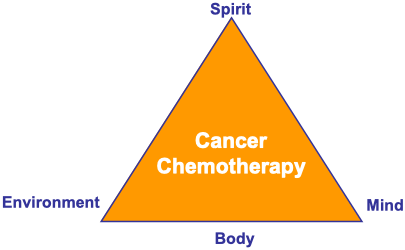
Figure 4

A – The Next step
In the view of a total approach to the disease, the patient is submitted to a battery of alternative tests to provide as much information as possible concerning her general condition, the hereditary profile, and the disease itself.
Alternative Tests used at Holiterapias
-
Peripheral blood analysis
-
Oxidative stress test
-
Infrared thermographic camera system
-
Iridoscopy
-
Electric interstitial system
-
P53 apoptosis test
The results of different tests provide a full range of over 100 valuable pieces of information that permit the understanding of every detail concerning the patient. It is very useful to evaluate a prognostic and build the best treatment possible, together with nutritional support.
At the clinic, a qualified experimental nutritionist spends time with patients to elaborate on their food diets, explaining the mistakes that they have made and how to change their food styles. Each patient receives an additional 40 pages of anticancer diets and a cookbook to help them to prepare healthful meals. It is true that in a case of colorectal cancer, the diet is quite different from that in a breast cancer case.
B – The Next step
When patients (and/or relatives) understand what we can do for them other than chemotherapy, which induces adverse effects and causes them to be under stress and fear most of the time, we move to the treatment and explain how we approach the disease.
Usually, we use large display posters on teach patients about immune cells and, hw our treatment can activate natural killer (NK) cells, ae may show a short DVD shoicting activels attacking cancer cells. We also do the same with angiogenesis, nutrition, and psychoneuroimmunology. We think that cancer patients must learn a simple basis in order to understand and be more confident.
The Combination Therapy
Our protocol is based on over 17 years of observation and results with a combination therapy that works in synergy to target cancer cells and/or improve the efficiency of antineoplasic agents. This protocol demonstrates efficiency with advanced cancer patients.
Figure 5

However, each patient at the first consultation may have a particular problem to handle, such as severe anemia that requires immediate correction to prevent more blood transfusion.
Biorejan
To balance blood parameters in severe anemia from chemotherapy, I use a special product from my own formula that was developed exclusively for our clinic. Biorejan is a frozen liquid of stem cells that contains small molecules extracted from embryonic porcine sources. It consists of a blended mixture of the umbilical cord, mesenchyme, and the spleen that work synergistically. The compound produces new healthy blood cells, increases the immune defense, and stimulates mitochondria to boost ATP energy. This is our weapon in such cases, and we can expect immediate improvement. With long-term intake, we observed that Biorejan decreases most of the antigen tumor markers.
Posology: 1 vial of 7.5 ml per day for 24 days.
The Combination Therapy
A Biological Response Modifier
BRAC is an arabinoxylan extract derived from rice bran and cultivated on shiitake mushrooms, which demonstrates strong immunomodulatory effects and antitumor activity.3 One of the particularities of BRAC is to strongly activate NK cells by regranulation to destroy cancer cells more quickly. Our experience demonstrates that BRAC is stronger than any other similar compound when it comes to treating cancer, and shows significant synergism with chemotherapy.
Posology: (Granule) 3g per day
BRAC is nontoxic during long-term administrations. Our patients take BRAC as long as 4 years or more with no toxic effect.
Antioxidant Therapy
This is one of the most controversial alternative treatments. On the other hand, many new reports demonstrate the efficiency of antioxidants as support to increase the effectiveness of chemotherapy. Antioxidants may also target some signal transduction pathway to induce apoptosis, BAX, and/or inhibit NFKB, VEGF, and so on.4 Some antioxidants may have a dual role of oxidant and antioxidant, depending on the milieu and the need of other antioxidants.
In our therapy, we use a low-molecular compound made from modified vegetables and seed that is rich in antioxidants.5 It is developed under an innovative process that splits the large molecules of enzymes to be quickly absorbed and transported in the body for immediate healing.
Posology:
18g per day
Most cancer patients exhibit high to very high oxidative stress. Advanced cancer may exhibit a persistent, strong oxidative stress, which increases tumor growth, metastatic invasion, and poor response to chemotherapy.6
Our patient demonstrated a very high oxidative stress status of 600 U.CARR under the FORM (free oxygen radical monitor) test. Middle oxidative stress is around 300, 350 U.CARR: 400–450 is high oxidative stress.
For more information, see the booklet Measuring Oxidative Stress Levels with the Technique of Photometry FORM – Application in Cancer Disease (Jurasunas).
Enzyme Yeast Cell Preparation
For over 35 years, enzyme yeast cells have been the bedrock of my method to treat cancer.7 This natural dietary product, made from Saccharomyces cerevisiae, contains essential young enzyme yeast cells that provide in a concentration most of the body’s requirement in quantity and quality. Enzyme yeast cells are similar to human cells and contain all the essential enzymes to activate the body’s functions.
They contain a naturally balanced combination of 17 vitamins, 14 minerals, 16 amino acids, enzymes of the redox system, NADH, nucleus-building substances, adenosine nucleotides, and very high levels of coenzyme Q10 and cytochrome oxidase. Enzyme yeast cells are rich in mitochondria and contain sequences to repair damaged mitochondria.8
Enzyme yeast cells are rich in glutathione, methionine, cysteine, potassium, and magnesium to detoxify the body from pollutants such as heavy metals. Basically, the product detoxifies the liver, colon, blood, and kidneys, and increases oxygen delivery to tissue. This most complete and important nutritional support may be seen as a total body rejuvenator. Enzyme yeast cells increase a cell’s respiration to activate ATP energy crucial to activate a cell division, cell differentiation, and apoptosis.
Posology: 40–60
ml per day
Symbioflore Therapy
Intestinal symbiotic rebalancing by use of bacterial reconstruction. 9
-
Prosymbioflore
-
Symbioflore
-
Symbioflore 1
The indication is from 5 to 20 drops per day sublingual and follows programs 1, 2, and 3 over the months. Symbioflore induces the growth of a new bacterial ecosystem and increases the immune resistance. It is most indicated during chemotherapy, which usually damages the intestinal flora and induces infections in cancer patients.
The patient agreed to do the treatment together with the anticancer food diet while still undergoing chemotherapy. After 34 days, she came back for another consultation with some improvement, such as a weight increase of 4 pounds, and balanced blood parameters.
RCBs 43000000 29000000
WBCs 3.2 1.8
Hemo 13.2 9.1
Platelets 97 mm 35 mm
One cannot deny the result of our treatments to improve blood parameters, even during chemotherapy.
The patient continues with the same treatment. As we can see in Figure 6, after a few months, her physical condition improved.
Figure 6
Adverse effects |
1 |
2 |
3 |
4 |
5 |
| Fatigue | × | ||||
| Depression | × | ||||
| Pains | × | ||||
| Anorexia | × | ||||
| Insomnia | × |
After 2 months of treatment, the patient made some improvement, gained more weight, increased her appetite, and felt less pain and fatigue. The transfusion of blood was no longer required, but she still felt debilitated and realized that chemotherapy was killing her. Therefore, the patient decided not to return to hospital to continue chemotherapy, and to only continue with our treatment.
The Next Treatment
With this new option from the patient, we started with an additional therapy known as Ukrain, a natural chemotherapeutic agent made from the modified alkaloid chelidonic acid, with selective cytotoxicity to cancer cells.10–11 Ukrain destroys only cancer cells (or encapsulated), not healthy cells, and works in synergy with chemotherapy. It can also be very effective without chemotherapy, depending on the case. We use Ukrain with all types of advanced cancer, with resulting increased survival and quality of life, and even remission.12
Posology:
1 ampoule of 5 ml IM 3 times per week during the first month, 2 times per week during the second month, followed by one month of rest. Then start the same protocol again.
The patient followed the initial treatment together with Ukrain.
Infrared Thermography Imaging System
Figure 7: 3 larges lesions with low temperature – 35.6C – 35.7C – 35.9C – showing inactivation.
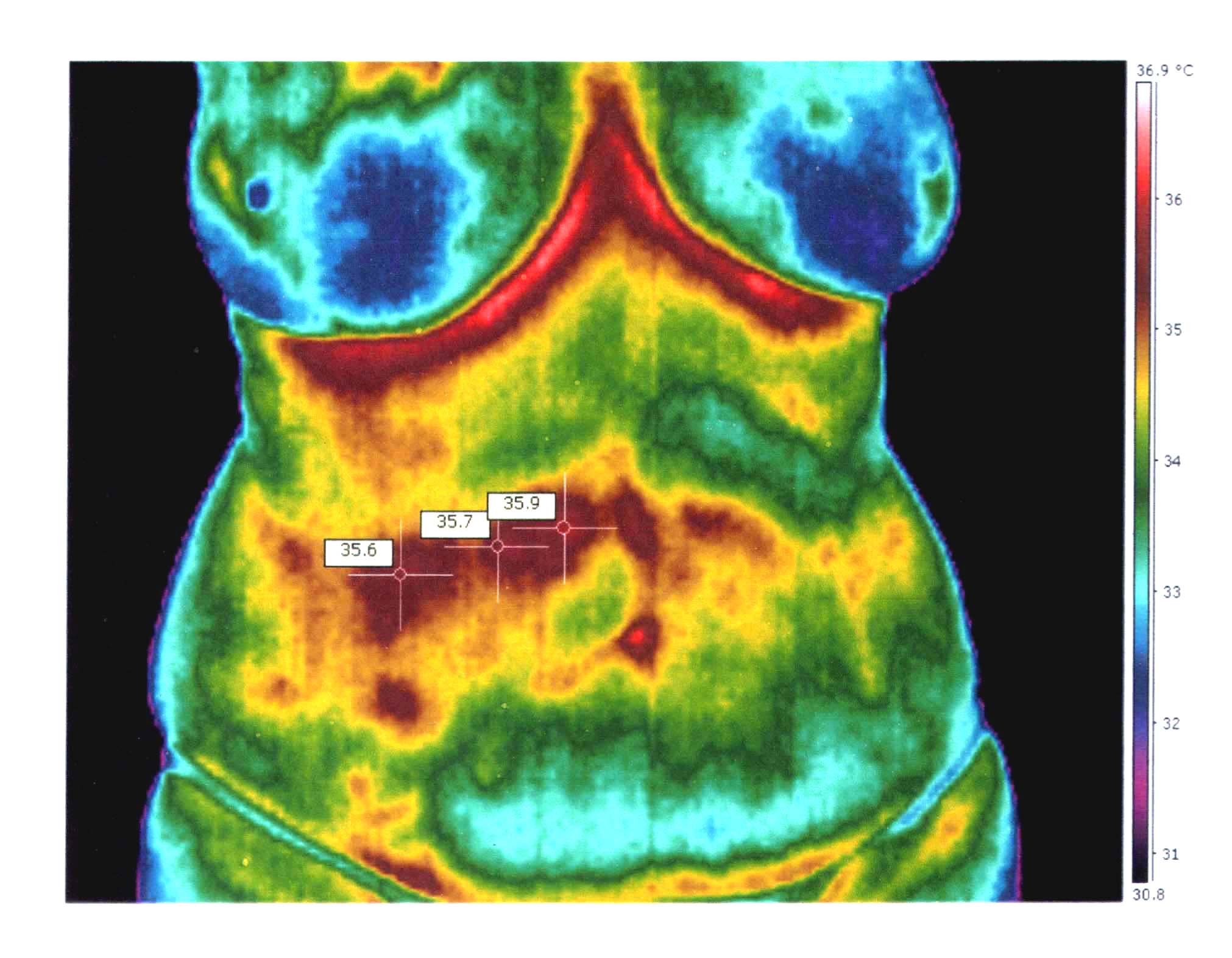
The patient followed our treatment regularly until 2008 with excellent recovery, improving liver function, and normalization of the alkaline phosphatase, which decreased from 472 U/L to normal ranges, 87 U/L. Additionally, the good news was that the hospital scan showed that most of the liver nodules were eliminated. Only 3 large nodules remained. Seventeen nodules were detected and 14 were eliminated with our treatment. A test done in our clinic with the infrared thermographic camera system showed the inactivity of the 3 large nodules, which was proved later on by a new hospital checkup. We demonstrated that, contrary to much criticism, our alternative treatment can work with efficiency to bring tumor regression.
Furthermore, the patient gained a total of 19 kg, enjoyed good quality of life, and had a balanced mind, far from her desperate condition at the beginning. In February 2009, a year later, a new hospital scan of the liver by the thermographic camera system did indeed observe only 3 encapsulated, inactive nodules.
Oxidative Stress Profile
360 U.CARR – 420 U.CARR – 580 U.CARR – 600 U.CARR
The high oxidative stress level taken at the beginning greatly decreased from 600 U.CARR to 360 U.CARR, which is still a little high, but close to moderate oxidative stress 320 U.CARR.
Conclusion
This case of advanced colorectal cancer was diagnosed 5 years ago with a poor prognostic, and was treated only for a short time with chemotherapy. Chemotherapy was replaced only by alternative medicine, which demonstrates the dramatic efficiency of our methods. The strategic treatment included natural compounds, anticancer remedies, and supplementation that worked in synergy to selectively kill cancer cells and regenerate the whole body, and included psychological support. In this case and many similar cases, we fully demonstrated the benefit of our treatment to increase quality of life and significantly increase median life extension. We also demonstrated that chemotherapy is not always essential and, on the contrary, in many cases shortened the life of patient with less quality of life.
Serge Jurasunas Clinic Treatment Strategy |
||||||||||||||||
Phase A |
||||||||||||||||
| Detoxification |
Strengthen the body, Activate liver, kidneys and colon |
|||||||||||||||
| Blood – Lymphatic system |
Nutrition Vegetable juices |
|||||||||||||||
| Changing the milieu | ||||||||||||||||
| Reduce focal inflammation |
Phase B |
Enzyme yeast cells | ||||||||||||||
| Increase the immune activity | Angiogenic therapy | |||||||||||||||
| LCE | ||||||||||||||||
| (liquid cartilage | ||||||||||||||||
| Thymus – Arabinoxylan extract |
Antioxidant therapy: ANOXE |
extract) | ||||||||||||||
| Eliminate and destroy any bacterial fungal invasion |
Decrease Oxidative stress |
|||||||||||||||
| Stem cells therapy – (oral) |
Liver regeneration (peptide liver molecules) |
|||||||||||||||
| Restore blood status (anemia) | Stem cells therapy | |||||||||||||||
Phase C |
Heavy Therapy |
|||||||||||||||
| Natural chemotherapeutic agent | ||||||||||||||||
| Should be used only by experimented doctors with clinical assistance for certain type and growth of tumor. Only at the C phase. | ||||||||||||||||
Ukraine |
||||||||||||||||
| With cytotoxic effect on cancer cells | ||||||||||||||||
| Thymus and umbilical cordon (from embryonic source) can be injected alternatively one per week during one month, then every 15 days, one more month and after one per month. | ||||||||||||||||
| Stem cell therapy IM | ||||||||||||||||
| ESB (energy sand bath) | Can be used in phase A or B, depending on patient condition. | |||||||||||||||
| Detoxify, increase energy level, decrease lipid in blood circulation and oxidize cancer cells. | This bath has provided good support in a way to increase energy level of patients and to help against metastatic invasion (see Townsend Letter, June 2000. | |||||||||||||||
|
Blood assessment Oxidative stress level |
Necessary at the beginning and after each session of chemotherapy for a reevaluation and adjust the treatment to specific needs. | |||||||||||||||
Serge Jurasunas is a private researcher and clinician directing a modern clinic of integrative medicine, and has gained considerable experience in the field of cancer over the past 40 years. Over the years, he has earned an international reputation as a pioneer in the field of naturopathy and integrative medicine, with a large contribution to iridology, medical microscopy, and theories on cancer. He developed innovative therapies for which he was appointed professor at Capital University of Integrative medicine (USA) in 1996. Serge Jurasunas teaches and gives lectures all over the world, including in Russia, Hungry, Romania, US, Mexico, Korea, and Sri Lanka. He wrote more than 100 documents translated into 11 languages and 6 books.
He is member of the American Academy of Anti-Aging Medicine and a member delegate of the World Society of Anti-Aging Medicine, the Society of Integrative Oncology (USA), and the American Naturopathic Medical Association.
Notes
-
Baum M. Does surgery disseminate or accelerate cancer? Lancet Oncol. 1996:347–260.
-
Targarona EM, Martinez J, Nadal A, et al. Cancer dissemination Turing laparoscopy surgery: tubes, gas and cells. World J Surg. 1998;22;55–60.
-
Lieherman S. A scientific review of the oncogenic effects of rice bran arabinoxylan compound (RBAC). Townsend Lett. May 2009;310:85–89.
-
Khan N, Afaq F, Muklitar H. Cancer chemoprevention through dietary antioxidants: progress and promise. Antiox Redox Signal. 2008;10(3):475–510.
-
Jurasunas S. Therapeutic application of a new molecular antioxidant compound (Anoxe) in ROS activity. Presented at: Int. Symposium on ROS and Nitrogenes Species, Diagnostic, Prevention and Therapeutic Values; 8–12 June, 2004; St. Petersburg, Russia.
-
Toyokumi S, Okamotok K, Yodoi J, Hiai H. Persistent oxidative stress in cancer. FEBS Lett. 1995;358:1–3.
-
Jurasunas S. The Therapy of Enzyme Yeast Cells in Cancer Disease, C.F.S. and Aging Process. Lisbon: Natipress; 2001.
-
Jurasunas S. More natural approaches to treat cancer. 4th Anti-Aging Medicine World Congress; April 10–12, 2008; Paris.
-
Hyde RM, Hyde RM. Orally administered Symbioflor preparations enhance the non-specific resistance of mice. 25th Congress of the German Assoc. for Microbiological Therapy; Sept. 16, 1979; Germany.
-
Lohninger A, Hamler F. Chelidonium majus L (Ukrain) in the treatment of cancer patients. Drugs Exp Clin Res. 1992;18 (supp):73–77.
-
Nowicky JW, Nowicky W, Liepend A. Cytostatic and cytotoxic effects of Ukrain on malignant cells. VIII Mediterranean Congress of Chemotherapy; Athens, Greece; J Chemother; 24–29 May, 1992.
-
Jurasunas S. The effectiveness of a combination therapy in an advanced uterine cancer with neoplasic infiltration lesions. Townsend Lett. Aug/Sept 2008:103–107.








0 Comments