

Wildfires and Their Health Effects
Marianne Marchese, ND
Introduction
Every year the number of wildfires burning across the US increases as does the proximity to major cities and towns. Some wildfires are man-made, both accidental and on purpose, and others are due to forces of nature like a lightning strike. Global warming and climate change also play a role in the increase in wildfires. Numerous toxic chemicals are released into the air when fires rage through forests, fields, and towns. The health effects of the first responders is well documented but not as much attention is paid to the effect on those living or working nearby. It’s important for physicians and health care providers to understand what chemicals are released when a wildfire burns. These toxicants can travel through the air, contributing to respiratory conditions in vulnerable populations. Identifying the health effects of wildfires and how to treat these patients is imperative as wildfires are expected to increase each year.
As the world warms up it has the potential to burn. While wildfires are a normal part of our landscape, across the US and the globe the number of fires each season is increasing and wildfire seasons are longer each year. Climate change is considered a driving force behind the increase. According to the National Interagency Fire Center, from January 1, 2020 to August 10, 2020, there were 33,917 wildfires in the US compared with 28,821 wildfires in the same period in 2019. About 2.3 million acres have burned in the 2020 so far, compared with 3.6 million acres in 2019. California has been especially hit hard in 2020 seeing a 68% increase in wildfires from January 1, 2020 to August 20, 2020, compared to the same period in 2019. California is an easy example of climate change with warmer temperature and precipitation. Climate change raises the risk of wildfires several ways; longer periods of draught, warmer temperatures, less rain or snow pack, and drying out vegetation. 1 Warmer temperature cause the atmosphere to create more thunderstorms and lightning strikes, which contribute to more wildfires. Man-made fires, whether on purpose or accidental, will easily spread in such warm and dry conditions. 1
What’s Burning?
Wildfires can rip through forests, grass lands, buildings, and homes that stands in its path. Numerous toxicants that are known carcinogens, immunotoxins, endocrine-disrupting compounds are released into the air and can affect the pulmonary and cardiovascular system. Both firefighters and residents near fires are exposed to these chemicals. Toxicants travel through the air to neighboring town, cities and even other states. A 2004 publication in the Journal of Occupational and Environmental Hygiene identified some of these harmful chemicals. They include acrolein, anthracene, benzene, benzo(a)anthracene, benzo(a)pyrene, benzo(b)fluoranthene, benzo(k)fluoranthene, carbon monoxide (CO), chrysene fluoranthene, formaldehyde, indeno(1,2,3-cd)pyrene, particulate matter (fine particles smaller than 10 µm), phenanthrene, and pyrene.2 Most of these are known to disrupt the endocrine, neurological, immune and cardiopulmonary system—even in healthy individuals without underlying conditions.3
In 2013 the US Department of Agriculture released a report that outlined additional harmful chemicals emitted from wildfires and forest fires, including carbon monoxide, aldehydes, particulate matter, crystalline silica, and polycyclic aromatic hydrocarbons. Again, many of these are known carcinogen and respiratory irritants.3 When vegetation burns, it emits carbon monoxide, sulphur dioxide, particulate matter, aldehydes, benzene, and acrolin. 3 It will emit pesticides or herbicides if the area has been sprayed, such as agriculture or farmland.
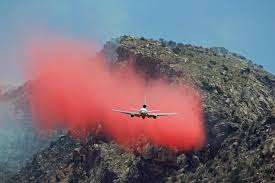
As fires move toward urban areas and homes, buildings and structures are burned and the contents inside them. Additional chemicals are released, such as pesticides, arsenic, lead, mercury, solvents, paints, cleaning solutions, plastics and their chemical compounds, defluorinated chemicals, volatile organic compounds, and more.4 The adverse health effects spans multiple organ systems. As firefighters move in to extinguish the flames, chemical suppressants and foams are used and have a host of health effects as well.5 The make-up of these wildfire suppression chemicals allows firefighters to contain the fire while also protecting physical structures and homes. There are two major types of wildfire suppression chemicals: foams and flame retardants, which are often what the average person sees on the evening news being sprayed from planes flying over a wildfire. These can also have detrimental health effects especially to firefighters who are in close contact with these chemical suppressants.5 These foams and flame retardants can also travel in the air, affecting people nearby.
Health Effects
As wildfires are becoming more prevalent near towns and cities, emitting harmful chemicals into the air, health care providers need to consider the health impact on those living nearby. Certain populations are more vulnerable to chemicals released from wildfires. These populations include children, the elderly, and pregnant woman.6-8 People with underlying conditions are predisposed to the effects of toxicants from wildfires, and those conditions include asthma, COPD, diabetes, cardiovascular diseases, and cystic fibrosis.6-8 Even people who are younger and without any underlying conditions may experience symptoms related to wildfires. Short-term effects range from shortness of breath, wheezing, coughing, sore eyes and throats, runny nose, and sinus issues, to headaches, fatigue, heart palpitations, and chest pain. Longer term effects include increases in asthma-related hospitalizations, chronic and acute respiratory and cardiovascular health outcomes, and even premature death.9,10 People with these health effects should seek medical attention, especially asthmatic patients, as the use of a steroid inhaler, home oxygen, and other medication may be needed in the short term.
As fires burn nearby and flame retardants are sprayed from above, it is important people take measures to protect themselves from the exposures to toxicants released in the air. Recommendations include the following:
-
Stay indoors with the windows closed.
-
Use a HEPA-type air filter in the home and at work.
-
Wear an N-95 mask indoors and outdoors.
-
Roll up your car window when driving.
-
Seek out a health care provider trained in environmental medicine to help mitigate the effects of toxicant exposure.
If someone is experiencing acute cardiac or pulmonary concerns, immediate medical attention may be required at an emergency room or urgent care center. Advanced pulmonary function testing and cardiac tests will help evaluate if there is long-term damage to the lungs or heart. Once acute concerns are addressed and they are stable, then seeking out the guidance from an environmental medicine doctor to address the toxicant exposure from wildfires will help overall health. Most people exposed to chemicals emitted from wildfires experience only mild symptoms such as ear, nose and throat irritation, coughing, shortness of breath or wheezing. But over time these toxicants can produce chronic health issues.
Mitigate the Health Effects of Wildfires
Many of the chemicals inhaled during a wildfire can directly damage lung tissue, cause inflammation in respiratory passageways, create oxidative stress and free radicals, cause macrophage cytotoxicity, and deplete glutathione, which is the most important antioxidant in the body.11 These mechanisms of damage underlie the changes in respiratory symptoms and why people seek out healthcare after a wildfire event. To mitigate some of the effects, restoring glutathione levels, offsetting free radical production with antioxidants, and trying to decrease body burden of toxicant exposure are key methods in treating or preventing health effects from wildfire smoke. Most of the research done in this area is on people living in areas of high air pollution and on firefighters who as frontline workers face the highest level of exposure and health effects from wildfires.
Air pollution contains chemicals found in wildfire smoke, including particulate matter, carbon monoxide and sulfur dioxide and benzene. Carotenoids, vitamin D, and vitamin E help protect against pollution damage, which can trigger asthma and COPD.12 Vitamin C, curcumin, and omega-3 fatty acids also help mitigate the harmful effects.12 N-acetylcysteine, is a major antioxidant in the body and precursor to glutathione. NAC has long been used for supporting lung function in conditions such as COPD and chronic bronchitis. Studies show it is beneficial in patients with inhalational smoke-induced lung injury.13 Glutathione is beneficial for patients with asthma, COPD and bronchitis. Supplementation can help mitigate the effects on the lung of inhaled smoke.14
Sauna therapy has been used for years for numerous cardiovascular and pulmonary conditions. Mayo Clinic Proceedings published an excellent review showing sauna bathing can reduce the risk of high blood pressure, cardiovascular disease, neurocognitive diseases, and pulmonary diseases.15 Sauna is being utilized by firefighters as a method to treat the damage induced by wildfire smoke. A study just completed by researchers at the University of Arizona demonstrated sauna therapy lowered the urinary level of polyaromatic hydrocarbons PAHs of firefighters.16
Sauna therapy, vitamins, minerals and antioxidants are not only important for lung function and pulmonary conditions but also to support liver metabolism of toxicants. As stated above, wildfire smoke emits numerous chemicals into the air including lead, mercury, arsenic, pesticides, solvents and polyaromatic hydrocarbons. An environmental medicine approach can be useful in assessing and addressing health concerns due to wildfire smoke. An in-depth history and intake, testing for toxicants, and treatments including sauna therapy, vitamins and minerals are an important step in mitigating effects from wildfires.
Case
At the end of May 2020, a man-made fire broke out in Cave Creek Arizona, a town just a few miles north of Phoenix. It was called the Ocotillo fire and located between popular recreation hiking spots Cave Creek Regional Park and Spur Cross Ranch Conservation Area. Hundreds had to evacuate, and numerous structures and homes were burned. A 45-year-old woman who lived near the fire and had to evacuate began experiencing shortness of breath, dry cough, and fatigue a few days after returning home. She had a history of seasonal allergies and was currently receiving allergy shots every other week at her allergist office and used Flonase and Allegra-d as needed. She was on no other medication and was otherwise healthy. She took Vitamin D (2,000 iu a day), a probiotic, and fish oil (1,500 mg a day). She initially went to her PCP who did an appointment via telemedicine and prescribed a steroid inhaler, which didn’t help. After a week she wasn’t better and came to my office (June 2020).
Her exam was unremarkable: lungs clear, oxygen saturation 99%, peak flow meter 420, 440, 440, heart regular rate and rhythm, and no signs of distress. She did not cough once while in the office but says she has a dry cough and shortness of breath on exertion and in the evening. The intake reveals every spring when her allergies flare, she has the same symptoms as well as during the summer monsoon season when the wind blows dust throughout her area. She had Valley Fever five years prior, like many living in Arizona. Many patients who have had Valley Fever and recovered tend to have comprised lung function. Environmental history was unremarkable except she lives on a golf course where pesticides are sprayed. CBC, CMP, TSH, ESR, CRP-hs all within normal limit.
The initial treatment consisted of the following:
-
HEPA air filter to run 24 hours a day
-
N-Acetylcysteine 600 mg twice a day
-
Supplement to provide vitamin and mineral co-factors for liver phase one and two metabolism (four a day). The cofactor support product contained vitamin A, vitamin D3, vitamin K1, vitamin B1, vitamin B2, vitamin B3, vitamin B5, vitamin B6, vitamin B12 (as methylcobalamine), vitamin C, vitamin E, biotin, folate (5-methyl-tetrahydrofolate), calcium, chromium, copper, iodine, magnesium, manganese, molybdenum, potassium, selenium, zinc, choline, inositol, boron, vanadium, green tea extract, turmeric.
-
Liver herbal supplement (2 a day); it contained milk thistle, beet root, dandelion, burdock and artichoke.
-
Sauna therapy two times a week for eight weeks. This was done as 7-10 minutes in the heat then 30-second cold shower, repeat five times and end on cold.
-
Rumex 200C (3 pellets under the tongue in the evening for 2 weeks).
After four weeks she returns and reported her energy, cough and shortness of breath all improved significantly and she was feeling better.
Summary
The past few years have shown an increase in wildfires across the US and around the world. This is in-part due to global warming and changes in our climate. Even man-made fires, both on purpose or accidently, are spreading like never before due to warmer, drier conditions. As vegetation, forests, structures and homes burn numerous toxicants are released posing health risk for both firefighters and those living and working nearby. It is important health care providers understand the toxicants emitted from wildfires and the flame retardants used to manage fires, and their effects on health. Educating patients on measures to protect themselves during the fire and providing treatments for managing the health effects are a key part of integrated care.
References
-
Jolly W, et al. Climate-induced variations in global wildfire danger from 1979 to 2013. Nat Commun. 2015;6,7537.
-
Booze TF, et al. A Screening-Level Assessment of the Health Risks of Chronic Smoke Exposure for Wildland Firefighters. Journal of Occupational and Environmental Hygiene. 2004;1: 296–305.
-
United States Department of Agriculture. Wetland firefighter smoke exposure. Published Oct 2013. https://www.fs.fed.us/t-d/pubs/pdfpubs/pdf13511803/pdf13511803dpi100.pdf Accessed Aug 10 2020.
-
Kristensen LJ, Taylor MP. Fields and forests in flames: lead and mercury emissions from wildfire pyrogenic activity. Environ Health Perspect. 2012;120(2):a56-a57.
-
Carratt SA, et al. Pesticides, wildfire suppression chemicals, and California wildfires: A human health perspective. Current Topics in Toxicology. 2017;13:1-12.
-
Cascio WE. Cardiopulmonary health effects of air pollution: is a mechanism emerging? American Journal of Respiratory and Critical Care Medicine. 2005;172(12):1482-1484.
-
Bateson TF, Schwartz J. Who is sensitive to the effects of particulate air pollution on mortality? Epidemiology. 2004;15(2):143-149.
-
O’Neill MS, et al. Diabetes enhances vulnerability to particulate air pollution-associated impairment in vascular reactivity and endothelial function. Circulation. 2005;111(22):2913-2920.
-
Delfino R, et al. The relationship of respiratory and cardiovascular hospital admissions to the southern California wildfires of 2003. Occup Environ Med, 2009. 66: 189.
-
Kunzli N, et al. Health Effects of the 2003 Southern California Wildfires on Children. Am J Resp Crit Care Med. 2006; 171: (11) 1221-1228
-
Black C, et al. Wildfire smoke exposure and human health: Significant gaps in research for a growing public health issue. Environ Toxicol Pharmacol. 2017;55:186-195.
-
Whyand T, et al. Pollution and respiratory disease: can diet or supplements help? A review. Respir Res. 2018;19(1):79.
-
Ashraf U, et al. Nebulized heparin and N-acetylcysteine for smoke inhalational injury: A case report. Medicine (Baltimore). 2018;97(19).
-
Rahman I, MacNee W. Lung glutathione and oxidative stress: implications in cigarette smoke-induced airway disease. Am J Physiol. 1999;277(6):L1067-L1088.
-
Laukkanen JA, Laukkanen T, Kunutsor SK. Cardiovascular and Other Health Benefits of Sauna Bathing: A Review of the Evidence. Mayo Clin Proc. 2018;93(8):1111-1121
-
Burgess, JL, et al. Evaluation of Interventions to Reduce Firefighter Exposures. Journal of occupational and environmental medicine. 2020;62(4), 279-288.
Bio
Dr. Marianne Marchese is the author of the bestselling book 8 Weeks to Women’s Wellness about the environmental links to women’s health and detoxification. She maintains private practice in Phoenix, Arizona, and is adjunct faculty at SCNM, teaching both environmental medicine and gynecology. She served on the State of Arizona Naturopathic Physicians Medical Board
,
National Association of Environmental Medicine, Arizona Naturopathic Medical Association, and Council on Naturopathic Medical Education. She lectures throughout the US and Canada on women’s health, environmental, and integrative medicine topics. Dr. Marchese recently helped develop three supplements for Priority One Vitamins. Learn more at www.drmarchese.com








0 Comments