

“You never change things by fighting the existing reality. To change something, build a new model that makes the existing model obsolete.”
– Buckminster Fuller
The Evolution of Medicine: Why We Need a Paradigm Shift
The greatest challenge in advancing global health and well-being lies not in incremental improvements, but in recognizing the need for fundamental transformation. This transformation must extend beyond simply enhancing existing healthcare systems—it requires a comprehensive reimagining of multiple interconnected systems that influence human health.
Research by the Whole Health Institute has identified 13 distinct yet interrelated systems that significantly impact health and well-being, each requiring revolutionary change. From healthcare delivery and education to social services and environmental factors, these systems form a complex web that determines the overall health outcomes of populations worldwide. Understanding and addressing these systems holistically, rather than in isolation, is crucial for achieving meaningful and lasting improvements in global health.1
The current conventional healthcare system primarily focuses on disease management—diagnosing illnesses, implementing treatments, and pursuing cures when possible while managing chronic conditions when necessary.
In contrast, the Whole Health approach represents a paradigm shift in healthcare delivery. This comprehensive model empowers individuals to take charge of their physical, mental, and spiritual well-being, enabling them to live fuller, more meaningful lives. While the conventional healthcare system excels at treating acute conditions and managing diseases, it often falls short in promoting optimal wellness and supporting proactive self-care initiatives.
This limitation stems not from a lack of capability, but rather from the fundamental structure and objectives of the current healthcare framework, which was designed primarily as a reactive system for addressing medical conditions rather than an active system for fostering comprehensive wellness.
Documentary: How Health Care Became Sick Care
Dr. Rick Kirshner, naturopathic physician and best-selling author, has created a documentary on the history of the medical system and how it became focused on sick care instead of true healthcare. You can watch it for free here: https://talknatural.com/documentary.html
The Price of Illness: America’s Healthcare Crisis
Americans are caught in a paradox: we spend more on healthcare than any nation on Earth, yet our health outcomes lag behind many developed countries. In 2023, US healthcare expenditure reached a staggering $4.9 trillion—six times our national defense budget. This astronomical figure isn’t just a number; it represents a systemic failure that affects every American’s physical and financial well-being.
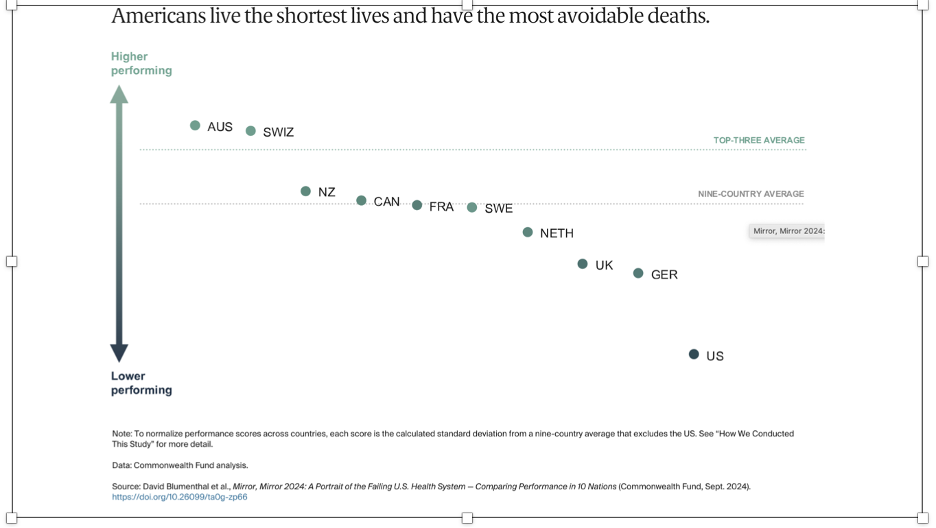
Despite this unprecedented investment, our healthcare system increasingly resembles a sick-care system, focusing on treating diseases rather than preventing them. The result? A population burdened by both declining health outcomes and crushing medical debt.
The scope of American healthcare spending is unprecedented among developed nations. As a percentage of GDP, the United States spends one-third more than European counterparts like Germany and France, and more than double what China allocates to healthcare. Despite this massive investment, Americans generally experience poorer health outcomes and shorter life expectancies than their peers in other developed nations, leading experts like Jackson Hammond of the Paragon Health Institute to observe that Americans are “wealthy but sick.”
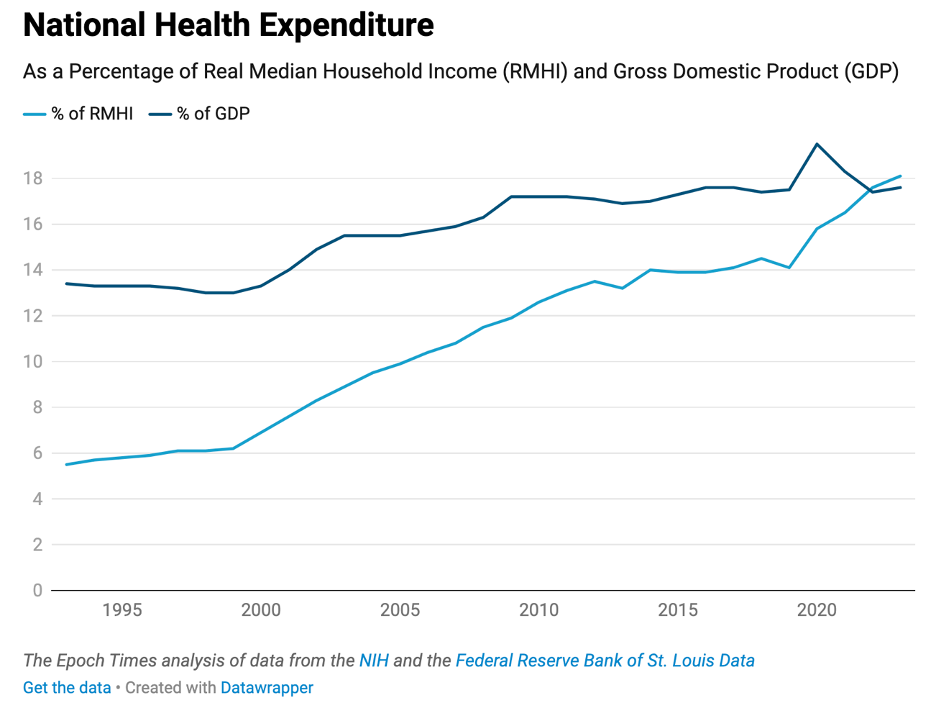
The individual impact of these costs is substantial. In 2023, Americans paid an average of $1,500 per person in out-of-pocket medical expenses, amounting to $6,000 for a typical family of four. However, this represents only a fraction of the total cost. When accounting for all healthcare spending, including employer contributions and government funding, the figure balloons to $14,570 per person – over $58,000 for a family of four.
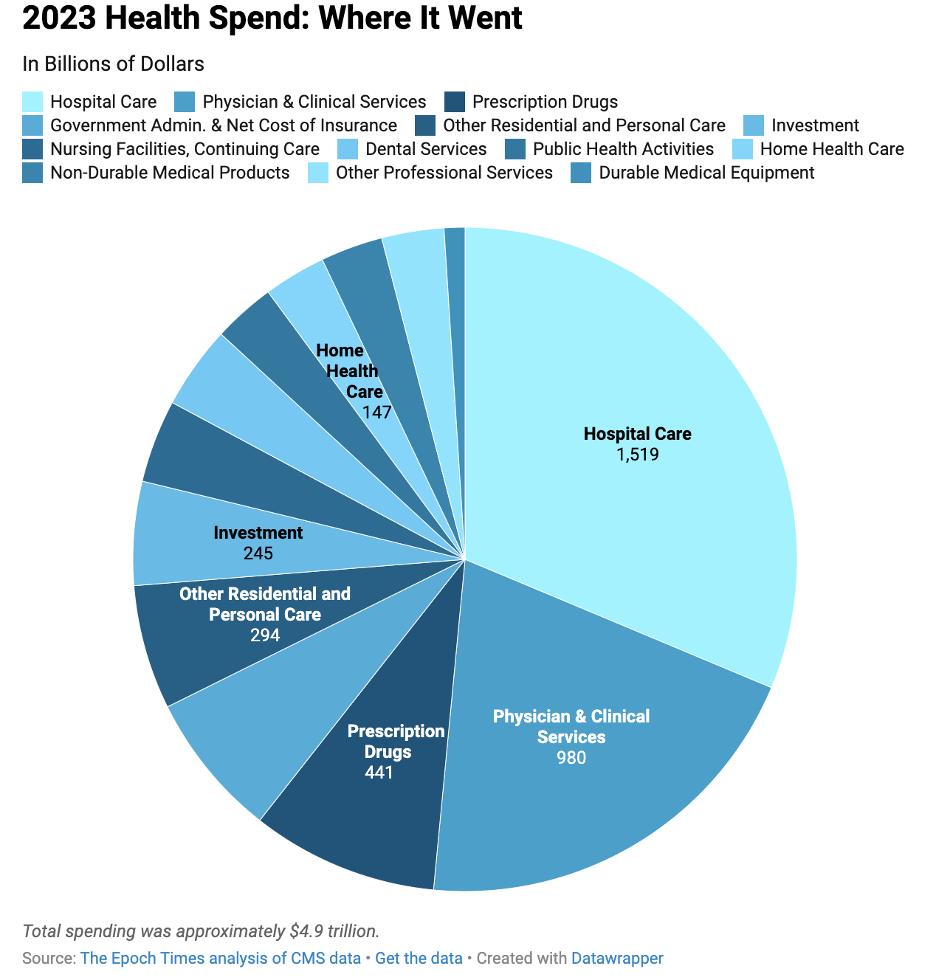
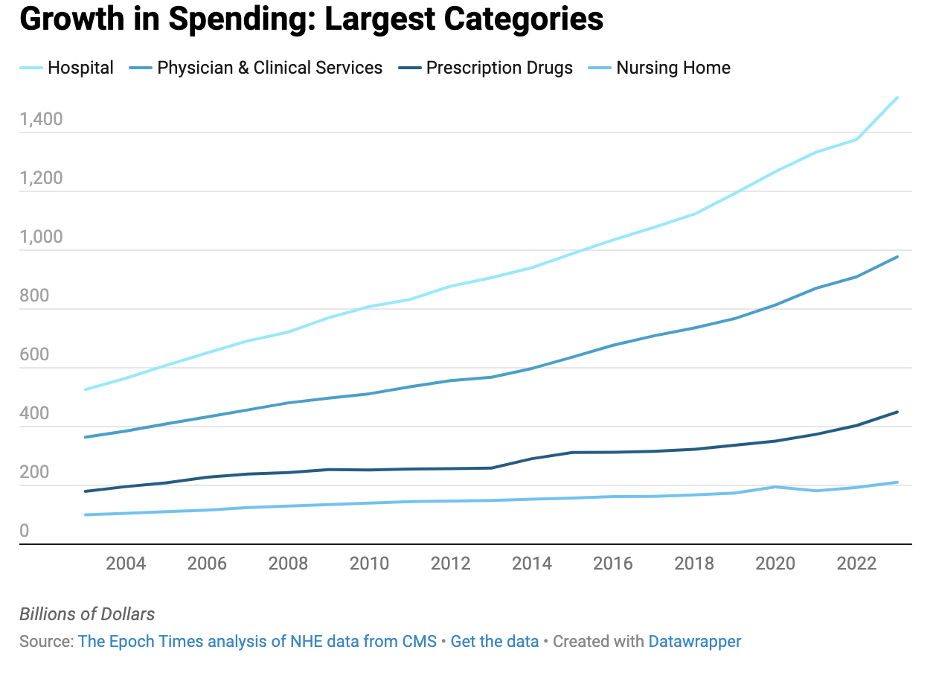
Government spending plays a crucial role in this equation. Federal, state, and local governments contribute more than half of all healthcare spending in the United States. In fiscal year 2023, federal healthcare spending exceeded $1.8 trillion, notably surpassing the federal budget deficit of $1.7 trillion. The majority of these healthcare dollars – 51 % – went to hospitals and outpatient providers, while prescription drugs accounted for approximately 9% of spending.
The rapid acceleration of healthcare costs is particularly concerning. Out-of-pocket spending grew by 7.2% in fiscal year 2023, while hospital services saw an increase of over 10%. Prescription drug spending experienced an even steeper rise at 12%.
Several key factors drive these escalating costs. First and foremost is the deteriorating health of the American population. The United States leads developed nations in deaths from diabetes and chronic liver, kidney, and respiratory diseases. The population is also aging significantly – the median age has increased from 29 in 1960 to 39 in 2023, with the percentage of Americans aged 65 and older doubling from 9% to 18% during this period.
Chronic conditions, which often require lifetime treatment, have become increasingly prevalent, even among younger Americans. Dr. Reyn Archer notes that chronic illnesses are now appearing in children as young as 10 to 12 years old. The rise of Type 2 diabetes serves as a stark example. What was once rare in children has become commonplace with up to 70% of new diabetes cases in some areas being Type 2, largely driven by obesity.
The complexity of the American healthcare system itself contributes to rising costs. Well-intentioned regulations can have unexpected consequences. The Medical Loss Ratio (MLR) provision of the Affordable Care Act, designed to limit insurance company profits, inadvertently creates incentives for higher spending. Insurance companies must spend 85% of premiums on medical services for large group plans, leading to a situation where increasing overall healthcare spending becomes one of the few ways to increase profits. This has contributed to a 47% increase in family coverage premiums since 2013.
Technological advancement and new treatments, while improving care options, also drive costs higher. Joint replacements exemplify this trend. While the procedure has become more efficient and less expensive per operation, increased accessibility and demand have led to higher overall spending. Similarly, new medications, particularly in the realm of cell and gene therapy, contribute significantly to cost increases. Drugs like Ozempic, Rybelsus, and Wegovy, used for diabetes treatment and weight loss, command premium prices – Wegovy, for instance, costs $1,349 for a month’s supply as of March 2024. Medicare payments for these types of drugs have seen a remarkable 1,000% increase in just five years, rising from $57 million in 2018 to $5.7 billion in 2022.
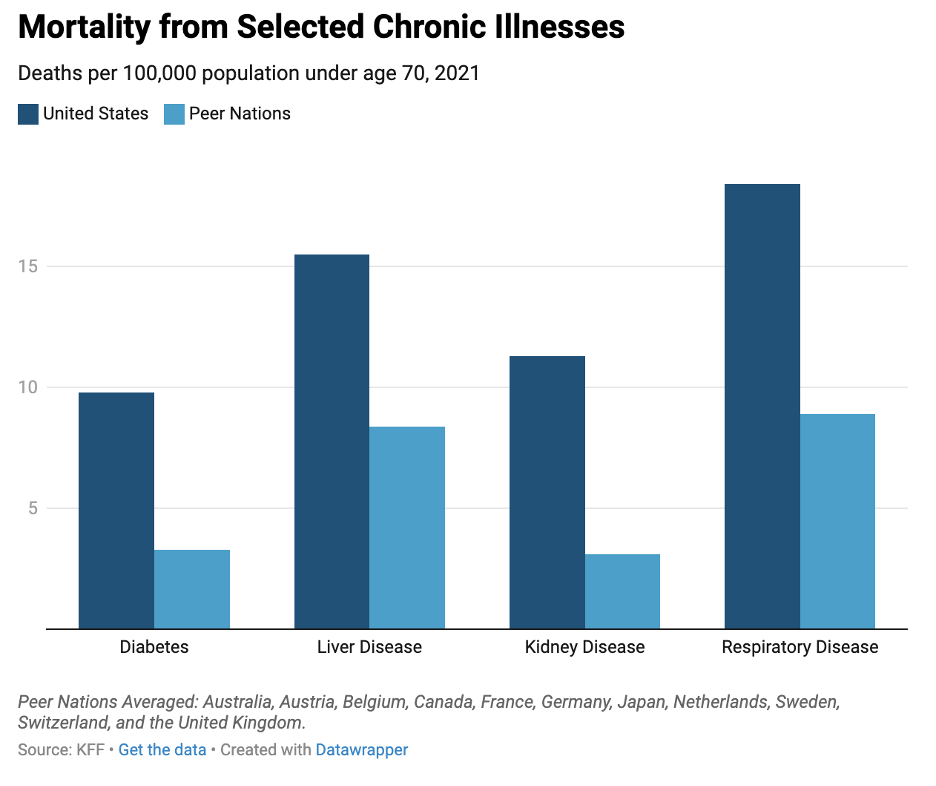
The prevalence of conditions requiring these expensive treatments underscores the challenge – more than 11% of US adults have diabetes, over one-third are obese, and childhood obesity affects 17% of American children. These statistics suggest that without significant changes in both healthcare delivery systems and population health management, costs will likely continue their upward trajectory.
The American healthcare cost crisis represents a complex interplay of demographic shifts, deteriorating public health, systemic inefficiencies, and technological advancement. Addressing these challenges will require a multifaceted approach that considers both the structural elements of healthcare delivery and the underlying health conditions driving demand for medical services.2
The Mederi Care Solution
As an extension of my life’s work, I have developed the Mederi Care system to be a solution to the modern healthcare crisis. Mederi Care represents a groundbreaking advancement in healthcare delivery, offering a comprehensive and integrative approach that harmoniously bridges traditional wisdom with modern medical science. This revolutionary system operates on the principle that optimal health emerges from the delicate balance between indigenous healing practices and contemporary medical interventions.
Therapeutic Toolboxes
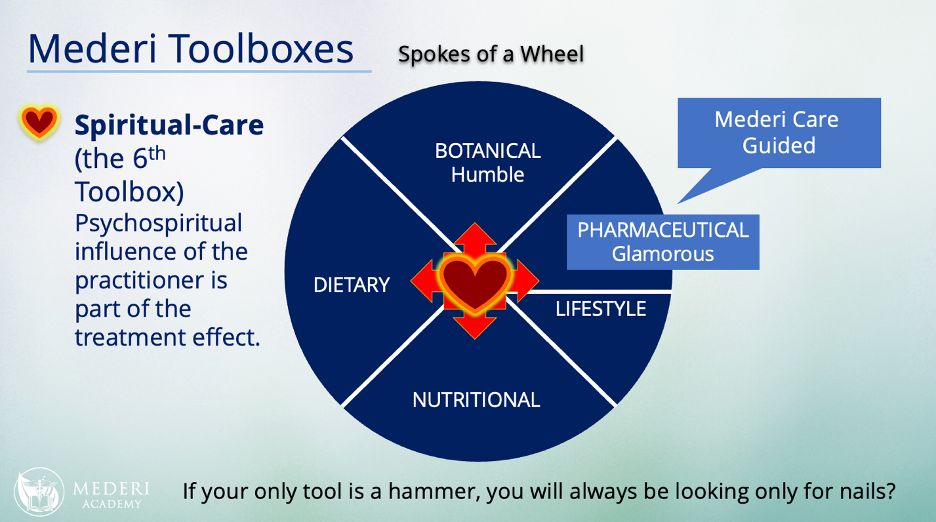
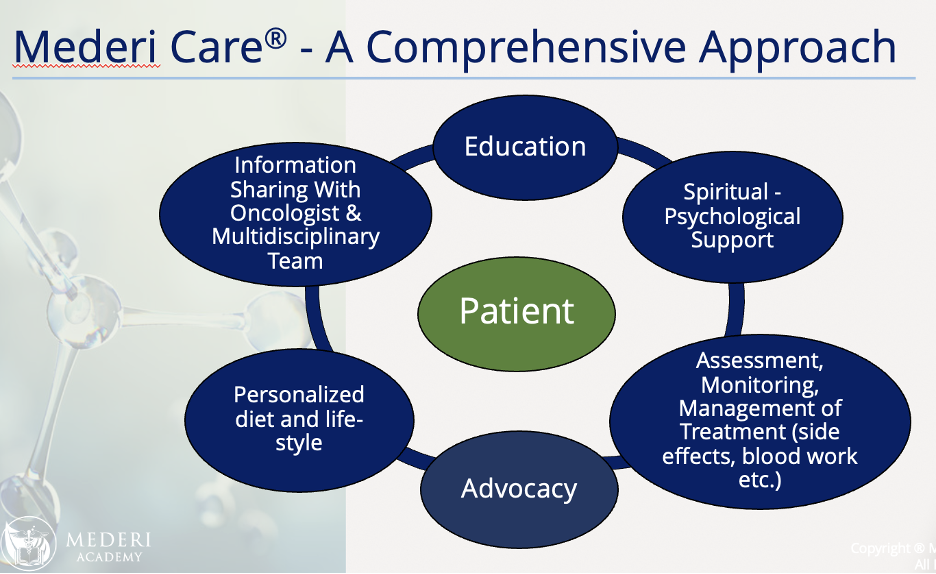
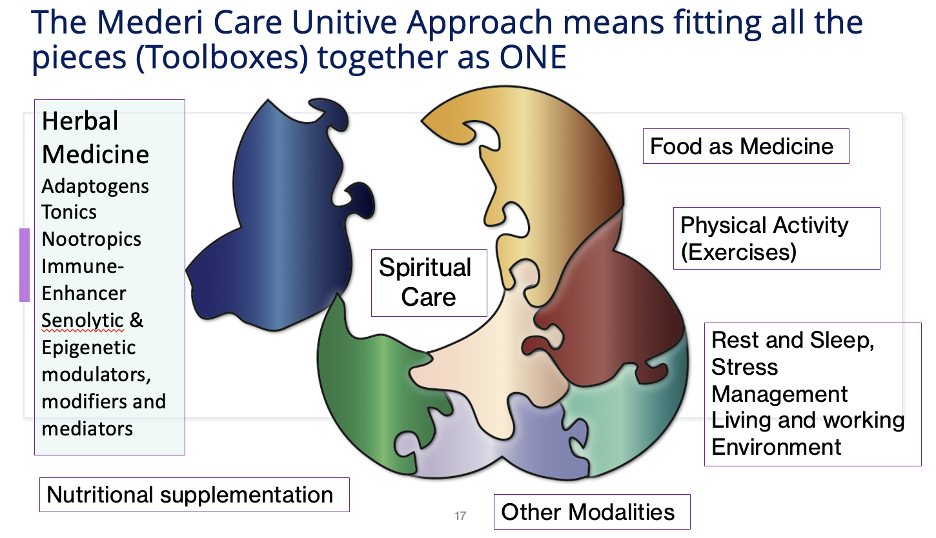
The system leverages six distinct yet complementary therapeutic approaches:
- Botanical Medicine: Utilizing nature’s pharmacopeia for healing and restoration
- Nutritional Supplementation: Strategic use of targeted nutrients for biochemical optimization
- Food as Medicine: Therapeutic dietary interventions that support healing and prevention
- Lifestyle Medicine: Evidence-based behavioral and environmental modifications
- Modern Pharmaceuticals: Selective integration of contemporary medical treatments
- Spiritual Care: Addressing the vital spirit-mind-body connection in healing
Diagnostic Framework
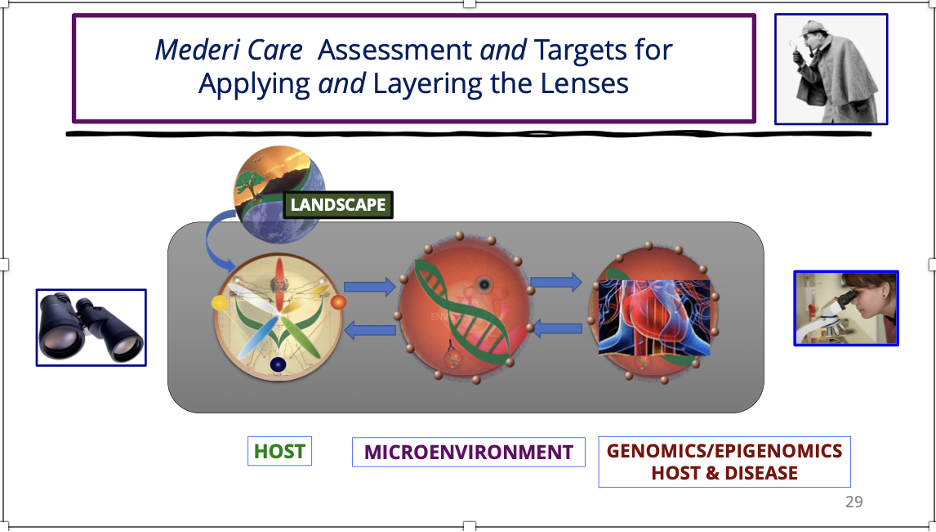
At its core, Mederi Care employs three sophisticated diagnostic lenses that work in concert:
- Host Analysis: A thorough evaluation of the individual’s unique physiological, genetic, and metabolic profile
- Microenvironment Assessment: Detailed examination of the internal biological terrain and cellular environment
- Disease Etiology/Tumor Investigation: Comprehensive analysis of disease origins, progression, and contributing factors
Branch I: Host Constitutional Assessment
Historical Foundations
Throughout human history, indigenous medical systems across cultures have developed sophisticated diagnostic models based on energetic or non-tangible qualities.
These traditional frameworks include:
- Eclectic Medicine: A 1900th century American medical system that believed in nourishing the body and utilizing herbal medicine as the primary toolbox.
- Traditional Chinese Medicine (TCM): The five elements (earth, fire, metal, wood, and wind)
- Ayurveda: The three dosha system (Vata, Pitta, Kapha)
- European Humoral Medicine: The four temperaments (sanguine, melancholic, phlegmatic, choleric)
- Native American Medicine: The four directions corresponding to life’s cycles and rhythms
These time-tested approaches have contributed significantly to the development of Mederi Care, which synthesizes traditional wisdom with modern insights to create a comprehensive healing paradigm.
The Art of Constitutional Analysis
Constitutional assessment transcends rigid categorization. While established medical models offer valuable frameworks, the remarkable uniqueness of each individual necessitates a more flexible and integrative approach. Experienced holistic practitioners develop sophisticated diagnostic abilities that go beyond traditional classification systems, considering:
- Physical presentation and symptoms
- Emotional and psychological patterns
- Environmental influences
- Lifestyle factors
- Genetic predispositions
- Energetic qualities
The true artistry in holistic medicine lies in the practitioner’s ability to synthesize these diverse elements into a coherent understanding of the patient’s comprehensive state. This holistic perspective extends beyond the immediate disease process to encompass the entirety of the patient’s well-being.
Bridging Art and Science
The integration of intuitive assessment with clinical methodology represents the perfect marriage of art and science in medicine. While the ability to perceive and interpret constitutional patterns is an art form developed through experience, the translation of these insights into effective treatment protocols requires rigorous scientific understanding. This dual approach ensures that constitutional assessment serves as a practical tool for clinical practice rather than merely a theoretical framework.
The artistry lies in the practitioner’s capacity to observe subtle cues—tone of voice, facial expressions, posture, and energy—that collectively reveal the patient’s constitutional makeup. This perceptual skill develops through years of patient interaction and cannot be fully taught through textbooks alone. Meanwhile, the scientific dimension demands comprehensive knowledge of physiology, pathology, pharmacology, and evidence-based interventions that correspond to specific constitutional types.
What makes this integration particularly powerful is how each aspect enhances the other. Scientific understanding provides structure and validation to intuitive insights, while intuitive observation often reveals patterns that prompt new scientific inquiries. Practitioners who excel at both dimensions typically achieve superior clinical outcomes, as they can both connect with patients on a deeply personal level and address their conditions with methodical precision.
Constitutional Assessment in Holistic Medicine
Constitutional assessment forms the foundation for developing targeted personalized therapeutic strategies in holistic medicine. This comprehensive evaluation approach considers both physical and energetic aspects of human health.
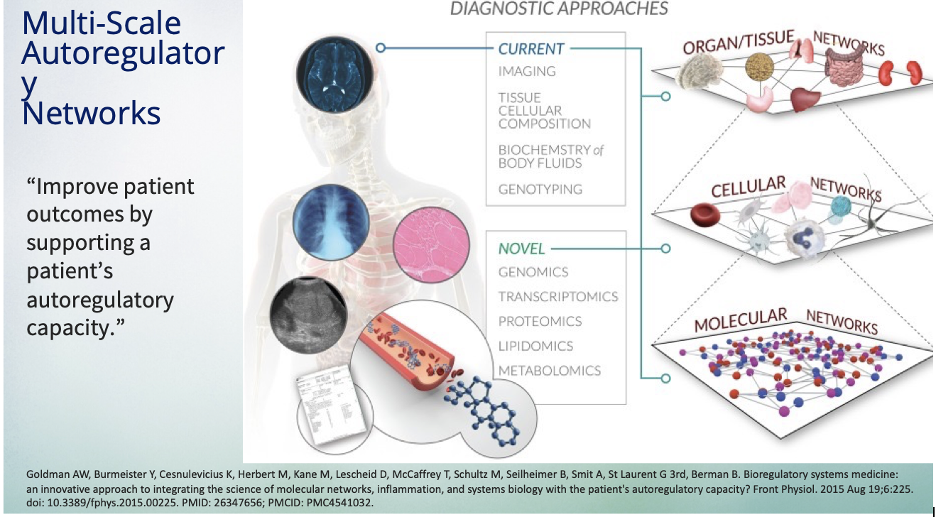
The complex interactions in biological systems have been shown to affect the response to single-targeted therapies which were initially developed under the “reductionist paradigm” of cancer precision medicine.3
Just like in all life forms (human, animal, and plants) there is nothing about our health that is reductionistic, functional, or stagnant. There are numerous networks throughout the body, which include neural-networks, immune-networks, endocrine networks, intra-cellular molecular networks, cell signaling pathways and their receptors, which also behave as a network, and organ system networks. These networks also communicate with each other and are orchestrated by an internal life-force, that is receiving information from everywhere within, as well as being influenced by the external environment. It is dependent on energy flow, and is adaptive and protective in nature.
The Three Vital Energies
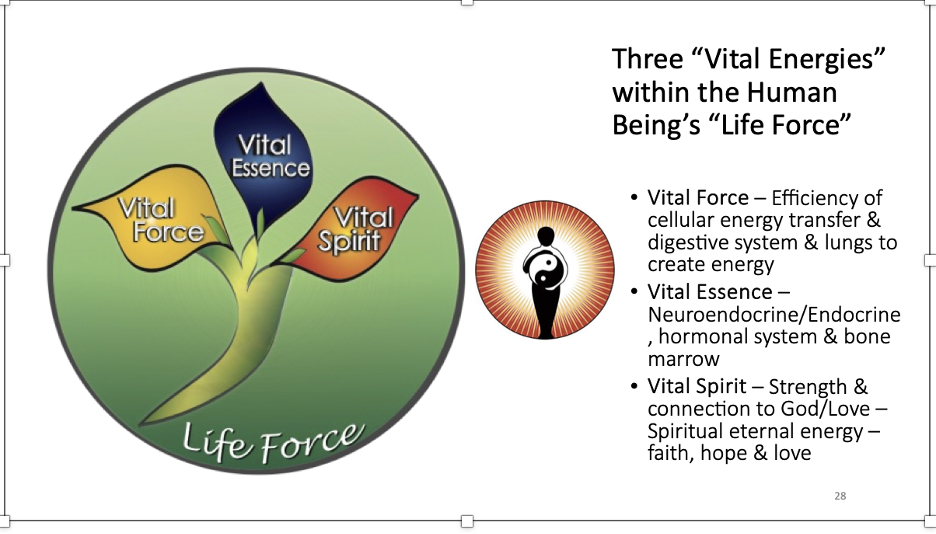
The Human Energy Branch comprises three fundamental energetic systems:
- Vital Essence
- Manifests through the Kidney Network
- Encompasses the neuroendocrine and endocrine systems
- Forms the foundation of physical vitality
- Vital Force
- Operates through the Spleen Energy Network
- Governs digestive and respiratory efficiency
- Facilitates energy transfer at molecular, cellular, and organ system levels
- Responsible for blood and tissue formation
- Vital Spirit
- Channels through the Heart and Soul
- Represents our eternal spiritual energy
- Manifests as compassion, forgiveness, humility, and love
- Essential for emotional and spiritual well-being
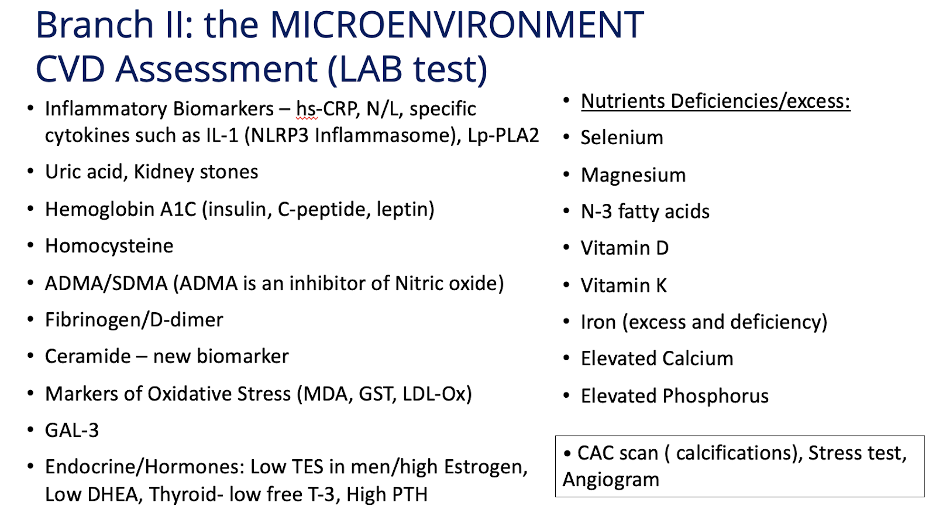
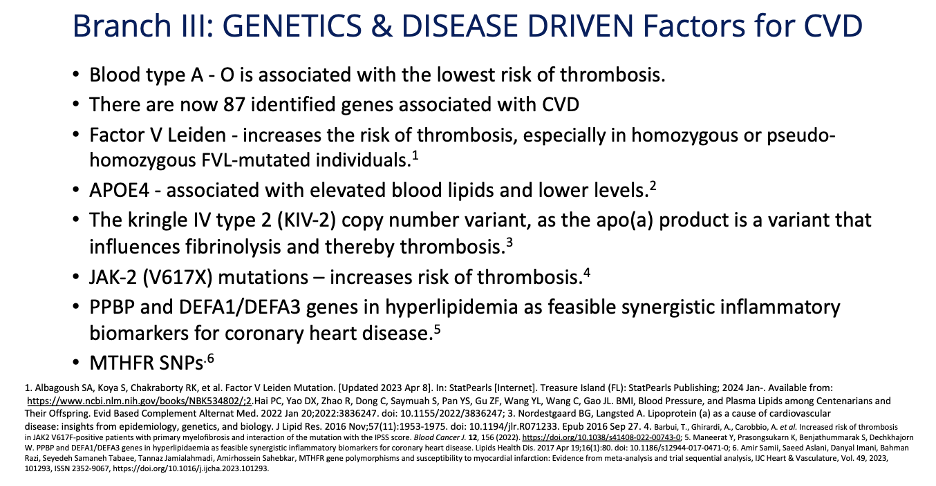
Here is an example of lab tests that would be run specifically as it relates to Cardiovascular Disease (CVD) risk assessment.
This innovative healthcare model demonstrates remarkable potential to revolutionize patient care by offering a more nuanced, personalized, and holistic approach to health optimization. Through its comprehensive methodology, Mederi Care stands poised to elevate the standard of healthcare delivery while improving patient outcomes across the spectrum of health conditions.
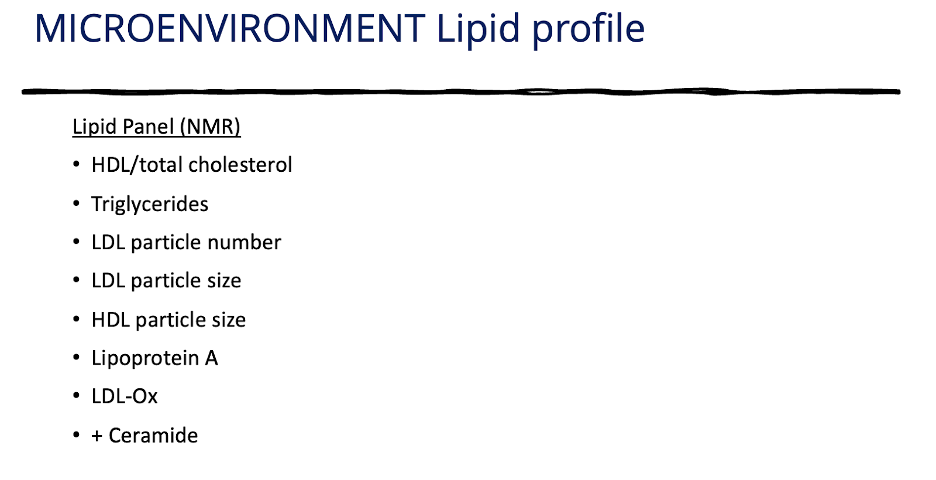
Here is an example of various disease associated genetic tests that might be run to assess CVD risk.
Mederi Care and the Evolution of Healthcare: From Disease Management to Holistic Wellness
The evolution of medicine demands a fundamental shift in how we approach healthcare. Rather than continuing to invest in a system that prioritizes disease management over prevention and well-being, we must embrace a more holistic, integrative model.
The Mederi Care System, with its blend of traditional wisdom and modern medical science, exemplifies this transformation by offering personalized, proactive, and preventative healthcare strategies.
Root Causes and Systemic Approaches
Addressing the root causes of illness, rather than just treating symptoms, is essential for improving global health outcomes. Furthermore, the unsustainable costs of the current healthcare system underscore the urgency of this shift.
Network Medicine: Understanding Interconnected Health Systems
Network medicine represents a revolutionary approach that views diseases not as isolated entities but as ripples within the pond of complex biological networks. By mapping the intricate web of molecular interactions, genetic pathways, and environmental factors, network medicine reveals how seemingly distinct conditions often share underlying mechanisms.
This systems-biology perspective enables healthcare practitioners to:
- Identify previously hidden relationships between diseases
- Develop multi-targeted therapeutic strategies rather than single-intervention approaches
- Predict disease susceptibility based on network vulnerabilities
- Personalize treatments by understanding each patient’s unique biological network
The integration of network medicine with traditional healthcare systems offers unprecedented opportunities for prevention, early intervention, and more effective treatment protocols, particularly for complex chronic conditions that have historically challenged conventional medical approaches.
The Path Forward
By adopting a whole-health approach and prioritizing preventive care, we can create a system that not only enhances individual well-being but also reduces the financial and societal burden of chronic disease. When combined with network medicine concepts, this integrated approach provides deeper insights into the interconnectedness of human health and disease.
The future of medicine lies in embracing innovation, unification, and a commitment to fostering true health rather than merely treating disease.
The Mederi Care System is poised to be an elegant answer to the puzzle of the modern healthcare dilemma.
References:
1. Gaudet T. Cultural Transformation to a Whole Health System: Lessons Learned. Glob Adv Health Med. 2022 Apr 23;11:2164957X221091452. doi: 10.1177/2164957X221091452. PMID: 35478714; PMCID: PMC9036378.
2. This is a summary of an article printed in the Epoch Times, from February 25, 2025, 2https://www.theepochtimes.com/article/why-americans-pay-so-much-for-health-care-5785093?ea_src=frontpage&ea_cnt=a&ea_med=top-news-8-special-report-4.
3. Tan A, Huang H, Zhang P, Li S. Network-based cancer precision medicine: A new emerging paradigm. Cancer Lett. 2019 Aug 28;458:39-45. doi: 10.1016/j.canlet.2019.05.015. Epub 2019 May 21. PMID: 31125640.








0 Comments