

Flashback to a lecture I presented on genetics and epigenetics 12 years ago in New York, at the Integrative Health Symposium (IHS), as the first opening lecture of the day. I began with an impromptu question to the audience of functional medicine providers. I held up my index finger and asked, “How many cells in my finger must be in pain before I perceive that it hurts?” The fact is that we really don’t know, and sometimes, a paper cut or a tiny splinter can hurt more than a visible, large cut.
Of course, when we’re dealing with chronic pain, we’re talking about more than a paper cut. Chronic pain refers to pain that persists for longer than the normal healing time of tissues, typically lasting more than three months. Conversely, acute pain lasts less than a month. Subacute pain lasts one to three months.
Chronic pain includes back pain, joint pain, and migraines. Chronic pain is a leading cause of disability, with an estimated 12% to 44% of adults suffering from this condition.1 It’s more common in women and older people, but it can affect anyone.1
In this article, I’ll discuss pertinent points about pain, the dangers of opioids, and alternatives to opioids. Note that this paper is not meant to be a criticism of opioids. They have their place for some patients over the short term, such as after surgery or dental work. Instead, this article aims to offer possible alternatives that support healing and address the root cause of chronic pain. This article is also not meant to be a complete review of pain, but rather to touch on important points about the subject.
Nociplastic Pain
A common type of chronic pain is called nociplastic pain, which embodies a representative challenge in defining pain based on merely tissue damage. The disorders linked to central sensitization are restless leg syndrome, chronic fatigue syndrome, fibromyalgia, temporomandibular disorder, migraines or tension-type headaches, irritable bowel syndrome, multiple chemical sensitivities, and whiplash injuries.2 This type of pain usually has an emotional component such as anxiety, panic, or depression.2 But that does not mean the patient inherently has or will receive a mental health diagnosis; rather, it speaks to the complexity of pain, its perception, and potential amplification. It also begs the classical question of the chicken or the egg. Nociplastic pain may help explain the presence of chronic pain that persists without any tissue damage or identifiable pathology.2
The Opioid Epidemic
Many people suffering from acute or chronic pain are prescribed opioids. Although opioids are effective at reducing pain, they carry the risk of tolerance (taking more of the medication to achieve the same pain relief), physical dependence (symptoms of withdrawal when opioids are stopped), and the potential for abuse. In the United States, there are 70,000 deaths from opioid overdose annually, with prescription opioids accounting for a substantial number of those deaths.3 Between 2015 and 2020, deaths related to prescription opioid overdose quadrupled.4
The last thing we want to do is address the problem of pain and then create another issue (addiction). The goal for clinicians is to help mitigate the perception of pain without causing harm.
| Questions I Ask Patients Who Are In Pain My personal clinical questions for patients experiencing pain include:Have you ever had pain like this before? How does this compare to previous pain you have experienced? Have you noticed anything that lessens the pain, even a little: position, heat, cold, lidocaine patch, CBD, botanical interventions, chiropractic, etc.? Additionally, I assess the patient’s general health status before the triggering event(s) that led to the pain. For example:Did they have elevated C-reactive protein (CRP), sed rate, or other markers of inflammatory issues?Do they have autoimmune markers?How is their sleep quality? Do they have sleep apnea? (Sleep deprivation does not help pain management. Oxygen is king to healing tissues and restoration.) |
Non-Opioid Medications for Pain
Other non-opioid pain medications also carry risks. For example, nonsteroidal anti-inflammatory drugs (NSAIDs) such as ibuprofen and naproxen may cause gastrointestinal bleeding, platelet inhibition, renal impairment, and cardiovascular complications.5 Older adults or those with preexisting conditions are at increased risk of NSAID side effects.5
Gabapentinoids are non-opioid medications used for neuropathic pain. They come with an increased risk of sedation, sleep disturbances, dizziness, and the potential for misuse and dependence.6
| What about suboptimal adrenal function? A low total cortisol/cortisone ratio over 24 hours or a dampened 4-time salivary diurnal rhythm can play a role in pain. If low levels of cortisol are associated with a 24-hour pain scale diary, consider prescribing hydrocortisone, as it is the most biologically similar to cortisol at a physiological level, ideally, along with adaptogenic botanicals and adrenal supportive nutraceuticals. |
Endocannabinoid Deficiency
Endocannabinoids are naturally occurring compounds produced in the body. These compounds interact with a collection of receptors known as the endocannabinoid system. Deficiency in endocannabinoids can contribute to various health issues, including pain.
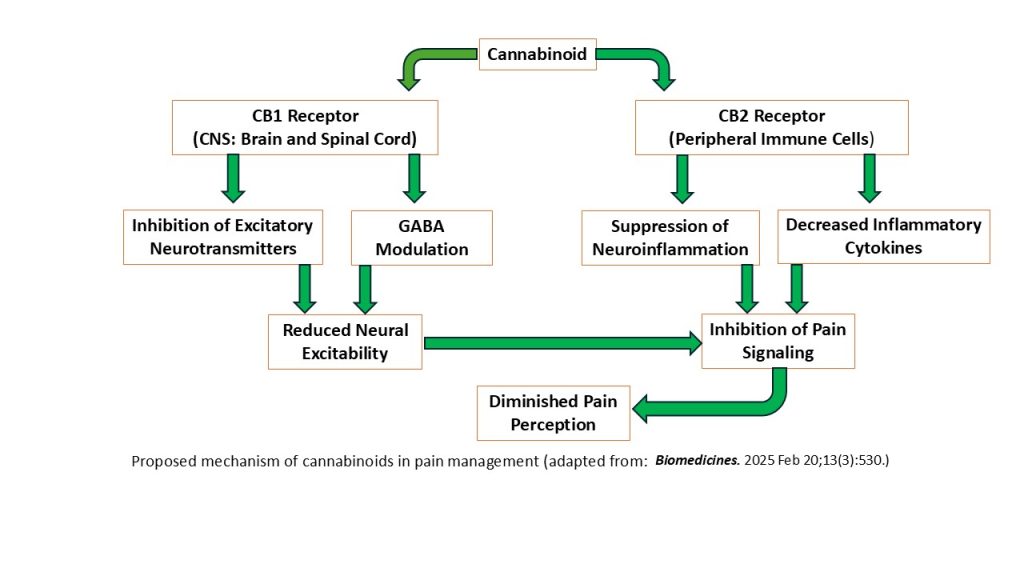
Cannabinoids, the active compounds in the Cannabis sativa plant, have emerged as a potential therapeutic alternative for pain management due to their analgesic and anti-inflammatory properties.3 Cannabinoids interact with the body’s endocannabinoid system, modulating pain and inflammation.3 Research has found cannabinoids may be beneficial in conditions including neuropathic pain, fibromyalgia, cancer-related pain, and multiple sclerosis-related spasticity.3
However, delta-9-tetrahydrocannabinol (THC), the psychoactive cannabinoid found in Cannabis sativa, has side effects such as cannabis use disorder, cognitive impairment, and psychiatric effects in predisposed individuals.3 Cannabis use may also be associated with increased risk of cardiac events and stroke.7 This is not to say these will manifest, yet as clinicians, we must help our patients make informed consent decisions. Plus, certain vocations perform drug testing as part of hiring or as part of random employee testing.
Consequently, a safer option is to use cannabidiol (CBD), a non-psychoactive cannabinoid. Rodent studies have found CBD to be beneficial in resolving joint pain and inflammation.8-10 In a human study, CBD led to improvement in joint pain in women on an aromatase inhibitor, a type of medication that can cause musculoskeletal symptoms.11 In my clinic, I use a type of CBD formulated with VESIsorb® technology, which improves the absorption.12
Nutritional Status and Pain
In patients with chronic pain, I test to make sure they’re getting enough of key nutrients. These important nutrients include:
- Omega-3 Fatty Acids – Omega-3s support a healthy inflammatory response, but their pain-relieving actions go beyond reduced inflammation. The omega-3 eicosapentaenoic acid (EPA) has been found to reduce both inflammatory and neuropathic pain significantly.7
- Vitamin D3 – An estimated 26% to 93% of people with chronic pain are deficient in vitamin D.1 Many studies have found that vitamin D deficiency is linked to pain. For example, one study found that men with chronic widespread pain and “other pain” were more likely to have lower vitamin D levels when compared with men without pain, even after the study authors adjusted for age and lifestyle factors.13 When evaluating patients’ vitamin D levels, it’s essential to test, not guess, even if they’re supplementing with vitamin D.
- Folate, Vitamins B12, C, D, and Magnesium – A recent study found that deficiency of key micronutrients is linked to chronic pain. Specifically, vitamins D, B12, and C, folate, and magnesium were more likely to be lower in individuals experiencing pain. Testing for such polymorphisms as MTHF, MAO, and COMT is vital as they can impact the way folate is metabolized.
Botanicals for Pain
Several botanicals have been studied to investigate their effects on pain. Here are some of the ones I like to use in clinical practice:
- Turmeric – Curcumin can regulate inflammatory cytokines. With its anti-inflammatory effects, it has been used in autoimmune diseases such as rheumatoid arthritis, inflammatory bowel disease, and multiple sclerosis.14
- Ginger – By inhibiting arachidonic acid metabolism, ginger is anti-inflammatory. It’s best used for chronic pain, as it is not as effective for acute pain.14
- St. John’s wort – This botanical helps reduce pain-related depression and also has analgesic effects. It should not be used together with selective serotonin reuptake inhibitor drugs (SSRIs), MAOIs, opiates, tricyclic antidepressants, or cold and flu medications.14
- Capsaicin – A natural chili pepper extract, capsaicin applied topically is a common treatment option for pain.14
Other Effective Pain Management Approaches
Several other approaches often yield good results. These include:
- Acupuncture15
- Hypnosis16
- Prayer/Meditation17
- TENS18
- Cryotherapy18
- Heat Therapy18
- Massage Therapy18
- Yoga and Tai Chi18
- Chiropractic Care18
- Red Light19
- Laser20
Conclusion
Although opioids may have their place for acute pain management, often, we can look to other considerations when possible, especially when tackling the complexities of chronic pain management that frequently impacts quality of life, relationships, employment, and carries both a physical and emotional toll on patients. This article provides a brief explanation of alternative therapies for pain relief, aiming to improve patients’ quality of life. In the end, the key is to find the pain management team that can offer each patient the best individualized plan.
References
1. Martin KR, Reid DM. Is there a role for vitamin D in the treatment of chronic pain? Ther Adv Musculoskelet Dis. 2017;9(6):131-135.
2. Yoo YM, Kim KH. Current understanding of nociplastic pain. Korean J Pain. 2024;37(2):107-118.
3. Johnson BW, Strand NH, Raynak JC, et al. Cannabinoids in Chronic Pain Management: A Review of the History, Efficacy, Applications, and Risks. Biomedicines. 2025;13(3).
4. Gomes T, Tadrous M, Mamdani MM, Paterson JM, Juurlink DN. The Burden of Opioid-Related Mortality in the United States. JAMA Netw Open. 2018;1(2):e180217.
5. Davis A, Robson J. The dangers of NSAIDs: look both ways. Br J Gen Pract. 2016;66(645):172-173.
6. Nwankwo A, Koyyalagunta D, Huh B, D’Souza RS, Javed S. A comprehensive review of the typical and atypical side effects of gabapentin. Pain Pract. 2024;24(8):1051-1058.
7. Jeffers AM, Glantz S, Byers AL, Keyhani S. Association of Cannabis Use With Cardiovascular Outcomes Among US Adults. J Am Heart Assoc. 2024;13(5):e030178.
8. Philpott HT, OʼBrien M, McDougall JJ. Attenuation of early phase inflammation by cannabidiol prevents pain and nerve damage in rat osteoarthritis. Pain. 2017;158(12):2442-2451.
9. Costa B, Trovato AE, Comelli F, Giagnoni G, Colleoni M. The non-psychoactive cannabis constituent cannabidiol is an orally effective therapeutic agent in rat chronic inflammatory and neuropathic pain. Eur J Pharmacol. 2007;556(1-3):75-83.
10. Costa B, Colleoni M, Conti S, et al. Oral anti-inflammatory activity of cannabidiol, a non-psychoactive constituent of cannabis, in acute carrageenan-induced inflammation in the rat paw. Naunyn Schmiedebergs Arch Pharmacol. 2004;369(3):294-299.
11. Fleege NMG, Miller EA, Kidwell KM, et al. Pilot Study of Cannabidiol for Treatment of Aromatase Inhibitor-Associated Musculoskeletal Symptoms in Breast Cancer. Cancer Med. 2025;14(15):e71117.
12. Knaub K, Sartorius T, Dharsono T, Wacker R, Wilhelm M, Schön C. A Novel Self-Emulsifying Drug Delivery System (SEDDS) Based on VESIsorb(®) Formulation Technology Improving the Oral Bioavailability of Cannabidiol in Healthy Subjects. Molecules. 2019;24(16).
13. McBeth J, Pye SR, O’Neill TW, et al. Musculoskeletal pain is associated with very low levels of vitamin D in men: results from the European Male Ageing Study. Ann Rheum Dis. 2010;69(8):1448-1452.
14. Jahromi B, Pirvulescu I, Candido KD, Knezevic NN. Herbal Medicine for Pain Management: Efficacy and Drug Interactions. Pharmaceutics. 2021;13(2).
15. Ling F, Qi W, Li X, et al. Bibliometric Analysis of Acupuncture Therapy for Cancer Pain Over the Past 10 Years. J Pain Res. 2023;16:985-1003.








0 Comments