
Part 1: The Paradigm
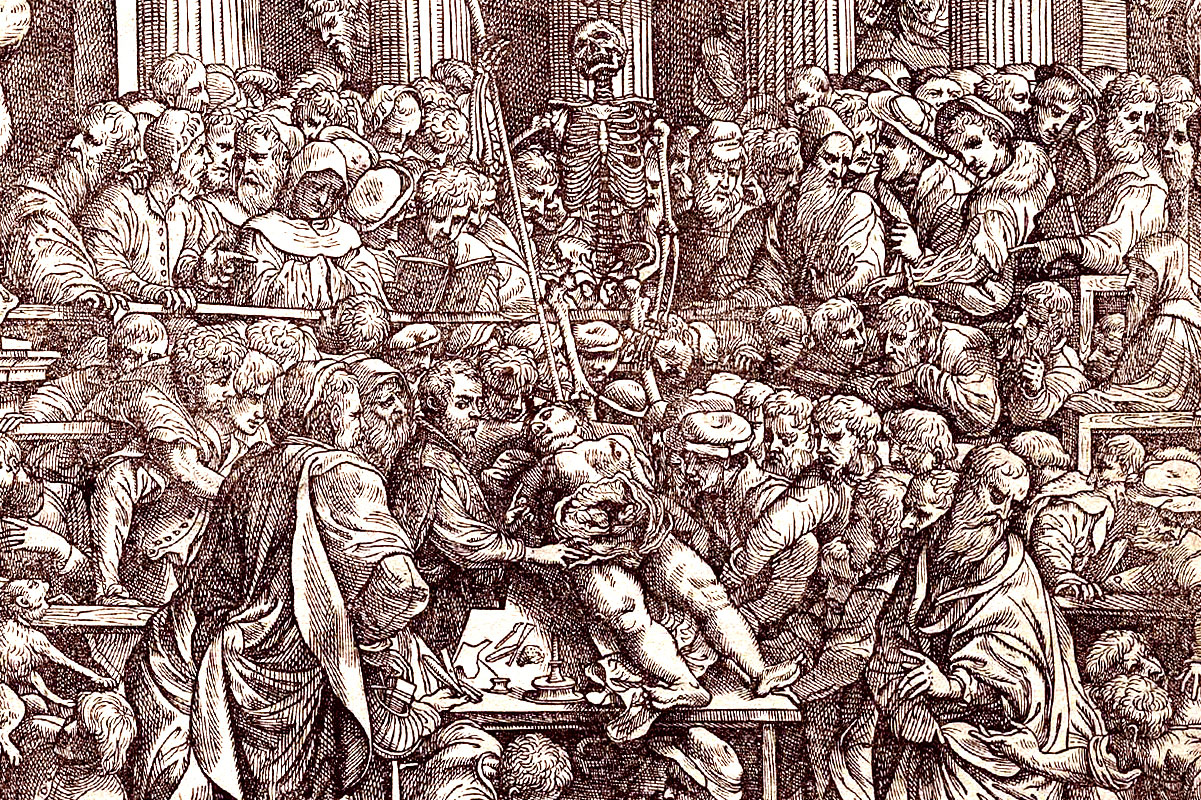
First displayed in Vesalius’ textbook of 1543, the revolutionary implications of anatomical dissection for modern scientific thinking about the human body lured Renaissance painters into trafficking in stolen bodies to explore them first-hand. A century later, they were immortalized in Rembrandt’s masterpiece, Dr. Tulp’s Anatomy Lesson, which shows the learned Professor dissecting the muscles of the forearm, placing a clamp on the flexor tendon, and savoring the amazement on his students’ faces as he prepares to pull back on it and make the dead fingers rise again. These revelations are still celebrated in the cadaverous initiation ritual of first-year medical students today.








0 Comments