
Part 1: The Paradigm
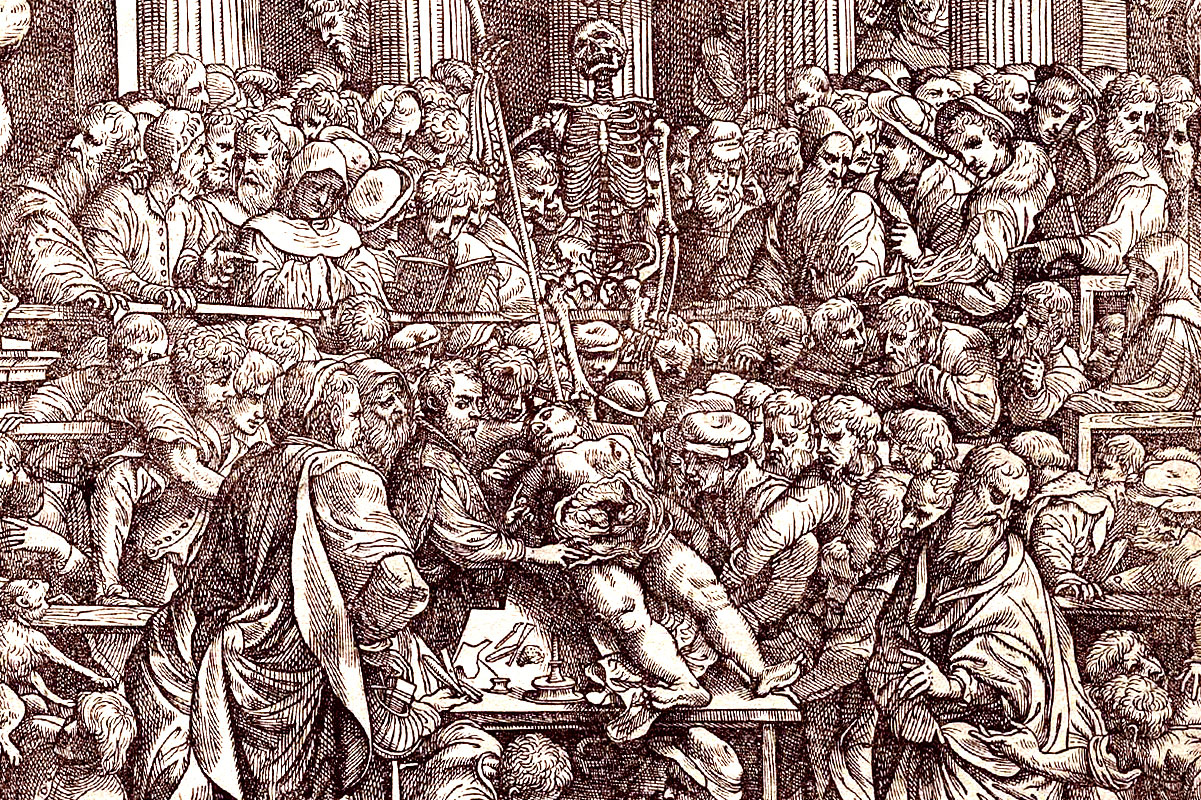
First displayed in Vesalius’ textbook of 1543, the revolutionary implications of anatomical dissection for modern scientific thinking about the human body lured Renaissance painters into trafficking in stolen bodies to explore them first-hand. A century later, they were immortalized in Rembrandt’s masterpiece, Dr. Tulp’s Anatomy Lesson, which shows the learned Professor dissecting the muscles of the forearm, placing a clamp on the flexor tendon, and savoring the amazement on his students’ faces as he prepares to pull back on it and make the dead fingers rise again. These revelations are still celebrated in the cadaverous initiation ritual of first-year medical students today.
The next step was the emergence of microscopic anatomy and analytic chemistry in the Nineteenth Century, which prompted Claude Bernard, the great French physiologist, to articulate the notion of mechanical causality that these sciences were already making use of; and his words still accurately describe the form and content of medical research today:
Neither physiologists nor physicians must imagine it their task to seek the cause of life or the essence of disease. That would be entirely wasting one’s time in pursuing a phantom. The words “life,” “death,” “health,” and “disease” have no objective reality. When a physiologist invokes “the vital force,” he does not see it; he merely pronounces a word. Only the vital phenomenon exists, with its material conditions: that is the one thing that he can study and know. [Italics mine: RM]
What we call the immediate cause of a phenomenon is nothing but the physical and material condition in which it exists or appears. The object of the experimental method and the limit of every scientific research is therefore the same for living as for inanimate bodies: it consists in finding the relations which connect a phenomenon with its immediate cause, or, to put it differently, in defining the conditions necessary to the appearance of the phenomenon.
When the experimenter learns the necessary conditions of a phenomenon, he is in one sense its master: he can predict its course and appearance; he can promote or prevent it at will. We shall therefore define physiology as the science whose object is to study the phenomena of living beings and to determine the material conditions in which they appear.1
Health and disease are not two essentially different modes, as the ancient practitioners believed. These are obsolete medical ideas. In reality, between these two modes there are differences only of degree: exaggeration, disproportion, and discordance of normal phenomena constitute the diseased state.2
Strict adherence to this discipline has yielded a vast and minutely detailed knowledge of the human organism that enriches our lives in countless ways, with ingenious tools like antibiotics to eliminate harmful bacteria, hormones to regulate metabolism, vaccines to prevent dangerous infections, and pharmaceutical drugs to stimulate and inhibit enzymatic reactions, all of which have saved the lives of many patients throughout the world in situations that would have killed or maimed them otherwise.
But our passion for devising and commanding ever more formidable power over nature regularly beguiles us into downplaying, ignoring and sometimes deliberately concealing the inherent risks of that strategy, which are at least as important, but subtler, harder to detect, and sure to be disheartening when they’re brought to our attention. For medicines to be manufactured and dispensed on a large scale, they must be potent enough to force most people taking them to function in whatever narrowly targeted way we’ve determined that they should, and to override any individual sensitivities that might interfere. Such results are best achieved by identifying various biochemical and physiological dysfunctions commonly found in selected varieties of sick people, and isolating natural metabolites or synthetic chemical agents with sufficient power to overcome them or at least lessen their severity by returning the associated abnormalities to measurements within the normal range.
But clinical practice amply confirms that drugs and vaccines powerful enough to accomplish that consistently also inflict harm on a regular basis. Most drugs in common use do indeed have the power to accomplish at least some of what we ask of them, and in advanced cases they often provide miraculous relief, buy valuable time, or at least do the best that can be done under such circumstances. But the exorbitant price we must pay for such precise and formidable causal power includes two enormous risk and cost centers that may be acknowledged in passing as a kind of entrance fee into the system but are seldom taken seriously and paid careful attention to as practical problems requiring artful care.
Most reasonably attentive and experienced physicians will recognize when the prescribed dose is excessive or insufficient and make the proper adjustment, including discontinuing medicines that don’t work or produce immediate, obvious toxicity in the form of bothersome “side effects.” But the disease or abnormality controlled by the drug is abstracted from and defined independently of the lived experience of the patients who exhibit it, needn’t alter or affect them in any other noticeable way, and often reappears with comparable force when the drug wears off. Using drugs in this fashion thus involves the readiness to continue using them for longer periods of time, until what may have originated as an idiomatically programmed episode of illness in the patient’s life easily and often slides into an ongoing, chronic, and less curable disease, now rigorously and indeed artificially programmed, with the power to propagate itself through time in exchange for temporary relief of symptoms and technical correction of abnormalities.
Chemical dependencies of this type follow regularly from our perceived need to use powerful drugs to force the body to behave in whatever narrowly targeted ways we think it should, and also help to complete the self-fulfilling prophecy already implicit in the definition of chronic diseases, that they are incurable in any case and must therefore be removed surgically, controlled or palliated with drugs throughout life, loudly complained of, or borne in silence.
No less widespread, the second risk is an obvious corollary of the first, that treating chronic diseases for long periods of time with drugs powerful enough to correct the targeted abnormality often leads to other dysfunctions at some point in the future that require additional drugs to control them as well. These may take months or years to manifest, as well as varying at random according to each patient’s latent predispositions, and are thus easily dismissed as individual hypersensitivities, which in fact they are, rather than measurable or certifiable effects of the drug. In this insidious fashion, our medical system’s ceaseless quest for definitive causal power adds its own major contribution to the burden of chronic diseases that have become the most prevalent and diverse complaints seeking medical help today.
In recent years, these “side effects” have multiplied to the point that the industry has abandoned its traditional strategy of downplaying them and now all but boasts of them as further proof of the drug’s power, as if daring patients to actually take the gamble. In the United States, one of only two countries to allow direct-to-consumer drug advertising, such inducements now dominate the intermissions on prime-time network television, featuring a cast of lively actors impersonating happy patients with chronic diseases enjoying nearly symptom-free lives, while the announcer rattles off a long list of serious or even fatal complications much too rapidly for anyone to actually remember them. Some go even further, like the ad for Cialis, a long-acting drug for impotence, in which viewers are warned to beware of and seek immediate help for erections lasting more than two hours, a complication which to its potential customers must sound tantalizingly close to hitting the jackpot.
A subtle risk-benefit analysis also hangs over surgery, the magnificent archetype of causal mastery in medicine, requiring awesome skill, effective control of pain, bleeding, and infection, and moment-to-moment stabilization of basic life functions, without which patients would regularly die or suffer crippling impairment. But the surgical ideal of technical control is inherently risky when it succeeds, over and above all the ways in which it can fail. Cutting into a living body involves removing, bypassing, repairing, or replacing certain parts; interrupting or interfering with the seamless integrity of the organism; and altering or disfiguring the appearance, feeling, and functioning of the patient in some fashion, the long-term consequences of which can never be completely or precisely foreseen.
Surgery tempts us with the prospect of immediate, profound, and lasting relief, for the simple reason that wounds tend to heal, whereas our diseases must be slowly, laboriously, and often painfully cured. By converting diseases into wounds, surgery thus ironically relies on us to heal ourselves after all, to summon our neglected self-healing capacity merely to survive, and hopefully recover and thrive as well.
As a way of assisting the natural healing process by repairing a part of the body that is broken or removing a part that is already dead, modern surgery must surely be reckoned among the supreme technical achievements of human history. But its purely anatomical approach to curing disease triumphantly reaffirms mechanical causality as the conceptual model for the medical enterprise as a whole, with its quasi-military decision to cut, burn, remove, and replace in lieu of gentler, safer, and more enduring methods of healing. The burden of suffering and disability cheerfully borne by our “cured” surgical patients thus becomes a telling indictment that never shows up in our statistics but approximates the risk that such procedures will continue to be needed in the future.
No longer content to heal the sick, contemporary medicine is driven above all to achieve technical mastery over the life process. What Bernard clearly foresaw and his successors routinely seek to accomplish is acquiring the knowledge and devising the means to manipulate and control biological phenomena artificially and more or less at will, on the dubious assumption that health, well-being, and our more subjective and personal goals will reliably follow. The ingenuity and sophistication of its instruments are increasingly wondrous to behold, but the methodology of their use remains essentially the same as Bernard outlined: characterizing the phenomenon to be studied, identifying its component parts, isolating its physicochemical causes, and devising appropriate technologies for controlling them with as little disturbance as possible to the rest of the organism. Left unsaid but still taken seriously is the subtext that what can’t be subdivided, objectified, and measured in this fashion needn’t and shouldn’t be studied at all, since it can’t be defined rigorously or understood in any useful or meaningful sense.
Our emphasis on physicochemical causality has also created a medical culture replete with the imagery of warfare and combat, with our diseases seen as enemies to be fought, our physicians trained to man the front lines in the endless war against them, and armed with antibiotics, antihypertensives, antimetabolites, and the latest, most potent chemical and surgical weapons to shoot down and kill symptoms and abnormalities whenever, wherever, and however they show themselves.
Part 2: The Art of Healing
What the causal model leaves out, upstages, and overrides is the unique individuality of each patient as an integrated energy system, based on his or her lived experience, which transforms the task of healing the sick into an art as well as a science. Ignoring this essential resource has created a medical system that is rigid, one-sided, and much too powerful to accomplish its own noble purpose on a regular basis. Compelling our bodies to behave by applying superior force at a strategic point overlooks the gentler varieties of causal influence that stimulate, influence, or simply enable most of our lived experience, and thereby enable practitioners of our most venerable traditions to help their patients achieve real healing, despite being relegated to the fringes of the dominant system, if they are tolerated at all.
Successful practitioners of herbal medicine must also acquire scientific knowledge through diligent study of plant substances, but with time and experience can develop an intuitive faculty for matching the indescribable essence of each one to the illness that can best respond to it with a thorough and lasting cure. Chinese and Japanese acupuncturists must likewise master an incredibly detailed and complicated data-set of observations accumulated over many centuries, purporting to correlate an elaborate radial pulse diagnosis based on 18 different readings with various organ dysfunctions, ultimately with points mapped out along the “meridians,” longitudinal energy currents spanning the torso, for rebalancing with needles or moxibustion. As elaborate and improbable as that methodology appears to a modern observer, the profound healings it often achieves similarly point to an artful adaptation of bioenergetic science that modern medicine now happily tolerates but pays only nominal attention to.
Homeopathy is the form of energy medicine that I’m most familiar with, having practiced it more or less exclusively for 46 years; so I will examine it in enough detail to show what can happen when the focus shifts from fighting diseases to simply helping patients do what their organism is already trying to do. Homeopathic physicians are also interested in making a diagnosis and eager to make use of the whole body of scientific knowledge that our medical system is based on. But making the diagnosis is no longer the main purpose of the interview, and no longer dictates the choice of the appropriate medicine. Like herbalists and classical acupuncturists, homeopaths need constant additional study to adapt that knowledge to each individual case, a particular skill that can ripen into an art form all its own.
To that end, the interview, the analysis, the choice of the medicine, and the reactions brought about by it are all conducted, studied, and recorded in the ordinary language of lived experience, of how each patient feels and functions according to his or her own individual standards. The technical language of diseases and abnormalities is still relevant and useful, but plays in most instances a secondary or confirmatory role.
Both the Law of Similars which gives homeopathy its name and its preference for “infinitesimal” doses diluted beyond the point of detectable molecular structure are important principles that remain puzzling even to veterans who use them every day and unfathomable to just about everyone else. But underlying and helping to explain them both is the “vital force,” the same truism that Claude Bernard dismissed as a platitude of no practical use, which modern physicians have dutifully ignored as well. To the homeopath and other practitioners of integrative and complementary medicine, it is the life principle itself, the capacity of all living organisms to function as integrated energy systems with their component cells, tissues, and organs working together in concert and encompassing everything that sets them apart from inanimate matter.
What homeopaths call the “totality of symptoms” is simply the vital force in its clinical aspect, the unique ensemble of overt signs and symptoms that each patient feels and exhibits at any given time; and investigating it in as much detail as necessary is the main purpose of every homeopathic visit. That composite portrait is the indispensable basis not only for choosing the appropriate medicine, but also for following how the patient improves, worsens, and changes over time in response to it, and for choosing a different medicine when that picture changes as well. In contrast, regular physicians who ignore it must choose their prescriptions and judge improvement and worsening on the basis of dysfunctions that their patients share with many people, which again are usefully quantifiable but abstracted from and often untranslatable into what they actually feel and experience. The totality of symptoms is the epicenter of the homeopathic project from start to finish, and the key to unlocking the mysteries surrounding the Law of Similars, the single remedy, and the infinitesimal doses as well.
Hahnemann coined the term “homeopathy” from two Greek roots meaning “similar” and “suffering,” and his so-called “Law of Similars” is not an ironclad law that binds with mathematical force, like Newton’s Laws of Motion or Einstein’s Laws of Relativity, but simply an empirical generalization based on a startling phenomenon that he experienced in his own body. Translating an article on Peruvian cinchona, the source of quinine, prompted him to take a dose of the bark himself, which brought on a bout of chills and fever just like the illnesses it was famous for relieving, a duality so unexpected that he let it wear off and took a second dose just to make sure, with exactly the same result. This extraordinary, unlooked-for correspondence was life-changing for him. Immediately sensing its profound importance, he methodically set about administering therapeutic doses of the leading remedies of his time to himself and willing family members, friends, and colleagues, compiling detailed, written “provings” of all their reported symptoms that amounted to more than 90 medicines in the course of his lifetime. When he began matching and administering them to his patients, even these earliest results were successful enough to make him famous and attracted students from all over Europe. In the 200 years since then, well over a thousand medicines have been studied and utilized all over the world in exactly the same way.
Hahnemann called his method the “Law of Similars,” but never claimed it was the only way to cure, although his experience kept confirming his belief that it was the surest, the safest, and indeed the best way. So he wrote and published it not as a simple, declarative assertion in the Indicative, Similia similibus curantur, “Likes are cured by likes,” but rather an exhortation in the Subjunctive, Similia similibus curentur, “Let likes be cured by likes!” And the best way to think of it is simply as an invitation to physicians to take advantage of the regular correspondence that he discovered, with this still-unsolved mystery pointing the way to a bioenergetic science of the future that is still in its infancy.
Right from the start, it has any number of delightful consequences to ponder and make use of. A good example is coffee, whose well-known ability to keep us awake and alert makes it highly prized by homeopaths everywhere for relieving the kind of insomnia that is galvanized by excessive thoughts, ideas, and mental overstimulation, the same rewards for which we habitually drink it in the morning. Another is the various snake venoms of the Crotalid or rattlesnake family, which kill by dysregulating the blood and its clotting mechanism, causing thrombosis, hemorrhaging, or both, and are favorites with homeopaths for dispelling these same life-threatening emergencies when the totality of symptoms also points to them. This double-edged quality of medicines is actually well-known in allopathic circles as well, with “paradoxical” effects like antihypertensives raising blood pressure and antidepressants intensifying depression to the point of suicide cited in standard reference texts like the Physicians’ Desk Reference, just not yet recognized as a general rule.
The totality of symptoms also leads directly to the single remedy, Hahnemann’s general rule of choosing just one medicine at a time for the whole patient, since each medicine elicits its own unique totality or composite symptom-picture in the healthy volunteers who prove it, which then resonates even more strongly with that of the patients who heal themselves with its help. To that end, the interview proceeds by confirming or refuting the symptomatology of each medicine being considered against that of the patient, with each data-set amplifying, refining, and feeding back into the other until a comprehensive match is found. The totality of symptoms of both the medicine and the patient thus represent synchronicities, assemblages of phenomena that exist on their own, independently of whatever may have caused them to be what and how they are: the healing power of each medicine is vested in the extent and particularity of that resonance, and its exquisite beauty reveals itself only when the patient’s symptom-picture truly matches it. The miracle of homeopathy is definitively non-causal in that sense.
Like the Law of Similars, homeopathy’s use of microdoses also began with an empirical discovery. When Hahnemann began using medicines homeopathically, he found that the standard material doses often worsened the symptoms before relieving them, sometimes to an intolerable degree, and that diluting them reduced both the unpleasantness and the subsequent benefit, just as one would expect. Eventually, with the help of some inspired guesswork, he found that vigorously shaking or “succussing” the solution with each dilution not only relieved the aggravations but mysteriously enhanced the healing response, until by the end of his life he was achieving splendid results with medicines diluted 1:100 up to 30 times, a level well below the chemical threshold of Avogadro’s number.
After more than two centuries, nobody has ever satisfactorily explained how a solution with no detectable molecules of the medicine remaining in it could possibly have any effect on a patient, let alone a curative one. Even now, with various forms of alternative and complementary medicine entering the mainstream, most American physicians still find homeopathy a challenge to take seriously, much less believe in. But ever since Hahnemann’s time, all criticisms of it, both well-intentioned and otherwise, boil down to the same defective syllogism:
It can’t possibly work!
Therefore, it doesn’t work!
Neither the failure of modern science to explain it nor its studied disinterest in even taking a closer look will ever suffice to prove that the homeopathic phenomenon is a fake and the method of treatment based on it is ineffective.
In any case, the phenomenon is real, and the medicines do in fact work. A substantial body of estimable scientific research already establishes quite convincingly that homeopathy’s infinitesimal doses are entirely capable of significant biological activity, both stimulating and inhibiting colony growth in bacterial and one-celled parasitic cultures,3 in vitro enzymatic activity in tissue culture and cell-free extracts,4 seed germination and growth in various plant species,5 and various physiological functions in higher animals.6
As for healing the sick, well-designed RCTs in peer-reviewed journals of clinical medicine have repeatedly shown that equally dilute solutions can relieve the sufferings,7 ease the disabilities,8 correct the abnormalities,9 and even heal the tissue damage10 of patients with a variety of major diseases as well or better than their standard treatments with pharmaceuticals.
Even more impressive is the historical record that licensed physicians have continued to practice medicine successfully on the basis of these same principles for well over 200 years, and now do so almost everywhere in the world despite the ascendancy of causal medicine as the dominant model of health care. This is a major achievement in its own right, and it argues persuasively for the truth of the homeopathic phenomenon and all that follows from it. Even in my own far from expert hands, it worked well enough to delight, reward, and sustain me in the practice of family medicine for 46 years with never a cause for regret; and I have no doubt that the vast majority of my colleagues would say the same.
So if our critics are right that our medicines are merely placebos, either we must be helping our patients heal themselves by some shamanic spell we’re casting over them unawares, which would be flattering indeed; or we’re simply lying and haven’t helped them at all, in which case simply interviewing them and investigating their cases would settle the matter; or they got better all by themselves, which would be the best outcome of all.
I am far from suggesting that pharmaceuticals have no value, or that the science leading to their use is untrue. I often referred patients whom I couldn’t help to my allopathic colleagues, and was deeply grateful for their help. What I am saying is simply that matching the treatment to the individuality of the patient allows and encourages a more comprehensive, profound, and enduring level of healing than is possible with drugs designed simply to counteract a specific dysfunction or correct a particular abnormality by applying superior chemical force at a particular strategic point.
This broader perspective also helps both the doctor and the patient to recognize and appreciate the homeopathic interview as a healing experience in its own right. Rather than a quick once-over for making a diagnosis, its fundamental aim of patiently compiling the totality of symptoms invites, encourages, and assists patients to tell their story in its entirety, as they live it and in their own words, giving special attention to whatever seems especially important, striking, or inexplicable to them, and including sensations, thoughts, and feelings that they alone are privy to, which are deliberately ignored in medical education and training for precisely that reason. The process of selecting the right medicine is thus intertwined with helping patients create a working mythology of their illness that makes sense, feels right, and rings true to them. Their profound gratitude for being given that opportunity then sets the stage for the medicine to continue the work of healing when they get home.
As a result, classifying our homeopathic cures as placebo effects is actually far from the putdown that it was meant to be. I’ll never forget a 34-year-old RN who’d been plagued with endometriosis for decades, beginning with severe dysmenorrhea in her teens. After four surgeries to remove large, blood-filled cysts from her bladder and pelvic organs, several prolonged courses of male hormones to suppress the condition, and the consensus of several fertility specialists that she couldn’t have children, she decided to try homeopathy as a last resort to restore her menstrual flow, which had become irregular, infrequent, dark-brown, and ultimately “dead,” as she described it, from so much aggressive treatment.
After trying a few medicines, her periods did indeed become fuller, richer, and more regular; and within six months she was pregnant. By the time of her next visit for a different complaint, eight years later, she was raising two healthy children after two uncomplicated pregnancies, uneventful labors, and normal vaginal births, as well as enjoying her best run of general health in a very long time. Quite rightly, her story remains an isolated anecdote with no statistical significance whatsoever, nor can its favorable outcome be attributed unequivocally to homeopathy or any other agency in precise, linear fashion. But my patient has never stopped thanking me for it, which is as much proof as I need, and more than enough to last us both for a lifetime; so to a homeopath that throwaway line about placebos turns out to be high praise indeed.
After so many studies showing that they work as well as or better than drugs, it should be a no-brainer to try the cheaper, gentler, and safer method first and save the heavy artillery for when they fail. Patients treated successfully with homeopathy rightly feel that they’ve healed themselves and may even wonder if they might have done so without any medicine at all. But that delicious quandary is hardly cause for complaint, much less ridicule, since what it describes is indistinguishable from the ultimate healing experience, a gentle, spontaneous, and long-lasting cure requiring no further treatment, even if not precisely because the pharmaceutical industry actually boasts of surpassing it.
The irony lies in precisely the opposite direction, that our present system banishes this optimal response to the placebo side of the equation, while the industry’s most favored and costly products are deemed effective only to the extent that they can overpower the physiology of as many patients for as long a time as possible. Rather like a bullfight, successful RCTs ritually celebrate the victory of the human intellect over the primitive forces of nature, an absurdly unequal contest in which the latter is hobbled in advance and defeated as often and overwhelmingly as possible. However precise and useful they may be for certain purposes, they resurrect the omnipresent reality of self-healing just long enough to vanquish it again and again, thus upstaging and downgrading the splendid mystery that most needs to be celebrated, not to mention understood and put to work.
At the very least, the submolecular doses of homeopathy, the medicinal plants of herbal medicine, the precise needlings of acupuncture, and other non-invasive methods that the future will surely devise should all remind us to utilize these gentler causal influences to assist, promote, enhance, or simply enable the dysfunctional organism to finish the job it is already perforce engaged in. That is why for the moment I’m well content for our homeopathic cures to remain snugly ensconced on the placebo side of the equation, because until we develop a gentler, more inclusive, and collaborative model of causal influence and a medical system focusing on the lived experience of flesh-and-blood individuals, that is precisely where they belong. What the nuclear physicist J. Robert Oppenheimer once told a group of psychologists seems equally apposite for those who would heal the sick:
We inherited at the beginning of the Twentieth Century a notion of the physical world as a causal one, in which every event could be accounted for if we were ingenious, a world characterized by numbers, where everything interesting could be measured and anything that went on could be broken down and analyzed. This extremely rigid picture left out a great deal of common sense which we can now understand with a complete lack of ambiguity and phenomenal technical success.
One [such idea] is that the world is not completely determinate. There are technical predictions you can make about it, but they are purely statistical. Every event has in it the nature of a surprise, a miracle, or something you couldn’t figure out. Every pair of observations taking the form of “we know this and can can predict that” is global and can’t be broken down. Every atomic event is individual: it is not in its essentials reproducible.11
Part 3: Bad Ethics and Bad Science
Our system of causal medicine has also tended to obscure serious threats to our general health by hampering not only our ability to recognize but our willingness to acknowledge them as well. To my way of thinking, mandatory vaccination is the worst of these, because the medical profession and the worshipful public have been warned and now largely agree not to talk about it, so that its destructive effects keep spreading and intensifying without anything being done to stop or even mitigate them. The urgency and obligation I feel about warning the public about it as often and as loudly as I can thus begins with pointing out what our causal model of science overlooks, as in the previous sections. But understanding the vaccine mandates requires the further step of distinguishing real science from scientism, the elaborate, ingenious counterfeit that has been dressed up to resemble the real thing, speak its name, claim its authority, and bask in its glory.
From the start I had a gut feeling against vaccinating kids routinely for infections that were mostly non-threatening or already on the decline, as well as injecting them against their parents’ wishes and denying them an education if they refused. But I had no solid evidence to back it up; so when I moved to Boston in 1982, I felt I needed to understand more about vaccines and devoted the better part of a sabbatical year to studying them. Only the DPT, MMR, and polio were required back then, and the mandates weren’t enforced all that strictly in Massachusetts, where the so-called “religious” exemption was granted to parents for any deeply-held conviction against them without requiring formal membership in Christian Science or any other such denomination.
My review of basic immunology focused on coming down with and recovering from acute infectious diseases with fever, because that process is precisely what vaccination is meant to replace and thus easily forgotten now that that replacement has in fact taken place. With my own childhood memory of it still fresh in my mind, the measles seemed like a useful model, beginning with the virus dispersed through the air by sneezing and coughing, inhaled by susceptible persons in the vicinity, and sensitizing the epithelial cells lining the upper respiratory tract to get rid of it the same way.12 During the long incubation period of 10 to 14 days, it multiplies first in the tonsils, adenoids, and accessory lymphoid tissues of the nasopharynx, then in the regional lymph nodes of the head and neck, and finally in the spleen, liver, thymus, and bone marrow, while the patient continues to feel well and exhibits few if any symptoms to speak of.
When symptoms first appear, circulating macrophages and monocytes are already detecting, engulfing, and digesting the virus. These phagocytic cells are then aided by serum complement, proteins that bind and fragment it, and by interferons and interleukins, cytokine peptides that direct the cells to where they’re needed; this most basic or “cellular” component of immunity initiates, co-ordinates, and regulates the process as a whole. Meanwhile, cloned subsets of lymphocytes and plasma cells in the thymus and bone marrow help to finish the job by synthesizing specific antibodies that clump the virus, rendering it insoluble and easier for the cells to locate and grab hold of; this is the “humoral” component. The net effect of the whole process is expelling the foreign virus from the blood and leaving behind a permanent memory of the virus encrypted within the DNA of T- and B-cell lymphocytes to help them respond promptly and efficiently if they should encounter it again in the future, two all-important results that can’t be achieved by any one mechanism acting independently of the rest.
For most healthy people, the immunity conferred by this splendid collaboration is profoundly health-giving in two respects. First, it is specific to the disease in the obvious sense that those who recover from it will never again be susceptible to it, no matter how often or how extensively they are re-exposed in the future. Vaccines are designed to accomplish a reasonable facsimile of that result, and most do succeed in preventing the acute disease from breaking out for an extended period of time.
But natural immunity also involves the crucial nonspecific element of mobilizing and organizing the whole sequence of mechanisms, programming and energizing the immune response as a whole, and priming the system to respond acutely, vigorously, and collaboratively to whatever other infections it may encounter throughout life. This is the formative experience for developing and perfecting a healthy immune response, and an enormous net gain for the general health of individuals, and their families, communities, and nations as well. A substantial body of research demonstrates that children who come down with and recover from measles, mumps, chickenpox, influenza, and other common acute infectious with fever are much less likely to develop chronic autoimmune diseases and various forms of cancer later in life than those who do not, to an extent actually proportional to the number of such illnesses recovered from.13
This health-giving benefit is so profound and unambiguous as to warrant general rejoicing, and immediately raises the question why the general public and even most doctors remain largely unaware of it. At least part of the answer must be our ardent, quasi-religious faith in vaccines, despite this evidence that a healthy immune response comes from learning how to be sick rather than vaccinating everyone against everything simply because we have the technology to pull it off.
In any case, whatever good vaccines accomplish bypasses and indeed dysregulates the collaborative mechanisms of the cellular system14 and thus precludes the lifelong health benefit that depends on them. When a vaccine is injected intramuscularly, there is a brief inflammatory reaction at the injection site, but no local sensitization of the epithelium, no co-ordinated mobilization of phagocytes, cytokines, or serum complement, no overt illness, and thus no reliable mechanism or pathway for getting rid of the virus.
After 14 days or so, yes, measurable titers of specific antibodies will probably appear in the blood, and yes, the recipients of vaccines will be somewhat less likely to come down with the acute disease for a time than they were before. But without the acute illness, there is no priming of the immune system as a whole, no protection against chronic disease, no encrypted memory of the infection, and no means of expelling the foreign viruses, bacteria, or bioengineered fragments derived from them.
Indeed, where the vaccine goes, how it persuades the antibody-producing cells to continue doing their work over extended periods of time, and what price we must pay for these antibodies and the partial, temporary counterfeit of natural immunity that they provide are questions it seems we’re not supposed to ask, can expect righteous indignation or haughty contempt if we do, and haven’t been convincingly answered in any way that helps the public understand.
What haunts me about the process is simply that, unlike most of the infections it seeks to prevent, vaccination is a chronic phenomenon, so that its intended result of achieving continuous antibody synthesis for months and years afterward would seem to require the vaccine substance itself or at least the information that it conveys to remain active inside the body for as long a time as possible. In short, it is dangerously misleading if not the exact opposite of the truth to claim that vaccines somehow protect us from or render us immune to acute diseases if it does so by driving the foreign organisms or toxic derivatives of them deep into our vital organs, causing us to harbor them chronically if not permanently instead, and thus preventing the infections by suppressing our ability to react acutely to them, and very likely to other foreign antigens as well. To my admittedly jaundiced eye, that is as accurate a definition of and as unmistakable a recipe for chronic disease as I’ve ever come across.
My review of immunology provided the scientific basis for these hypotheses, but what made them starkly and vividly real for me was my clinical experience with vaccine-injured children,15 which led me slowly and incrementally to confirm that vaccines were indeed a significant cause of their pathology and to understand why I missed it for so long and so many parents and doctors overlook it as well.
The guiding light that showed me how to be a physician and taught me most of what I’ve learned in practice was the cumulative experience of private encounters with individual patients and their families and the personal relationships that developed from them. “Anecdotal evidence,” our somewhat dismissive term for it, still provides the basic content of medical practice; and while it can’t match the scientific rigor of RCTs, I’m reasonably sure that neither the hypotheses I came up with nor the research that could validate them would ever have occurred to me otherwise.
When parents told me that their kids were injured or made sick by their vaccinations, it was obviously an important part of my job to determine whether and to what extent that belief was accurate; and certainly there were times when I concluded that it wasn’t. But either way I trusted them to tell me the truth of their experience as they lived it, right or wrong, unless something happened to convince me they were lying; and in 53 years of family practice that almost never happened. Physicians are rightly trained to look for the specific effects of each particular drug or vaccine that we give, so the first reactions I was sure of were minor complaints that resembled the infections they were targeting. But with the DPT and MMR each containing three separate components, new vaccines being introduced right and left, and so many being given so often, or even simultaneously at the same visit, it became increasingly difficult to identify a specific vaccine or component as solely or primarily responsible for any particular complaint.
By the late 1980s I began to notice that children recently vaccinated were also reacting to them nonspecifically, by developing a more intense or prolonged version of whatever chronic illnesses they were already bothered by, like recurrent ear infections, which were practically ubiquitous at the time. One 19-month-old girl hadn’t reacted overtly to her DPT and polio, and ran a fever with her first ear infection after being weaned and entering day care around her first birthday, but then seemed fine after a round of antibiotics until her MMR at 15 months, when she came down with five ear infections in rapid succession, along with marked intensification of the eczema and nasal allergies she’d had only mildly since birth. Her ear infections cleared up nicely with homeopathic treatment, and she remained in good health while delaying further shots for a while; but her parents were dead-set against resuming them.
Still wedded to the idea of specific reactions to specific vaccines, I entertained the possibility that ear infections might be caused by the MMR mainly; but events soon proved otherwise. One six-year-old girl had had repeated episodes since early infancy and remained “run down” in between, needing more sleep and prone to catch whatever acutes were going around, which her mother summed up as being “sick all the time.” She’d had all her shots, but a DPT booster before first grade brought on her worst episode, lasting four months despite several rounds of antibiotics, which led her parents to try homeopathy. She too recovered nicely with treatment and remained in good health.
Another “aha” moment came from the case of a 15-month-old girl whose ears hadn’t healed from 11 infections and as many rounds of antibiotics. After a healthy pregnancy and easy labor, her mom chose to bottle-feed, and the first ear infection came with a high fever and violent earache at two months, soon after her first DPT, HiB, and polio combination. But her later episodes were mild and afebrile, with some fretting and pulling at the ear; and one was totally asymptomatic, with some fluid behind the eardrum detected by her pediatrician at a routine checkup, although she too seemed vaguely unwell most of the time.
Advising her parents to put off vaccines for a while, I gave her a medicine to strengthen her immune system; and within a week she was sick again, this time with 103° fever and loud screaming, just like her first attack. With the help of a common acute remedy she recovered the next day, and by her next visit, three months later, she was totally fine and remained so for the three years we kept in touch, with no ear infections, no antibiotics, and, at her parents’ insistence, no shots. Her story reminded me that acute childhood illnesses with fever and strong, well-defined symptoms usually indicate robust vitality and an immune system that is developing normally, while children who respond weakly to infection tend to be chronically ill and warrant further attention. But what really bothered me was that vaccines had pushed her into chronic territory and kept her there until natural medicines helped bring her back.
Over the years, I saw a large number of kids who reacted in exactly the same way to two or more different vaccines, until it became clear that any vaccine would do. One 10-month-old girl had had five acute episodes, each one with high fever, intense earache, and loud screaming, soon after finishing the antibiotic from the one before. Fussy and irritable as a newborn, she developed a rash from her milk-based formula, which flared up after her first shots at two months of age and led to her first ear infection two weeks later. After that she got only the DT and didn’t react to it overtly, but her ear infections continued without letup.
When her mother stopped vaccines and began homeopathic treatment, they subsided quickly enough, and she remained healthy and symptom-free. But six months later her parents separated, and her father insisted on taking her for the MMR, which promptly brought on three typical episodes and three more rounds of antibiotics. Once again, she recovered quickly under her mother’s care and remained in good health throughout her childhood, despite a tendency to relapse when she visited her dad, who indulged her with dairy products and took her to the pediatrician for her full quota of vaccines and antibiotics. In short, she reacted identically and in a manner distinctively her own to whatever vaccines she was given, implicating no one of them in particular, but some as yet unidentified feature of the vaccination process itself.
In the course of time, I saw hundreds of kids with a wide variety of other chronic diseases who reacted to their vaccinations in exactly the same way, more than enough to convince me that these individual sensitivities were actually the rule, not the rare exceptions they were widely assumed to be. From one story to the next, it slowly became apparent that almost any child who got well for several months from asthma, eczema, allergies, ADHD, autism, or any other chronic complaint was at high risk of relapsing within a few weeks of their next vaccination, whatever it was. My classic example was a girl of 18 who’d been plagued with bedwetting and obsessive-compulsive behavior in elementary school, but overcame both complaints with homeopathic treatment and remained in excellent health and largely symptom-free for more than 10 years. But her college required an MMR booster for admission, and within a week of receiving it her old syndrome reappeared in full force. Fortunately, she recovered with the help of the same medicine that had helped her in the past, her good health was restored, and she graduated with a splendid academic record.
This identical pattern of pre-existing chronic diseases relapsing after vaccination continued to hold true over the three decades that followed, involving not only every common vaccine, but also a broad spectrum of the diseases encountered in pediatric practice. Yet the causal connection was still elusive and difficult to pin down for three main reasons. First, they were characteristic of the patient, indicating an individual hypersensitivity and thus commonly mistaken as rare. Second, they could follow any vaccine and therefore called attention to the vaccination process itself, which is so widely esteemed by physicians that they never think to question it. And third, perhaps most important of all, they weren’t limited to any particular diagnosis, but involved the full range of chronic diseases and thus chronicity itself, the mysterious process by which various dysfunctions become incorporated into our physiology and propagate themselves over extended periods of time.
The special relevance of this final factor is evident in its remarkable complement-arity with the history of public health in our country, where physicians regularly boast of having eliminated acute infectious diseases through vaccination in recent decades, but shrug their shoulders at the tidal wave of chronic diseases taking their place and indeed engulfing our medical system over the same period, until we accept them as the new norm, which in fact they are.
To be sure, vaccination isn’t the only cause, since the same diseases also occur in the unvaccinated, and herbicides, pesticides, industrial wastes, drugs, toxins, and pollutants are almost certainly implicated as well. But the fact that we vaccinate nearly everyone, require them of our children, deny them an education if they refuse, and keep repeating them throughout life practically guarantees that they will be a huge factor if they are a factor at all.
In any case, chronicity is also one of the main reasons why adverse reactions are so difficult to pin down even when they are looked for. Chronic diseases exist subclinically in latent form as well as overtly, so that whether, how, and to what extent a given individual happens to respond to any particular vaccine is totally unpredictable, depending on the exact state of his or her health at that particular moment. But that very elusiveness should at least help us understand that the investigation must include the chronic dimension, rather than limiting itself to the few weeks after the shot, as our unceasing quest for “the cause” tempts us to focus on.
The consistent recurrence of this same pattern over so many years led me to hypothesize that vaccines must be a major factor in causing, aggravating, prolonging, and multiplying the chronic diseases that currently plague the developed world, not just as rare coincidences but indeed as a basic feature of how they are meant to work.
The extent and diversity of that pathology and our infuriating unwillingness to even consider it led me to comb through the scientific literature, and it wasn’t long before I located a substantial body of reputable, published research along the very same lines, albeit largely ignored by most physicians. In 2011, two investigators showed that the IMR or infant mortality rate of thirty-three developed countries was directly proportional to the number of individual vaccine components administered in the first year of life.16 Based on roughly 39,000 adverse reactions reported to the VAERS system between 1990 and 2010, the same authors later found that those given five to eight vaccine components simultaneously at the same visit likewise suffered many more deaths and needed more hospitalizations than those receiving a smaller number.17 Similarly, in 2013, another team analyzed 325,000 American children up to two years of age in eight different HMOs, and showed that those fully vaccinated on the CDC schedule needed many more hospital, ER, and outpatient visits than those receiving a smaller number.18
Meanwhile, the drug industry had gained control of CDC, FDA, NIH, and the other federal health agencies created to regulate and restrain it, so that the Advisory Committee on Immunization Practices, or ACIP, which decides which vaccines to mandate or recommend and on what schedule, has become a private club for industry executives as a reward for past services rendered or an inducement for others planned for the future. Without even a fiction of developing their own independent safety trials, the CDC merely rubber-stamps those designed, conducted, and micromanaged by the industry, which conceal or disqualify most of the bad outcomes by a battery of tricks like:
- limiting vaccine-related adverse events to the very few already accepted and occurring within 14 days, thus eliminating the chronic dimension entirely;19
- giving control groups the vaccine’s chemical adjuvants, which are toxic all by themselves, or a different vaccine, even more toxic than the one being tested and discontinued for that reason, rather than inert placebo;20
- entrusting the lead investigator with blanket authority to decide whether or not a given complication is vaccine-related, based on criteria that are not specified, as when a multitude of serious adverse reactions were reported by the subjects receiving Gardasil, Merck’s HPV vaccine, and 99.9% of them were dismissed from the tally as unrelated to the shot;21
- and actually destroying and falsifying data, as in a study showing that black children given the MMR before 3 years of age ran a much higher risk of developing autism than those who were not, about which the lead investigator later testified that he and the rest of his team were ordered to destroy all their records of this finding, which the 2004 article in Pediatrics made no mention of.22
In 1986 the vaccine manufacturers achieved their final victory with passage of the National Child Vaccine Injury Act, after parents of brain-damaged children won major damage awards from the makers of the DPT vaccine and an outraged public demanded a new law to compensate all vaccine-injured children. The version proposed by Congress created an agency to record adverse reactions and expedite generous damage awards without expensive and prolonged legal battles, but the industry threatened to stop making vaccines altogether unless they were excused from all future liability for any and all deaths and injuries caused by them, a free ride granted to no other industry, and then rewrote the law when Congress gave in to their ultimatum.23
Their final version created the Vaccine Adverse Event Reporting System, or VAERS, a Federal agency to receive the reports and evaluate the claims; but even now, 40 years later, few parents even know that it exists, and few doctors bother to report to it, so that Dr. David Kessler, the former FDA Commissioner, estimated the total number of claims to be no more than 1% of the injuries that have actually occurred,24 while the agency dismisses them as anecdotal evidence and makes little effort to investigate them. Most complaints are dismissed without a hearing, and the few singled out for further attention are subjected to a kangaroo court lacking the civil rights protections of a formal trial, must endure long delays, and very seldom prevail, with little choice but to accept whatever pittance is offered in the end. Nevertheless, billions of dollars have been paid out so far.25 Meanwhile, Congress’ abject surrender gave the industry carte blanche to develop as many new vaccines as they wanted; and in 2011, the whole travesty was upheld and indeed enshrined in perpetuity by the Supreme Court, based on Justice Scalia’s deathless non sequitur that vaccines are unavoidably unsafe and therefore always in need of such protection!26
The claims of vaccine effectiveness are equally specious, but rather than refuting them one by one I will simply point out the obvious conclusion that cuts them down to size: if they were truly as effective as we’ve all been led to believe, then the unvaccinated would be a threat to nobody but themselves, based on a free choice of their own making. Mandating them would not only be unnecessary, but in flagrant violation of the Nuremberg Code and Helsinki Declaration, both of which we actually helped write and still claim to abide by.27 They explicitly require the fully-informed consent of every patient or subject before undergoing any medical procedure, treatment, or experiment. The new mRNA agents against COVID-19 deserve their own separate discussion, because the CDC has stopped even claiming that they prevent transmission, and they are given solely to lessen the severity of the acute outbreak, not to prevent the disease in the future, so that they’re not really vaccines at all in the usual sense, as well as imposing grave new threats of their own.
On the other hand, while the hypothesis that vaccines prevent acute diseases by setting up chronic diseases instead is truly shocking, it greatly simplifies the task of designing a study to test it. For if the problem truly lies with all vaccines and all chronic diseases, the most relevant statistic is simply the “all-cause morbidity and mortality,” the overall rate of deaths and serious chronic diseases, as observed in two large, demographically-matched groups, one fully vaccinated according to the recommended CDC schedule and the other not vaccinated at all. This could be done first retrospectively on adults by compiling their medical records from birth, and later prospectively, beginning with newborns and following them through life.
One obstacle is the huge disparity that the mandates have caused between the vast numbers who submit to vaccination and the relatively tiny subpopulation who choose not to and have probably evolved quite differently in other respects as well. A temporary solution might be to compare those fully-vaccinated with those who choose a smaller number, as proposed in the book by Paul Thomas, MD, and Jennifer Margulis, PhD, The Vaccine-Friendly Plan.28 But the most difficult challenge will be to find someone to design, organize, and run the study who is reputable, independent of the drug industry, and unfazed by their opposition. In the meantime, the most reasonable course of action is to make the vaccines optional and readily available to all those who want them after consultation with their physician, and to invite, assist, and encourage the public to investigate, discuss, and debate these issues with both the manufacturers and the supposedly independent agencies that were created to regulate them.
Taking in all vaccines in common use and all chronic diseases for which data exists, such a study looks to be so comprehensive that the evidence it provides will be compelling and acknowledged as such by almost everyone, no matter which way it turns out. For if the fully-vaccinated group proves to be healthier than or even roughly comparable to those receiving none or just a smaller number, then all the nay-sayers like me will need to pipe down, which would surely be a blessing to everyone. But if the unvaccinated or less-vaccinated prove substantially healthier, as I’m betting they will, then we’ll all have to begin looking at vaccines in a very different way. At a minimum, they will no longer be mandatory and the 1986 law will be repealed; the manufacturers will no longer have free rein to fund, control, and profit from the federal agencies and the research they sponsor; and they will once again be held responsible for the deaths and crippling injuries that vaccines cause, like every other industry.
Most startlingly of all, if it’s true that vaccines prevent acute infections by making them chronic and thus preventing the acute response to them, and if that threat truly involves activating and intensifying the whole spectrum of chronic diseases as well, then the vaccination process could well provide the ideal key for unlocking the ultimate mystery of chronicity itself, how it happens, and hopefully how to heal it, which would be cause for celebration after all.
References
- Claude Bernard, An Introduction to the Study of Experimental Medicine, transl. H. C. Greene, Dover, 1857, p. 193.
- Claude Bernard, Principe de Medicine Expérimentale, cited in Georges Canguilhem, The Normal and the Pathological, transl. C. Fawcett, Zone Books, 1991, p. 71.
- Sukul, NC, et al., Reduction in the Number of Infective Trichinella spiralis Larvae in Mice by the Use of Homeopathic Drugs, Forschende Komplementärmedizin und Klassische Naturheilkunde 12:202, 2005.
- Carmine, TC, Effect of High Potencies of Tumour Necrosis Factor ‘Alpha’ on H2O2 Production in Cultured Neuroblastoma Cells by Enhanced chemoluminescence: a Possible System for Investigating the Biological Significance of Homeopathic High Potencies, British Homeopathic Journal 86:67, 1997.
- Baumgartner, S, et al., Growth Stimulation of Dwarf Peas through Homeopathic Potencies of Plant Growth Substances, Forschende Komplementärmedizin und Klassische Naturheilkunde 11:281, 2004.
- Davenas, E, Oberbaum, M, Beneviste, J, et al., Human Basophil Degranulation Triggered by Very Dilute Antiserum against IgE, Nature 333:816, 1988.
- Wayne Jonas, MD, et al., Homeopathy and Rheumatic Disease, Rheumatic Disease Clinics of North America 26:117, 2000.
- Peter Fisher, MD, et al., A Randomized Controlled Trial of Homeopathy in Rheumatoid Arthritis, Rheumatology 40:1052, 2001.
- Bignamini, M, et al., Controlled Double-Blind trial with Baryta carbonica 15CH vs. placebo in a group of hypertensive subjects confined to bed in two old people’s homes, British Homeopathic Journal 76:114, 1987.
- Bignamini, M, et al., Homeopathic treatment of anal fissures using Nitricum acidum, Berlin Journal on Research in Homeopathy 1:286, 1991.
- J. Robert Oppenheimer, PhD, Analogy in Science, American Psychologist 2:134, March 1956.
- Cf. Davis, B, et al., Microbiology, 2nd Ed., Harper, 1973, p. 1346, et seq.
- Cf., for example, Albonico, H, et al., Febrile Infectious Childhood Diseases in the History of Cancer Patients and Matched Controls, Medical Hypotheses 51:315, 1998. They found that those who acquired measles, mumps, rubella, chicken pox, pertussis, or scarlet fever as children were 20% less likely to develop genital, prostate, GI, skin, or ENT cancer if they had just one of these infections, 60% less likely if they had 3 or 4 of them, and 76% less likely if more than 4.
- Profs. Lucija Tomljenovic and Chris Shaw, Aluminum Vaccine Adjuvants: Are They Safe? Current Medicinal Chemistry 18:2630, 2011.
- Richard Moskowitz, MD, Vaccines: a Reappraisal, Skyhorse, 2017, pp. 57-69.
- Miller, N, and Goldman, G, Infant Mortality Regressed against the Number of Vaccine Doses Routinely Given, Human Experimental Toxicology 30:1420, 2011.
- Miller and Goldman, Relative Trends in Hospitalizations and Mortality among Infants by the Number of Vaccine Doses and Age, Based on the VAERS Reporting System, Human Experimental Toxicology 31:1012, 2012.
- Glanz, J, et al., A Population-Based Cohort Study of Under-Vaccination in 8 Managed-Care Organizations across the United States, JAMA Pediatrics 167:284, 2013.
- Cf., for example, Pneumovax-23, Package Insert, Merck, 2015, p. 4.
- How are Vaccines Evaluated for Safety? Inside Vaccines, insidevaccines.com, and “ActHiB,” Package Insert, Sanofi-Pasteur, 2009, p. 6.
- Gardasil, Package Insert, Merck, 2015, p. 4.
- Press Release, Statement of William Thompson, PhD, Regarding the 2004 Article Examining the Possibility of a Relationship between the MMR Vaccine and Autism, August 27, 2014, Morgan Verkamp, LLC; and Written Statement of Dr. Thompson, submitted to Rep. Bill Posey of Florida and read by him verbatim on the House floor, with Excerpts reported by Sharyl Attkisson, CBS News, July 29, 2015.
- Prof. Mary Holland, Unanswered Questions from the Vaccine Injury Compensation Program: Review of Compensated Cases of Vaccine-Induced Brain Injury, Pace Environmental Law Review 28:480, March 28, 2011; and Barbara Loe Fisher, Vaccine Injury Compensation: Government’s Broken Contract with Parents, The Vaccine Reaction, National Vaccine Information Center, nvic.org, November 2, 2015.
- Kessler, D, Introducing MEDWatch: a New Approach to Reporting Medication and Device Adverse Effects, JAMA 269:2765, June 2, 1003.
- Petitions Filed, Compensated, and Dismissed, NVICP, Health Resources and Services Administration, HHS, hrsa.gov, p. 1, “Statistics.”
- Bruesewitz v. Wyeth, 2011.
- World Medical Association, Ethical Principles of Medical Research Involving Human Subjects, Helsinki 1964, Amended 2008, ¶32, p. 5; The Nuremberg Code, 1947, Wikipedia, ¶1.
- Paul Thomas, MD, and Jennifer Margulis, PhD, The Vaccine-Friendly Plan, Penguin Random House, 2016.








0 Comments