
Bioregulatory Medicine: New Medical Paradigm
by Tatyana Bosh, MD
Introduction
Bioregulatory medicine offers a medical paradigm entirely different than conventional allopathic medicine. In contrast to the latter’s reductionism and its linear, cause–effect therapeutic approach, bioregulatory medicine shifts the emphasis from diagnosing and treating diseases toward facilitation of an individual’s health. Rather than dwelling on causality, the bioregulatory medicine furthers an open and nonlinear flow of bioinformation, which can counteract dysregulatory factors and activate self-corrective mechanisms, or homeostasis. In simple terms, bioregulatory medicine restores and facilitates our innate ability for self-healing. The philosophical and operational platform for bioregulatory medicine is referred to as the Biomedic Health System. It is a uniquely integrated, multifaceted, process-oriented and, above all, entirely health-centered therapeutic system.
Being conventionally trained medical doctors, bioregulatory doctors also take detailed medical histories on patients’ first appointments, as any conventional GP would do. The difference between initial assessments is that doctors of bioregulatory medicine also focus on psychological and bioenergetic assessment, structural evaluation, and analysis of nutritional deficiencies and toxicities in order to identify additional dysregulatory factors involved in the process of pathological manifestations. However, the major difference between allopathic and bioregulatory medicine is in the choice of therapeutic methodologies. While allopathy relies almost exclusively on technopharmacology, bioregulatory medicine employs various natural modalities and techniques such as nutrition, osteopathy, psychotherapy, acupuncture, and homeopathy. The individual bioregulatory treatment strategy greatly varies according to existing imbalances and bioindividuality, wherein each treatment is based on therapeutic methodologies that are the most indicated for homeostatic rebalance.
The Evolution of Bioregulatory Medicine
Dr. Constantine Hering, a contemporary of Dr. Samuel Hahnemann (founder of homeopathy), was the first physician to describe the principles of chronological disease progression, and the steps of disease reversal back towards health. This is known in medical history as the Hering’s Law of Cure. It states that healing happens from top down, from inside out, and in the reverse order of original pathological manifestation.1
Following Hering’s and Hahnemann’s homeopathic approach, Dr. Hans Heinrich Reckeweg developed his own bioregulatory concept, known as homotoxicology or the antihomotoxic therapy.2 His concept successfully merged naturopathic and homeopathic medical paradigms, placing them within the already established context of pathophysiology. Reckeweg’s Disease Progression Table, known in his time as the Reckeweg’s 6-phase Vicariation principle, describes a disease as a process that gradually develops along the embryological tissue lineage in three major phases: humoral, matrix, and cellular. The initial, or humoral, phase of the disease process is the stage of early dysfunctions and acute inflammation. The humoral stage evolves into the matrix stage, where unprocessed toxicity is deposited into intercellular space, leading to chronic inflammatory and early degenerative changes. The last phase Reckeweg describes as the cellular toxic impregnation and consequent dedifferentiation, which clinically manifests as variety of chronic degenerative and neoplastic diseases.
Reckeweg’s followers and successors expanded his concept further, by incorporating contemporary psychoneuroimmunoendocrinology, nutrition and environmental medicine within his original antihomotoxic treatment methodology.
In mid-1980s, Dr. Damir A. Shakambet and I started integrating conventional medicine and various Eastern and Western nonallopathic therapeutic methodologies. By the early 1990s, we had already established a coherent, scientifically viable and therapeutically effective bioregulatory system of health care. Integrating Traditional Chinese Medicine, psychotherapy, psychosomatic, nutritional, or herbal medicine, as well as various structural, postural, and bioenergetic therapies, was relatively easy and professionally fulfilling. However, when we tried to bring classical homeopathy within biomedically unified health system, it turned out to be an almost impossible task. Regardless of our huge respect for Hahnemann’s work, we have simply found classical homeopathy “un-integratable” within the concept of contemporary pathophysiology. Finally, homotoxicology helped us to solve this peace of the “puzzle,” and so integrated bioregulatory medicine was born.
Our concept of the bioregulatory medicine extends Reckeweg’s original understanding of disease evolution further into pathologic morphogenic field, which I refer to as the Presomatic Syndrome, or Latent Disease Syndrome. Like Reckeweg’s homotoxicology, bioregulatory medicine also aims to achieve homeostatic rebalance, and to reverse a disease process via its earlier developmental stages and toward achieving the optimal health. However, by placing the origin of a disease further into bioresonant and psychosomatic phenomena, bioregulatory medicine provides a therapeutic opportunity for a complete reversal of a dis-ease process, and consequent restoration of health. This extended concept of etiology creates a necessary precondition for profound preventative medicine, as well as for scientific induction of what is otherwise known as spontaneous remission, or the restitutio ad integrum.3
BIOREGULATION OF THE BIOLOGICAL TERRAIN
The state of one’s health is primarily determined by the quality of biological terrain or living matrix. Its vitality and purity is maintained by inherent ability of intercellular space to swiftly pass nutrients, bioactive molecules, and neural impulses to and from the cells, and to promptly eliminate homotoxins. Intracellular and intercellular matrices are in constant biofeedback with the external environment, while interlinked by uninterrupted flow of information and energy. The entire informational flow is governed by intelligence with mutation adaptability, which manifests itself as dynamic homeostasis or allostasis. 4
Various dysregulatory factors precipitate pathological changes of the matrix, such as electromagnetic smog, chemical pollution, iatrogenic pharmacodynamics, or prolonged psychological strain. In his book A Cancer Therapy, published back in 1958, Dr. Max Gerson argued that the human body was permeable and as such, vulnerable to toxic substances in the environment, raising the awareness, “the environment is our external metabolism.”5 In the 1960s, marine biologist Rachel Carson continued warning the public that levels of exposure could not be controlled and that scientists could not accurately predict the long term effects of bioaccumulation in the cells, or the impact of mixtures of chemicals on human health.6 Despite all warnings, environmental pollution and other forms of homotoxicity skyrocketed in last couple of decades, becoming a serious health hazard.
Those dysregulatory and tissue-altering factors can induce a chain of pathological reactions within the biological terrain. The process starts with a buildup of toxic overload, disruption of ionic currents, intra- and extracellular changes in concentration of electrolytes, and increase in tissue acidification, which further favors proliferation of pathological microorganisms. Increased acidity and toxic accumulation creates a less-reactive matrix and blocks informational flow between neural endings, cytokines, neurotransmitters, and their cellular counterparts. Since the human system is structured as a multileveled hierarchy that operates as an open biological system of informational exchangem, bioregulation of nonactive biological terrain calls for a multifaceted and process-oriented therapeutic approach.7 To restore original equilibrium, a bioregulatory therapist has to simultaneously address various problems, such as tissue hydration, remineralisation, detoxification, informational reactivation, regulation of tissue pH status, and recolonisation of disturbed microflora.
Toxic Blocks and Detoxification
Internally originated side metabolites such as amyloid and lactic acid, as well as externally sourced toxins, such as heavy metals (mercury from fish or dental fillings, lead from air or water lead pipes, aluminum from cooking utensils, etc.) and synthetic organic molecules (organophosphates, dioxin, herbicides, colorings, preservatives, etc.); all tend to deposit within the living tissue. The majority of homotoxins are metabolized and excreted, but a small amount is regularly retained within tissues. Some synthetic toxic compounds cannot even be eliminated, due to a lack of specific metabolic enzymes.
The cumulative and synergistic effect of various homotoxins increases entropy, and their negative impact on health may become only apparent after many years. Clinical symptoms of cumulative homotoxicosis vary, from those described as being idiopathic, psychosomatic, or iatrogenic to those diagnosed as chronic degenerative diseases, such as liver cirrhosis or pulmonary fibrosis. The official diagnosis frequently depends on intensity of homotoxicity and location of the affected tissue. For example, in case of Parkinson’s disease, toxic deposition mainly takes place in the substantia nigra of the basal ganglia, and homotoxicosis is usually slow progressing.
Therapeutically guided detoxification stimulates diffusion of toxins outside the cells and tissues, and facilitatates all eliminatory pathways of the body. Bioregulatory detoxification is carried out in three distinctive phases. We first support excretion via main eliminatory pathways, namely mucoutaneous surfaces (skin and mucous membranes of the respiratory, digestive, and uroreproductive systems), hepatobilliary, renal, and lymphatic systems; where therapeutic approach commonly focuses on colonic irrigation and liver detoxification.
The following stage intensifies elimination of homotoxins deeply stored within the extracellular matrix. Detoxification of matrix frequently involves activation of inflammatory responses. Apart from using homeopathic remedies, herbs, and nutritional supplements, the matrix stage of detoxification is additionally supported by manual lymphatic drainage (MLD), in order to enhance transport of waste products via the lymphatic system.8
Following the detoxification on organ and tissue level, the final stage of bioregulatory detoxification is intracellular detoxification, which is beneficial for overall cellular metabolism. Yet again, homeopathy and bioresonance become the preferred therapeutic methodologies, as they resonate with cellular bioharmonics and dysharmonics.
Throughout the bioregulatory detoxification, drainage remains a crucial part of the process, as toxins when pushed from the cell into the extracellular fluid must be drained outside a body, so as to avoid the “ping-pong effect.” Dr. Julian Kenyon, an experienced practitioner of homotoxicology, strongly recommends the use of drainage remedies to avoid the toxin reentering the cells.9
In his article “Detoxification for Generations to Come,” Dr. Odent explains how the miasmic effect of toxins and subtle poisons cross the generations and persist even after environmental toxicity levels have dropped.10 Bioregulatory medicine and its development are therefore a timely contribution to ever evolving art of medicine, coinciding with the emergence of new sciences and terminology, such as xenobiotic medicine, inductive chemistry or inductoxenopathy, as outlined by Professor Rati Ram Sharma.11
Apart from somatic detoxification, bioregulatory medicine also supports a “psychological detoxification.” The importance of psychological hygiene for maintenance of optimal health can not be emphasized enough. To increase the quality of the individual’s self-management, we use variety of therapeutic disciplines, from counselling and post-Jungian psychotherapies to neo-Reichian therapeutic approaches, particularly Dr. Lowen’s Bioenergetics.12 Dr. David Hawkins outlines in “Power vs Force” how kinesiology too can be a powerful tool in a finding the hiding determinants of human behavior. 13
By helping people express their unprocessed emotions, to let go of negative thought patterns and self-limiting believes, bioregulatory medicine optimizes individual cognitive function, emotional management and belief systems.
Informational Bioregulation of the Psychoneuroimmunoendocrine System
The bioregulatory treatment for psychoneuroimmunoendocrine system (PNEI) facilitates informational flow of a human biological system and activates blocked biofeedback loops. PNEI dysregulation needs a careful therapeutic assessment. It calls for detection and elimination of various factors involved, as it is usually a multifactorial condition. For example, ineffective eliminatory pathways impose disturbance on controlling PNEI system, where additional nutritional deficiencies, microtoxicities, geopathic stress, man made electromagnetic-magnetic pollution or allergies only enhance the entropy and further aggravate a vicious circle of PNEI dysregulation. Heavy metals and halogen elements are frequently overlooked yet powerful neuro-endocrine disruptors, such as mercury from dental fillings or fluorine and chlorine from tap water.
Bioregulatory PNEI protocol addresses not only necessary education, dietary changes, and PNEI specific supplementation, herbal and homeopathic medication, but also particularly emphasizes identification and elimination of toxins with primary affinity towards neuroendocrine tissues. The protocol may also involve structural bodywork for entrapment neuropathies, drainage of perineural lymphatic congestion or facilitation of the stagnant cerebrospinal fluid fluctuation.14
However, the major area for improvement regarding PNEI dysregulation is psychological. Emotional factors are the most common trigger of PNEI imbalance. Cortisol and adrenalin are regularly increased in acute states of stress, a condition that when prolonged may eventually precipitate resistance of insulin receptors and manifestation of diabetes mellitus. Adrenal hypofunction and consequent exhaustion tend to follow the phase of an increased steroid production. Stressful states may also disturb hypothalamo-pituitary axis or result in thyroid problems. In a similar way, overexaggerated neurotransmitters may eventually result in synaptic depletion, such as the case of stress-induced serotonin deficiency, which can trigger manifestation of depression or insomnia.
Improvement in stress management plays a crucial role in PNEI regulation. bioregulatory medicine is teaching patients how to master “The Art of Self Use”. Choosing health over stress and dis-ease frequently means choosing to face denied experiences and to process them in a more psychologically viable way.
Nutritional Bioregulation
To achieve longevity and maintain optimal health, a normal human body needs intake of over 90 different nutrients daily: 60 minerals, 16 vitamins, 12 amino acids, and 3 essential fatty acids. If this natural law is not respected, deficiency syndrome sets in and a disease may appear. There are 147 diseases known by medical science that can be induced, triggered, aggravated, or caused by calcium deficiency alone. Insomnia, muscle cramps and twitches, osteoporosis, hypertension, arthritis, Bell’s palsy, kidney stones, lumbago, colorectal cancer, premenstrual syndrome, gingivitis and receding gums are but a few of those conditions.
Bad breath can inform us about vitamin B3 deficiency; loss of sense of smell and taste and white spots on the nails are often an early sign of zinc deficiency. Tin deficiency may aggravate male baldness, just as menopausal problems may be related to boron deficiency; constipation to magnesium deficiency; dizziness and tinnitus to manganese deficiency; memory loss to vitamin B1 or omega 3 deficiency; menstrual problems to vitamin B6 deficiency; slow healing wounds to vitamin C deficiency; ruptured aneurysm and varicose veins to copper deficiency; cardiomyopathy to selenium deficiency; diabetes to chromium or vanadium deficiency; Alzheimer’s disease to vitamin E deficiency, and the list goes on. …
Since nutritional deficiencies impair homeostatic equilibrium, and free radicals may cause cellular damage, prescribing nutritional supplements is an integral part of the bioregulatory protocol. We use clinical assessment, laboratory analyses and bioresonance screening to evaluate nutritional deficiencies, environmental toxicities or oxidative stress of an individual.
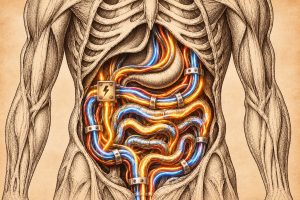
Bioregulation of the digestive system may call for renewal of intestinal mucosa and gut associated lymphatic tissue (GALT). The recommended therapeutic program then combines specific naturopathic, homeopathic or herbal preparations with a hypoallergenic organic diet and intestinal cleansing. Apart from the use of probiotics, prebiotics, simbiotics, herbal tonics or homeopathic preparations, all-around bioregulatory treatment for digestive system also incorporates specific bioenergetic, psychosomatic and structural therapeutic supports.15 For example, lymphatic drainage of cysterna chyli and associated deep abdominal lymphatics, manual facilitation of peristaltic movements, or liberation of entrapped vagus nerve (neural entrapment frequently happen in jugular foramen, due to stress-induced increased tension of the surrounding soft tissue) – are all capable of improving overall function of the digestive system. Similar functional regulation may be achieved by acupuncture, typically along stomach or spleen meridian; or simply by improving management of impatience or unprocessed guilt.
However, education on health and specific dietary guidance remains a fundamental strategy for increasing nutritional awareness of our patients. The need for exclusion of acid-forming food from one’s diet, such as white bread or sugar, and the importance of regular intake of alkaline food like fruits, nuts, and vegetables, is gradually becoming common knowledge. People are also now more aware that taking alkaline supplements, such as magnesium or sodium bicarbonate may further help preventing acidification of tissues.
Bioregulation of Structural Rigidities and Postural Realignment
While health is characterized by abundance and flexibility, dis-ease literally means “a lack of ease.” Structural resistances and rigidities are regular sign of declining health. For this reason, “hands-on” therapies have been successfully used in folk medicine for thousands of years to help restore vitality and vigor.
For manual improvement of specific physiological system or tissue, bioregulatory medicine relays on a single technique, such as chiropractic, osteopathy or lymphatic drainage. For general assessment and regulation of overall structural resistances, be they bioenergetic, fluid, soft- or hard-tissue related, we apply integrated bioregulatory bodywork, which we refer to as the Psychosomatic Bodywork.
Psychosomatic Bodywork (PSB) incorporates elements of physiotherapy, osteopathy, chiropractic, shiatsu, Rolfing, bioenergetics, visceral manipulation, lymphatic drainage massage, biofeedback, craniosacral therapy, polarity therapy, and kinesiology. At the Biomedic Clinic, we now regularly use PSB to detect and release both acute and chronic structural resistances, as it helps us to treat skeletal misalignments, muscular spasms, fascial restrictions, neural entrapments, poor joints mobility, functional spasms of visceral organs, stagnation of lymph, CSF (cerebrospinal fluid) or venous stasis, as well as bioenergetic blockages. Since structural resistances are somatic equivalent of unprocessed traumatic experiences, Psychosomatic Bodywork frequently precipitates psychotherapeutic resolutions.
Bioregulation of Salient foci, Allergies, and Intolerances
The most common salient chronic infections are old genitourinary infections or dental problems, such as unsanitized root canals. The presence of low-grade infections like candidiasis may silently persist for years, just to be further aggravated by environmental toxicity, electromagnetic pollution, nutritional deficiencies, or emotional stress. Silent foci persistently compromise the immune system, which may eventually react by manifesting allergic and immunological conditions, like migraine or eczema. Those hypersensitivity-based reactions are the most prevalent in people suffering a high toxic load or intestinal dysbiosis.
Allergic reactions are based on either immediate or delayed hypersensitivity. Immediate hypersensitivity, like urticaria, is often triggered by salycilates, penicillin, shellfish, nuts, berries, benzoates (E210-E219), or food colorings like tartrazine. Delayed hypersensitivity is based on degranulation of local mast cells and a consequent histamine release, which may than precipitate manifestation of intestinal colic, arthritis, headache, or a multitude of other unspecific clinical symptoms.
Bioregulatory treatment for allergic conditions and hypersensitivities is based on identification of allergens involved and consequent detoxification of causative allergens, desensitization, and immunomodulation.
After identification of the implicated allergens, contact with the antigen is avoided for three months, which changes the adaptation stage back to the alarm stage. During that time, the bioregulatory program for detoxification and remineralization is applied, to help removing traces of allergic substances and their antibody-antigen complexes, as well as to cater for nutritional deficiencies involved. Desensitisation is further facilitated by specific nosodes and the use of kinesiology or bioresonance devises, which work similarly to immunization. Specific immunomodulation is addressed by acupuncture and prescription of homeopathically prepared cytokines.
The Use of Homeotherapeutics and Mesotherapy in Bioregulatory Medicine
The most commonly prescribed medicines during bioregulatory therapeutic interventions are complex homeopathic remedies, homeomedicines, or homeotherapeuticals. They are combinations of traditional homeopathic remedies with homeopathically prepared immunological preparations, such as hormones, cytokines, and micronutrients. Those nanopharmaceutic homeopathic preparations are nowadays produced by different laboratories worldwide. Heel in Germany, Guna in Italy, or New Vistas in Ireland are some of the well-known companies that offer a wide range of homeotherapeuticals for oral, local, or parenteral applications. More details are available in BHF – British Homeopathic Formulary.15
Being capable of informational reactivation, homeotherapeuticals provide modern practitioners with a valuable therapeutic opportunity. For example, chronic infective lesions of the Epstein-Barr virus in glandular fever are effectively treated by a homeopathic preparation containing the viral nosode. Epstein-Barr nosode boosts immune system against this dormant microorganism. It activates macrophages and process of cloning specific T-helper cells, which consequently increases number of anti-inflammatory cytokines. Nosodes tend to be even more effective when combined with other homeopathic and nutritional preparations.
To further maximize the therapeutic impact of complex homeopathic remedies, they may be injected directly into the site of the problem. The injection of homeopathic preparations is generally referred to as the mesotherapy, biopuncture or homeopuncture. Mesotherapy typically penetrates only the surface layer of the skin, to deliver the homeopathic preparation into the associated acupuncture point. Bioregulatory Aesthetic Medicine is principally based on the mesotherapy.
As the general public is becoming more health-aware, there is a progressive increase in demand for bioregulatory aesthetic procedures, the Biofacelift being particularly in demand. Biofacelift is an authentic technique for Aesthetic Bioregulation, formulated by Dr. Damir A. Shakambet to represent a healthy alternative to surgical aesthetic procedures and botox injections. Apart from massage and acupuncture, the method additionally involves meotherapy. Micronutrients like collagen or hyaluronic acid are injected intradermally to stimulate local mitochondria and fibroblasts. The resulting increased collagen production and cellular regeneration, help reduce wrinkles, and create a radiant facial expression.
Homeotherapeuticals injectables are currently in UK “Prescription Only Medicines” (POM). They are categorized according to their specification and therapeutic indications in the British Homoeopathic Formulary. The Academy for Bioregulatory Medicine runs regular homeotherapeutics courses, teaching how to use those remedies and providing therapists interested in the bioregulatory medicine with prescription requirements.
Conclusion
Bioregulatory medicine assesses and regulates all factors involved in the maintenance of optimal health. Bioregulatory treatment represents a personal journey through a multifaceted therapeutic process. This process aims to rehydrate, remineralize, detoxify, reenergize and to restore structural resistances and postural misalignments of patients. It also offers to a genuine health-seeker an opportunity for spiritual nourishment, cognitive reframing, and improvement in emotional self-management.
Bioregulatory medicine fully matches the incidence of morbidity in modern society. This innovative approach to public health incorporates modern technological advances, but also offers solutions for detrimental consequences of contemporary civilization; namely, stress, pollution, and toxicity. Being an interdisciplinary medical approach that restores homeostasis by means of natural therapeutic methodologies, bioregulatory medicine also puts vis medicatrix naturae, the healing power of nature, back where it belongs – into clinical practice.
The Biomedic team, led by Dr. Tatyana Bosh and Dr. Damir A. Shakambet, practice at the Biomedic Centre, 23 Manchester Street, London W1U 4DJ. The Centre also run courses and seminars on bioregulatory medicine.
For more information, contact
www.biomedic.co.uk
or call +44(0)20 7935 6866
Notes
1. Hering C. The Guiding Symptoms of Our Materia Medica. Estate of C. Hering; 1879. Available at: generalbooksclub.com.
2. Reckeweg H-H. Materia Medica Homoeopathia Antihomotoxica. 4th ed. Aurelia; 1983.
3. Bosh T. Extended etiology; module 3. Manual for Bioregulatory Medicine. Biomedic Foundation.
4. Schulkin J, ed. Allostasis, Homeostasis, and the Costs of Physiological Adaptation.
Cambridge University Press; 2004.
5. Gerson M. A Cancer Therapy: Results of Fifty Cases and The Cure of Advanced Cancer by Diet Therapy. Gerson Intitute; 1958.
6. Carson R. Silent Spring. 40th ed. Houghton Mifflin; 2003.
7. Noble D. The Music of Life: Biology Beyond the Genome. Oxford University Press; 2006.
8. Kasseroler R. Compendium of Dr. Vodder’s Manual Lymph Drainage. HAUG; 1998.
9. Kenyon JN. 21st Century Medicine: A Layman’s guide to the Medicine of the Future. Wellingborough, Northants: Thorsons; 1986.
10. Odent M. Detoxing for generations to come. CAM Magazine;3(4):20–23.
11. Sharma RR. Homeopathy: personal histories and views. J Homoeopath North India. Jan–March 2001;5(1):4–9.
12. Lowen A. Bioenergetics. Arkana; 1994.
13. Hawkins DR. Power vs Force. Hay House UK; 2004.
14. Upledger JE. Craniosacral Therapy II: Beyond the Dura. Eastland Press; 1987.
15. Kirkman MF, Cedgar L. The Digestive Contract. Twelfth Knight Graphics.
16. Shakambet DA. British Homoeopathic Formulary. Biomedic Centre; 2007.



0 Comments