
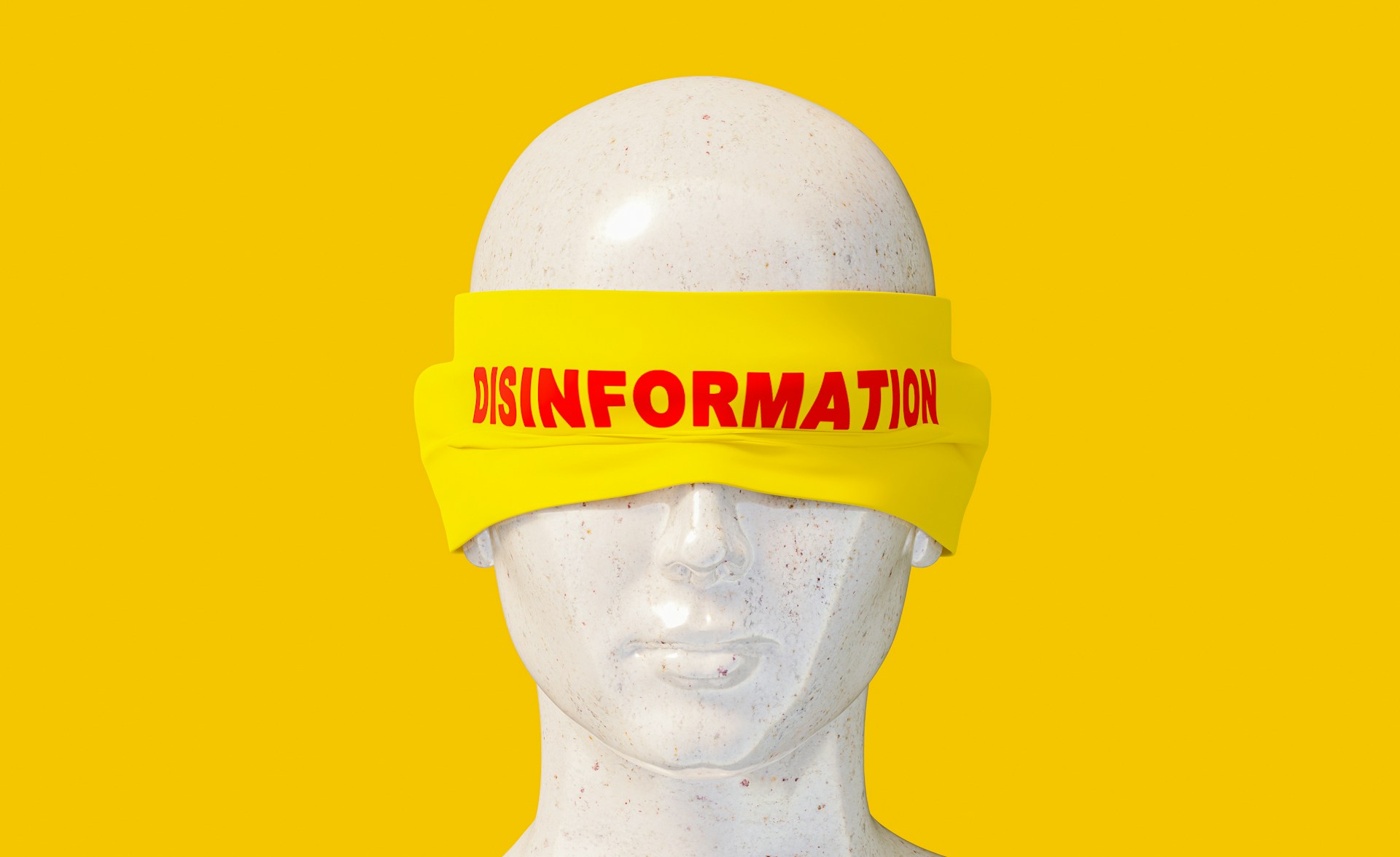
How many times have you thought “that was stupid” —something you said, something you did—and then felt the sting of regret? Are you actually smarter than the choices you make? A lot of people would say yes. They’ll point to their credentials: “I have a college degree, a master’s degree, a PhD. I’m an MD, an MD/PhD, a teacher, a professor, a department chair, the head of a corporation, a policymaker.” These people believe their titles grant them not just knowledge, but wisdom. And yet the track record tells a different story.
Why would a publisher spike a story—kill it entirely—because it doesn’t match their ideological, political, or cultural preconceptions? Why would a physician prescribe a treatment they’ve never critically examined? Why would a senator vote for a war they never questioned? The answer is the same in every case: they are credentialed, but they are not thinking. There is a profound difference between the two, and confusing them may be the most dangerous mistake a civilization can make.
As I have said for many years—and it takes a while for people to fully appreciate this—how you do one thing is frequently how you do everything else. If a person cannot apply critical thinking to what they eat, to whom they trust, to what they believe about their own health, it should surprise no one that they cannot apply it to their vote, their finances, or their children’s future.
The Spectrum of Stupid
Before we go further, let’s be clear about what we mean by “stupid.” This is not a slur. This is a spectrum, and we are all somewhere on it. At one end, there is the kind of stupid that is harmless, even charming—the kind that is part of growing up, part of being human. You pick up a honeybee and it stings you. It doesn’t know you meant no harm; it dies in the process. You learn. That is the low end of the spectrum, where stupidity is a teacher.
But continue along that spectrum. At the other end, you find stupid that causes wars. Stupid that kills millions. Stupid that enables genocide. And here is what is critical to understand: genocide is never caused by just one person with a small band of fellow travelers. It requires mass participation—or, at minimum, mass silence. Consider the “Good German” construct. Fifty or sixty million Germans were not all in the streets rounding up Jews. But they knew what was happening, and they did nothing, because they had been conditioned to perform their role as good citizens. They wanted to be seen as proper, patriotic, Christian Germans. And so atrocity was permitted to proceed.
We have learned nothing from this. The same dynamic—conform, comply, say nothing—repeats itself in every era, every culture, every domain of human life. The costumes change. The mechanism does not.
That is why Forrest Gump’s simple observation carries more philosophical weight than most academic dissertations: “Stupid is as stupid does.” You can hold three degrees and still consistently make stupid choices. You can score perfectly on a standardized test and still be unable to think for yourself. Show me the person willing to honestly examine where they fall on the spectrum of stupid—and I will show you someone genuinely capable of growth.
The Education Illusion
We have been taught to believe that formal education is the cure for stupidity. It is not. The United States spends more money per student annually than any other nation in recorded history, and we are graduating young people who cannot read critically, reason independently, or function in complex situations. Sub-literacy has become a quiet epidemic, visible in behavior—in the casual decision to walk into a store and steal, reasoning that if it is no longer aggressively prosecuted, it must somehow be permitted. That is not freedom of thought. That is the collapse of it.
The core failure of our educational model is not the teachers, many of whom are dedicated and conscientious. It is the model itself: memorize, agree, and repeat. Memorize what the textbook says. Agree with what the instructor presents. Repeat it on the test. Certification and licensure demand the same: conform to the consensus of the board. Challenge nothing. This is how we produce physicians who prescribe what their professors prescribed without ever asking whether the evidence supports it. This is how we produce politicians who vote the way their donors require without ever consulting their own conscience.
I learned this early in my career while studying dietetic science and working toward certification as a registered dietitian. Much of what was being taught in the textbooks, I took issue with. The difference was that many of the people writing those textbooks were not clinicians. I was actually seeing patients, helping people, observing cause and effect in real time. When I studied the effects of fasting in animal models, I saw that they lived longer and were healthier. I asked: why not apply this to humans? When I did, many of the conditions people believed were simply natural consequences of aging turned out to be the direct result of poor choices—choices encouraged, in many cases, by established medical consensus.
When Educated People Cause the Most Harm
The people advising us are not always bad people. More often, they are simply misguided. They trust their sources, absorb that knowledge, and pass it on with complete confidence—never pausing to ask whether the foundation is sound. But when the knowledge is wrong, and the authority behind it is unquestioned, the consequences can be catastrophic.
Consider synthetic hormone replacement therapy. For decades, physicians prescribed HRT to roughly ten million women per year. The consensus was settled, the protocols were established, and questioning them was professionally risky. Then the government’s own studies confirmed what careful independent researchers had long suspected: HRT increased the risk of heart attack, stroke, breast cancer, ovarian cancer, colorectal cancer, dementia, and autoimmune conditions by as much as 13%. Apply that rate to ten million women annually, and you are looking at approximately 1.3 million women whose bodies were damaged—in some cases destroyed—on the altar of consensus medicine. Highly educated physicians, following the accepted standard of care, caused this. Not out of malice. Out of an unwillingness to think critically about what they had been taught.
Or consider the question of pharmaceutical liability. Since the National Childhood Vaccine Injury Act was passed in 1986, vaccine manufacturers have been largely shielded from civil liability for vaccine-related injuries. No other pharmaceutical product enjoys this protection. Every other drug can be the subject of litigation. Every other manufacturer must stand behind its product in a court of law. But not vaccines. If you remove accountability from any system—corporate, governmental, or medical—you remove the primary incentive for vigilance and honesty. You produce, inevitably, a system that can harm without consequence.
This is the same logic that allowed millions of Americans to be swept into the COVID response without meaningful scrutiny. Everything we were told about its origins, its handling, its mandates—critical voices were silenced, dissenting experts were marginalized, and the public was told to trust the consensus. Millions of lives were disrupted or ended. No one has been held accountable. No indictments. No prosecutions. No reckoning. And yet these decisions were made by highly educated, highly respected individuals, operating with the full weight of institutional authority behind them.
Consensus Without Conscience
Approximately 74% of the American public lined up—without meaningful questioning, and more critically, without any serious desire to find the truth—during one of the most consequential mass compliance events in modern history. They did not look at the studies that challenged the prevailing narrative. They did not engage with the credentialed experts who said, “Don’t do this. Everything you are being told is wrong.” They did not seek out the dissenting voices. Why?
Because we have been conditioned to see compliance as virtue. We are propagandized to behave as “good citizens,” which means: do not challenge authority, do what you are told, and you will be rewarded. The reward may be social acceptance, professional advancement, or simply the comfort of belonging. The punishment for non-compliance is exclusion—from the professional mainstream, from polite society, from the consensus.
This is the structure of a cult, not a free society. In a free society, you may challenge the consensus. You may present evidence. You may disagree with authority figures and still be heard. In a cult, questioning is not permitted. And I am not using the word “cult” loosely: medical cults, financial cults, political cults, ideological cults—they all operate on the same principle. Conform, or be cast out. When an entire society organizes itself around this principle, the result is not civilization. It is managed obedience.
Consider the case of tampon dispensers installed in male restrooms at public universities—a policy enacted in several states as an expression of inclusive ideology. Ask any biological male whether he has ever used one. The answer, of course, is no—not because of prejudice, but because of basic physiology. Biological males do not have a uterus, fallopian tubes, endometrium, or any anatomical structure for which a tampon serves a function. This is not controversial. It is biology.
What is telling is not the policy itself, but the silence around it. Physicians did not speak out. Psychologists did not publicly question it. The professionals most qualified to weigh in largely remained silent, because to speak was to risk one’s career. Instead, an ideological movement became a multi-billion-dollar industry: hormonal interventions and surgical procedures offered to young people who are not yet legally permitted to vote or drive, sometimes without parental knowledge.
All people go through hormonal upheaval in adolescence. In that period, many do not feel comfortable in their own skin. If a young person, in that state of vulnerability, is exposed through social media to a community that offers a compelling explanation for their discomfort and a dramatic solution, they may be drawn in with no broader context and no rigorous independent clinical assessment. The rise of detransition lawsuits, and the growing number of young adults publicly reporting regret, is what happens when a medical consensus forms around social pressure rather than evidence. It is what happened with Vietnam. It is what happened with HRT. The costumes change. The mechanism does not.
Governments, Wars, and the Habit of Lying
Consider how we entered Vietnam. The Gulf of Tonkin incident was manufactured. The justifications were lies, and they were delivered by credentialed, authoritative, deeply respected men. As a result, approximately three and a half million people were adversely affected. Fifty-eight thousand Americans were killed—and we rarely pause to count those permanently injured in body or mind. Millions of Vietnamese, Cambodians, and Laotians lost their lives or were displaced. When did anyone stop and ask: What was this all about? What were the real motives? We are rarely told the truth. There is no real transparency in our public life.
The Korean War. World War I. The Spanish-American War. Iraq. Afghanistan. Libya. Syria. Ukraine. The Middle East. In each case, we accepted the narrative offered by our governments with minimal scrutiny, and in most cases, those narratives were incomplete, misleading, or outright false. If a government has lied about this many conflicts over this many decades, on what basis do we assume it has suddenly decided to tell the truth? That has not happened. It is not likely to happen.
We vote for politicians based on marketing slogans and emotional appeals. We trust media that is funded by the same corporations whose interests are served by the policies those media outlets promote. We look at a leader receiving an award—a Nobel Peace Prize, a humanitarian honor—and we accept the image without examining the record behind it. When a politician can receive campaign contributions from defense contractors and then vote to fund a war, and we continue to elect them without demanding otherwise, that is not their failure of integrity. That is ours.
There is a question worth asking plainly: Would you prefer a legislator who says, “I will not accept a dollar from any lobbyist, and no special interest will enter my office”—or the current reality, in which nearly every legislator operates on the principle of: “How much are you willing to give me to change my vote?” If we keep choosing the latter, it is not because our politicians are corrupt. It is because we vote for corruption, and then act surprised when it governs.
This dysfunction extends beyond elected officials into the unelected power structures that operate with even less transparency and even less accountability—organizations like the World Economic Forum, the Trilateral Commission, the Bilderberg Group, the Atlantic Council, and dozens of other think tanks and planning bodies that shape policy without ever standing for election. The question worth asking is: what are they thinking about, and for whose benefit? Certainly not ours.
The Hedonism Spectrum and the Emptiness of Ritual
Just as stupidity exists on a spectrum, so does pleasure. At the low end of the hedonism spectrum, you find the things that make life genuinely rich: the warmth of being with people you love, playing with a dog or a cat, discovering a landscape you’ve never seen before, encountering a culture that expands your understanding of what it means to be human. These are pleasures worth having. They cost almost nothing, and they nourish the spirit.
Now continue along that spectrum. As you move toward the extreme—decadence, excess, the compulsive pursuit of sensation for its own sake—you find that the more powerful and wealthy a person becomes, the more likely they are to experiment in forms of behavior that most people would find disturbing. Deviance, sadism, and nihilism are not aberrations at the top of our power structures. They are patterns that emerge with disturbing regularity when accountability is absent. Pleasure pursued without ethics, without empathy, without limit, does not enrich a life. It hollows one out.
Most people, however, are not at the extreme. They are simply living lives that have become constricted by habit. What are you doing today? The same thing I do every day. I have to do this, and then this, and then this. Ritual has become the substitute for meaning. The routine—wake, eat, commute, consume, sleep—is mistaken for a life. And the older we get, the deeper we dig into those grooves, because the familiar is safe, and the unfamiliar is frightening.
People retreat to gated communities, surround themselves with people who share their rituals, listen to the same music they loved in their twenties, and call it contentment. But it is not contentment. It is the avoidance of growth dressed as stability. Ask yourself honestly: Are you happy? Not comfortable—happy. Do you still have the passion you once had? And if not, why are you still in the same life you constructed decades ago, knowing it no longer serves you—other than because the fear of change is greater than the discomfort of staying?
This is where existential angst quietly takes hold. Not dramatically, but as a slow erosion: the regrets that begin piling up, the “I should have,” the “what if,” the realization that the life you settled for is shallower than the life you imagined. Life has become restricted, obedient, and small—not because of external circumstances alone, but because of a series of choices that consistently prioritized safety over aliveness. That, too, is its own form of stupid.
The Ethics Void
When was the last time you saw a genuine ethicist on television—not a partisan commentator, but someone trained in the philosophy of moral reasoning—discussing the ethical architecture of the decisions being made in our name? We hear endlessly about policy outcomes. We rarely hear about the ethical frameworks, or the complete absence of them, behind those policies.
We say we care about children, but we do not say a word about children killed by our bombs in other countries. We demand that our children not go hungry, yet we support, through silence or complicity, policies that contribute to the starvation of millions of children elsewhere. This is not a political point—it is a philosophical one. If a person is capable of absolute compassion within their own circle and absolute indifference outside of it, then their compassion is not a moral principle. It is a tribal reflex. And tribal reflexes, at scale, produce the conditions for atrocity.
Philosophy, ethics, and humanistic principles are not electives. They are the foundation of every consequential decision a human being can make. And yet they are treated as luxuries in our educational system, as impractical compared to the skills that make people economically productive. The result is a society of people who are technically trained but morally rudderless—capable of great sophistication in the service of goals they have never examined.
If a person can cheat on their spouse without remorse, lie under oath without consequence, make promises they have no intention of keeping, and we then elect that person to govern us—that is not a failure of the politician. It is a failure of the electorate. We vote for people whose behavior already reveals their character. And if the private behavior is dishonest, the public behavior will be too. People do not operate with two sets of values. They operate with one, expressed differently depending on the audience.
What We Consume and How We Process It
If you could truly see what goes into the foods and beverages you consume, you would not be drawn in by the sparkle of ice cubes in a soda and think it refreshing. You would see phosphoric acid, caffeine, artificial coloring agents, and high-acidity compounds with no nutritional value—compounds that are demonstrably harmful. But we do not process that. The marketing creates an experience, a feeling of refreshment, of coolness, of belonging to the culture that drinks this product. And we accept the image in place of the reality.
Every day, you consume information from the internet, major media, social platforms, and the people who influence you: a boss, a teacher, a parent, a celebrity, an algorithm. But how do you process it? How do you determine what is accurate? How do you distinguish between information that serves you and information that serves someone else’s interests? Most people don’t have a reliable method. They have a gut feeling, shaped by whatever they were exposed to first, whatever was repeated most often, and whatever confirms what they already believe.
This is the mechanism of propaganda. Not the dramatic propaganda of wartime posters, but the quiet, ambient propaganda of a culture in which the sources of information and the sources of profit are the same. We are not thinking deeply enough. We are not asking who benefits. We are not asking at what cost.
The Evidence Is All Around Us
The proof of this essay is not theoretical. It is on display in everyday life—in the choices we make daily that we know are not in our best interest, and yet make anyway, repeatedly, without honest reflection. These are not the exceptional failures of troubled people. They are the ordinary, normalized patterns of a culture that has surrendered critical thinking for convenience and comfort.
Health and Lifestyle
- Regularly smoking cigarettes or tobacco products
- Vaping nicotine or e-cigarettes
- Binge drinking on weekends or social occasions
- Eating fast food and highly processed food frequently
- Excessive meat consumption without consideration of sourcing or quantity
- Failing to read food labels; eating non-organic produce without awareness of pesticide exposure
- Staying up late and chronically getting insufficient sleep
- Using screens late at night despite well-documented sleep disruption
- Overeating, despite knowing it harms health
- Consuming large amounts of sugary drinks and high-caffeine energy beverages
- Living a predominantly sedentary lifestyle—hours of television or desk work without movement
- Avoiding regular physical exercise
- Skipping health check-ups and preventive screenings
- Neglecting dental care
- Avoiding mental health treatment when it is clearly needed
- Using recreational drugs without understanding their pharmacological effects
- Consuming pornography compulsively
- Environmental and Consumer Choices
- Driving gasoline-powered vehicles for short trips that could easily be walked or biked
- Taking frequent unnecessary air travel
- Eating large amounts of beef and other high-emission foods without awareness of their environmental cost
- Wasting food by discarding edible leftovers
- Using excessive single-use plastics—bags, bottles, packaging
- Leaving lights, electronics, and appliances running unnecessarily
- Keeping home heating or air conditioning set to extremes out of habit, not need
- Buying new clothing and consumer goods frequently instead of reusing or repairing
- Failing to recycle or properly dispose of recyclable materials
- Maintaining large, fuel-inefficient vehicles primarily for convenience
- Using gas-powered mowers and leaf blowers for large decorative lawns
Safety
- Texting or scrolling on a phone while driving
- Driving while fatigued
- Not wearing a seatbelt
- Digital and Social Behavior
- Constant smartphone use during personal interactions
- Doom-scrolling or consuming excessive negative news daily
- Neglecting meaningful hobbies or creative outlets
- Constantly comparing oneself to others on social media
- Avoiding community involvement, civic participation, or humanitarian service
Financial Decisions
- Overspending beyond one’s income
- Relying on credit cards for non-essential purchases and carrying high-interest debt
- Not saving for retirement or emergencies
- Gambling money on lotteries, casinos, or sports betting
- Impulsive buying of non-essential goods
- Failing to create or follow a personal budget
- Financing luxury cars, homes, or gadgets one cannot comfortably afford
- Paying for multiple unused subscriptions and memberships
- Investing in get-rich-quick schemes
- Borrowing money for vacations or entertainment
- Accumulating clutter in the home instead of living with intentional simplicity
Relationships and Communication
- Cheating on a spouse or romantic partner
- Starting frequent unnecessary arguments with loved ones
- Prioritizing social media over quality time with family or friends
- Holding grudges instead of resolving conflicts
- Maintaining relationships with noticeably toxic people
- Avoiding open communication about feelings or needs
- Gossiping about friends, family members, or colleagues
Professional Life
- Procrastinating on work deadlines
- Frequently arriving late to meetings or appointments
- Overworking without any meaningful work-life balance
- Remaining in unhealthy or toxic workplaces long past the point of harm
- Refusing to learn new skills needed for career growth
- Multitasking constantly, which reduces focus and output quality
- Never negotiating for higher pay or better benefits
- Lying or exaggerating on résumés or in performance reviews
Civic and Political Behavior
- Voting for politicians based only on marketing ads, slogans, and emotional appeals
- Sharing unverified or deliberately misleading political content online
- Consuming hours of partisan news without seeking out opposing or independent perspectives
The Moment of Honest Reflection
None of what I have described above makes you a bad person. We all make mistakes. That is how we grow. The real question is not whether you have made poor choices. Of course you have. We all have. The question is whether you learn from them. If you can honestly say, “I made a bad choice, and now I understand why,” then that mistake has made you wiser. But if you fail to learn from it—if the same pattern reasserts itself month after month, year after year—then you are not growing. You are simply repeating. And repetition without reflection is the very definition of foolishness.
We need a genuine moment of separation—a willingness to distinguish between academic achievement and true understanding. Just because you have been exposed to a vast amount of information does not mean that information is correct, honest, or in your interest. The critical questions are always: Who does it serve? At what cost? And do I have the intellectual courage to follow the evidence wherever it leads, even when it contradicts what I have been told, what I have practiced, and what I believe?
We are not going to be given permission to think independently. No institution will grant it to us. No authority will encourage it. It must be chosen—deliberately, consistently, at personal cost. That is what it means to be a thoughtful human being rather than a well-trained one. That is what it means to be responsible for the world your choices create.
It is not entirely your fault that you have been shaped by systems designed to produce compliant, predictable people. Those systems are real, they are powerful, and they have been operating on you since before you could walk. But you are not only a product of those systems. You are a person with a mind. And that mind, properly used, is more powerful than any institution ever built to contain it.
The question is not whether you are stupid. The question is whether you are willing to do something about it.








0 Comments