Eat What Grows in Season

Eat What Grows in Season

by , | Jul 1, 2022

We are what we eat. Our body is synthesized from the foods we eat. Creating the best conditions for a healthy body depends upon the foods we ingest as implied by the phrase, Let food be thy medicine, attributed to Hippocrates, the Greek founder of Western medicine.1 The foods are the building blocks for growth and repair. Comparing our body to building a house, the building materials are the foods we eat, the architect’s plans are our genetic coding, the care taking of the house is our lifestyle and the weather that buffers the house is our stress reactions. If you build a house with top of the line materials and take care of it, it will last a life time or more. Although the analogy of a house to the body is not correct since a house cannot repair itself, it is a useful analogy since repair is an ongoing process to keep the house in good shape. Our body continuously repairs itself in the process of regeneration. Our health will be better when we eat organic foods that are in season since they have the most nutrients.

Organic foods have much lower levels of harmful herbicides and pesticides which are neurotoxins and harmful to our health.2,3 Crops have been organically farmed have higher levels of vitamins and minerals, which are essential for our health, compared to crops that have been chemically fertilized.4

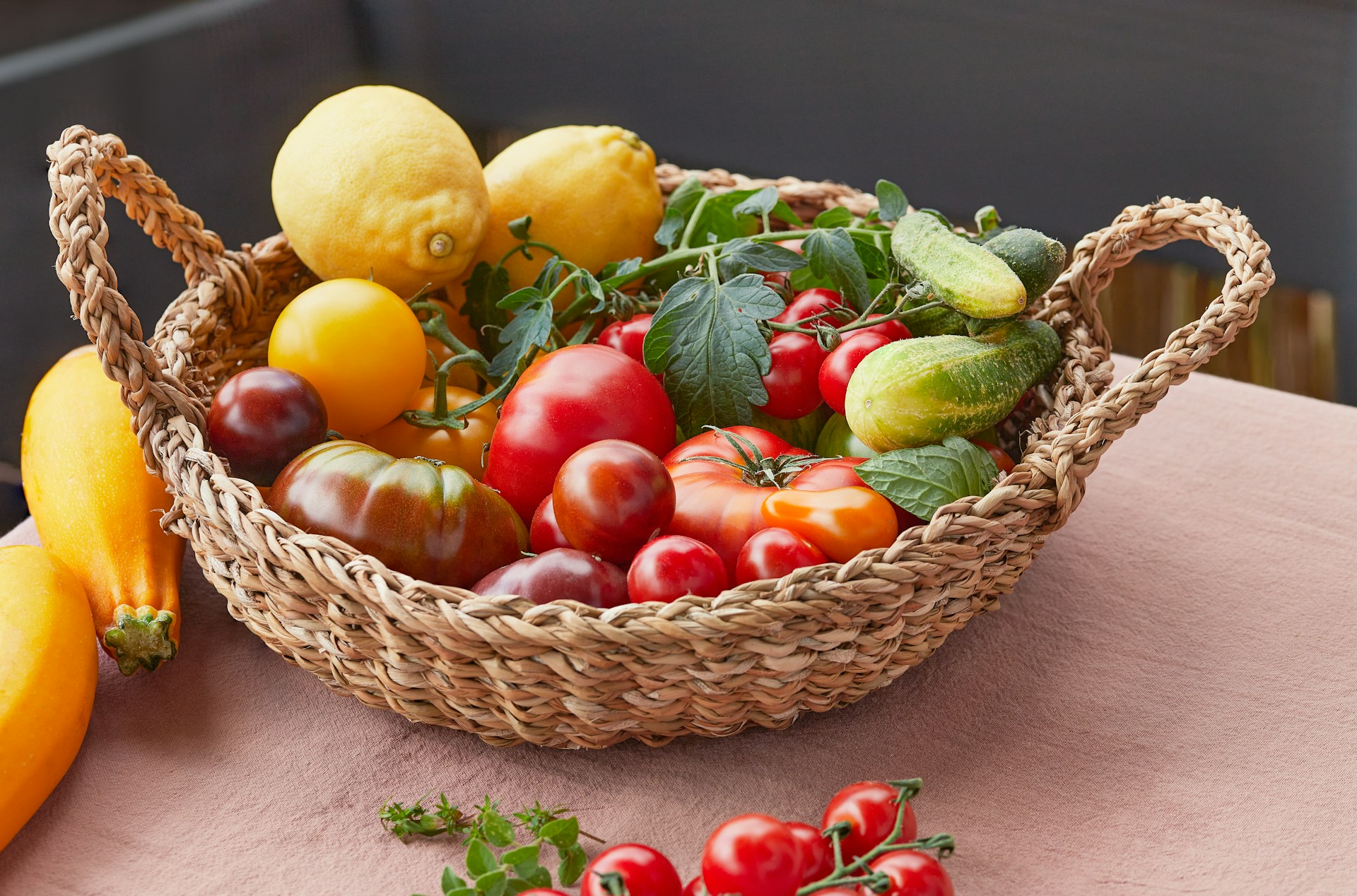
Even seasonality appears to be a factor. Foods that are outdoor grown or harvested in their natural growing period for the region where it is produced, tend to have more flavor that foods that are grown out of season such as in green houses or picked prematurely thousands of miles away to allow shipping to the consumer. Compare the intense flavor of a small strawberry picked in May from the plant grown in your back yard to the watery bland taste of the great looking strawberries bought in December.

The Seasonality of Food

It’s the middle of winter. The weather has cooled down, the days are shorter, and some nights feel particularly cozy. Maybe you crave a warm bowl of tomato soup so you go to the store, buy some beautiful organic tomatoes, and make yourself a warm meal. The soup is… good. But not great. It is a little bland even though you salted it and spiced it. You can’t quite put your finger on it, but it feels like it’s missing more tomato flavor. But why? You added plenty of tomatoes. You’re a good cook so it’s not like you messed up the recipe. It’s just missing something.

That something could easily be seasonality. The beautiful, organic tomatoes purchased from the store in the middle of winter could not have been grown locally, outside. Tomatoes love warm weather and die when days are cooler, with temperatures dropping to the 30s and 40s. So why are there organic tomatoes in the store in the middle of cold winters? Those tomatoes could’ve been grown in a greenhouse, a human-made structure to recreate warmer environments. Or they could’ve been grown organically somewhere in the middle of summer in the southern hemisphere and shipped up north (hello, carbon emissions!) so you can access tomatoes year-round.

That 24/7 access isn’t free, and excellent flavor is often a sacrifice we pay for eating fruits and vegetables out of season. Chefs and restaurants who offer seasonal offerings, for example, won’t serve bacon, lettuce, tomato (BLT) sandwiches in winter. Not because they’re pretentious, but because it won’t taste as great as it would in summer months. Instead of winter BLTs, these restaurants will proudly whip up seasonal steamed silky sweet potatoes or roasted Brussels sprouts with kimchee puree.

When we eat seasonally available food, it’s more likely we’re eating fresher food. A spring asparagus, summer apricot, fall pear, or winter grapefruit doesn’t have to travel far to get to your plate. With fewer miles traveled, the vitamins, minerals, and secondary metabolites in organic fruits and vegetables won’t degrade as much compared to fruits and vegetables flown or shipped in from other countries. Seasonal food tastes great and it’s great for you too.

If you’re curious to eat more of what’s in season, visit your local farmers market if it’s available to you. Strike up a conversation with the people who grow your food. If farmers markets are not available, take a moment to learn what is in season where you live and try those fruits and vegetables next time to go to the store. This Seasonal Food Guide for all 50 states is a great tool to get you started (https://www.seasonalfoodguide.org/).

Once you incorporate seasonal fruits and vegetables into your daily meals, your body will thank you for the health boost and your meals will gain those extra flavors. Remember, you’re not a bad cook: you just need to find the right seasonal partners so your dinners are never left without that extra little something ever again.

References

  1. Cardenas E. Let not thy food be confused with thy medicine: The Hippocratic misquotation. e-SPEN Journal. 2013;I(6), e260-e262.
  2. Baker BP, et al. Pesticide residues in conventional, integrated pest management (IPM)-grown and organic foods: insights from three US data sets. Food Additives and Contaminants. 2002;19 (5).
  3. Barański M, et al. Higher antioxidant and lower cadmium concentrations and lower incidence of pesticide residues in organically grown crops: A systematic literature review and meta-analyses. British Journal of Nutrition. 2014;112(5): 794-811.
  4. Peper E. Yes, fresh organic food is better! the peper perspective. 2017. https://peperperspective.com/2017/10/27/yes-fresh-organic-food-is-better/
Authors

  • Andrea Castillo

    Sign up for Andrea Castillo’s “Seasonal,” a newsletter that connects you to the Bay Area food system, one fruit and vegetable at a time (https://seasonal.substack.com/). Andrea is a food nerd who always wants to know the what’s, how’s, when’s, and why’s of the food she eats.

    View all posts
  • Erik Peper, PhD, BCB

    Erik Peper is a Professor of Holistic Health at San Francisco State University and his teaching and research focuses on self-healing strategies, illness prevention, the effects of posture and respiration, and how to use biofeedback and wearable devices. Each year he mentors undergraduate student researchers to create and complete studies that are presented at scientific meetings. He is an international authority on biofeedback and self-regulation and author of scientific articles and books such as Make Health Happen, Fighting Cancer-A Nontoxic Approach to Treatment, and Biofeedback Mastery. His most recent co-authored book is, TechStress: How Technology is Hijacking Our Lives, Strategies for Coping, and Pragmatic Ergonomics. He publishes the blog, The Peper Perspective–ideas on illness, health and well-being (peperperspective.com). In 2013 was received the Biofeedback Distinguished Scientist Award in recognition of outstanding career & scientific contributions from the Association for Applied Psychophysiology.

    View all posts

Already Subscribed?

Search

Formatting updates are ongoing for older articles.

Author

Featured Articles

Where are your Clinical Trials?

It has proven to be difficult, if not impossible, to proceed to full-scale randomized controlled trials (RCTs) for most of the natural methods that cannot be patented or otherwise monopolized. 

A Renewed Focus on Self-Help for Healing

As the producer of The Moss Report, the year leading up to the Covid-19 pandemic was filled with anticipation and excitement. We had invested years of hard work and significant resources into two major projects: our feature film, Immunotherapy: The Battle Within, and...

Issue Archives

Event Calendar

  • 2026 Association of Natural Health Conference

    Douglasville Conference Center Douglasville, GA, United States

    "From Practitioner to Leader: Clinical Excellence, Business Mastery & Sustainable Practice" Discover how clinical excellence, business mastery, and sustainable systems can help practitioners grow into confident leaders and build practices designed for long-term impact. Why Attend? Three days of learning, connection, and growth designed for every stage of your practice journey. Learn from Leading Voices Gain insights from top experts in natural health, holistic wellness, and functional medicine. Hands-On Learning Participate in in-depth workshops, real-world case studies, and interactive sessions you can apply immediately. Meaningful Networking Connect with like-minded professionals, students, and exhibitors who share your passion for natural health. Practical Tools & Approaches Explore new strategies and tools to elevate both your practice and your own health journey. Who Should Attend? This conference is built for a wide community of natural health professionals, educators, and advocates - wherever you are in your journey. Licensed & Clinical Practitioners Doctors, chiropractors, acupuncturists, naturopaths, and functional or integrative medicine practitioners looking to sharpen clinical skills and grow into stronger practice leaders. Allied Health Professionals Bio-feedback technicians and other allied practitioners seeking hands-on training and the latest tools in natural and holistic care. Educators & Students Natural health educators and students entering the […]

  • Food as Medicine Global 2026

    Virtual Event

    Join health professionals, farmers, food producers, researchers, educators, nonprofit leaders, chefs, policymakers, community organizers, food advocates, public health practitioners, nutritionists, and other changemakers as we convene to share knowledge, build partnerships, and explore new possibilities for improving health, strengthening communities, and creating more equitable and sustainable food systems. This year’s program features inspiring speakers and practical examples of collaboration at the intersection of food, health, social justice, and planetary well-being. Together, we’ll explore innovative approaches to Food as Medicine, community-led initiatives, nutrition, public health, regenerative agriculture, and equitable access to healthy food. Whether you work in health care, agriculture, food production, education, research, policy, or community development, you will discover new ideas, meaningful connections, and practical strategies to advance healthier, more resilient communities. Virtual  |  Join from anywhere in the world Check out the Program: https://tinyurl.com/Food-as-Medicine-for-All

  • The Midlife Women’s Health Summit: Evidence-Based Menopause Care in the Era of Longevity Medicine

    The Ritz-Carlton, Pentagon City 1250 S Hayes St, Arlington, VA, United States
    Hybrid Event

    Menopause Care in the Longevity Era Longevity medicine is everywhere right now. Supplements, protocols, influencer clinics, patients walking in with questions about interventions their doctors have never heard of. What's missing from most of it is the evidence. The Midlife Women's Health Summit is three days on what the research actually says about menopause care when you add a longevity lens. What works, what doesn't, what's being oversold, and what to tell the patient sitting in front of you. Co-chaired by Lisa Larkin, MD, FACP, MSCP, IF, Jen Gunter, MD, FRCS(C), FACOG, DABPM, ABPMR, and Lauren Streicher, MD, FACOG, MSCP; three of the clearest voices in women's health on separating data from marketing.

    $995 – $1299

Related Posts

Medicine, The Microbiome, and Homeopathy

By Ronald Whitmont, MD – Just as we have reached a watershed moment and a “tipping point” in our understanding of global ecology and climate change, we have reached a similar critical event horizon with respect to dysfunctional medical practices; and it is time to take evasive action.

Read More

BOOK REVIEW – Ending Chronic Illness

Book Review by Patricia S. Lemer, MEd – Ending Chronic Illness is the paradigm shift you have been looking for, whether practitioner or patient. While Horowitz believes there is no one magic bullet, his multi-pronged approach provides some clear answers for your health today, as well as how to become a seasoned advocate for the future.

Read More

0 Comments

Submit a Comment