
Coronavirus, Pollen, COVID-19
Pollen Exposure and COVID-19
Jacob Schor, ND, FABNO
We can hope that by the time this is printed that the virus will be under control, and this article will be irrelevant. At the moment it is anything but under control. Thus, let me tell you about a fascinating paper that came out in early March in the journal Allergy that may give us a tool to help control this COVID-19 thing we’ve got going on.1 After reading this article yesterday, I turned on our air filter and hesitate to ever turn it off again even though local pollution levels have dropped to their lowest level in memory.
This study consisted of multiple experiments that combined data from human cell cultures, mouse models and human cohorts to test the authors’ hypothesis that pollen exposure weakens immune defense against viral infection. It wasn’t about corona or COVID-19 specifically, but the knowledge gathered may be useful now.
Every springtime, plants dump pollen into the air. There are days here in Denver that we use a broom to sweep pine pollen that has blown down from the mountains off our front porch. During this period many people experience allergy symptoms as this pollen triggers sensitivity reactions; and many people end up at their doctors with respiratory tract infections. This is particularly true of people who are atopic or have asthma.2 These researchers wanted to figure out why, in particular why people who supposedly don’t have allergies still get sick. Prior to this study these researchers had already shown that pollen grains have potent immune-modulatory effects independent of them acting as allergens in some people.3 Pollen components have been shown to alter the barrier functions in respiratory epithelial cells.4
The first part of the study was done on tissue cultures. Primary bronchial epithelial cells were obtained via bronchoscopy from healthy individuals and expanded in appropriate growth media and induced to differentiate. That means they scraped some lung tissue out of people and grew the cells coaxing them into looking like lung tissue. Nasal epithelia were also obtained from healthy volunteers who were undergoing nasal surgeries or from nasal brush biopsies and cultured in appropriate media. Same deal, the scientists grew nasal mucosa tissue. Six-week-old female mice were used for the ex vivo section of the experiments.5
There were several sections to the human portion of this study, including both prospective, observational, and interventional controlled experiments along with a large retrospective study. For the observational and interventional portions, healthy non-allergic volunteers were recruited in Augsburg, Germany, and were screened for allergies; and only non-sensitive individuals were enrolled into the cohorts. Eight participants were only monitored for symptom intensity over the 2016 allergy season. Two groups of nine participants each, (again non-allergic subjects) were enrolled as an experimental group to be challenged with either pollen exposure or as a control group treated with placebo.
The retrospective human study was big; researchers examined nasal swabs from 20,062 participants collected at Sahlgrenska University Hospital in Gothenburg Sweden from 2010 to 2013. They determined whether these people had viral infections and compared frequency of infection with pollen counts.
The cultured bronchial and epithelial tissues were stimulated with pollen extracts and then exposed to human rhinovirus-16 viral cultures. Six-week-old female mice were infected with RSV and then exposed to ragweed pollen by intranasal instillation on three successive days.
In the small human experimental study, the 18 subjects were subjected to three nasal lavage challenges with either a placebo of saline solution or birch pollen extract (n=9). Unilateral curettage biopsies were taken before and after the study.
All of these experiments told a consistent story. Pollen exposure weakens the immune response against viruses.
In the tissue cultures and mice, pollen exposure significantly diminished interferon-λ and pro-inflammatory chemokine responses of the airway epithelia to rhinovirus and viral mimics and decreased nuclear translocation of interferon regulatory factors. In mice infected with RSV, co-exposure to pollen weakened expression of antiviral genes and increased pulmonary viral titers. In the non-allergic human volunteers, nasal symptoms were positively correlated with airborne birch pollen abundance, and nasal birch pollen challenge led to downregulation of type I and -III interferons in their nasal mucosa. In the large patient cohort, numbers of rhinovirus positive cases were correlated with airborne birch pollen concentrations.
Among the 20,062 Swedish participants, over the three-year period, there were 5,782 rhinovirus‐positive cases. In these people, nasal symptoms were positively correlated with airborne birch pollen abundance. Time series analysis revealed a significant correlation between rhinovirus‐positive cases, airborne birch pollen concentrations and precipitation (P = .005). There was a positive nonlinear relationship between rhinovirus and pollen comparing the RSV cases with pollen counts. Whereas the association was negative between rhinovirus/pollen and precipitation. (It sounds like if it rained and decreased pollen levels, the risk of RSV cases went down rather than up.)
The data from the eight nonallergic volunteers who tracked their symptoms during 2016 were used to establish that their nasal symptoms corelated with pollen concentrations. Time series analysis revealed a significant correlation between nasal symptoms and birch pollen with a lag effect of up to nine days though the strongest correlation of symptoms was to pollen levels the day prior. In those nine volunteers who were challenged directly with birch pollen, the exposure led to downregulation of type I and -III interferons in nasal mucosa compared to those treated with control saline.
This combination of tissue culture, mouse and human data creates a compelling argument that pollen exposure weakens innate immune defense against viral infection. What is of particular note is that the participants in this study were not ‘allergy’ patients. In other words, these findings apply to everyone and not just those ‘sensitive individuals.’ Pollen levels, of course, vary seasonally, and we are generally made aware of these concentrations by individuals who do display symptoms. Pollen concentrations are also carefully monitored by health departments and these levels can easily be accessed online either on government or commercial sites (https://www.pollen.com). The knowledge that increasing pollen levels may leave us more susceptible to viral infection is of special concern this year during the COVID-19 pandemic.
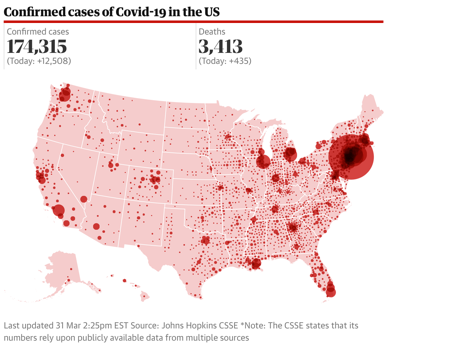
It was in light of these basic findings that a news story broadcast by Radio Sweden March 29, 2020 caught our attention. The news writer interviews and quotes one of the authors of this study, Åslög Dahl who heads the pollen laboratory at Gothenburg University. She had announced preliminary findings from a new study. Using COVID-19 data from the World Health Organization, “…Dahl says that areas with the highest mortality rates from the Corona virus have been shown to have the highest pollen levels too.” Although Dahl points out these results have been hastily assembled and require further study, she suggests that everyone, whether they have allergies or not, should currently follow the advice given to those sensitive to pollen and allergies.6 Or to quote the original study’s abstract: “The ability of pollen to suppress innate antiviral immunity, independent of allergy, suggests that high-risk population groups should avoid extensive outdoor activities when pollen and respiratory virus seasons coincide.” When pollen levels are high, don’t exert yourself and stay indoors day and night.
Well, at this point we are pretty much doing that anyway, you might think. But this is an argument against some outdoor activities when pollen exposure is high, even if there isn’t a soul in sight and social distance is not a concern.
Even though Dahl’s COVID-19 information is still preliminary, taken together with this current study, it is compelling enough that we should encourage patients to follow it. There is no risk in lowering pollen exposure. Hopefully by the time this is published more clarifying data will have been published. In the meantime, let’s pretend we have hay fever this spring
Mayo Clinic’s Advice to allergy sufferers7:
-
Stay indoors on dry, windy days. The best time to go outside is after a good rain, which helps clear pollen from the air.
-
Delegate lawn mowing, weed pulling, and other gardening chores that stir up allergens.
-
Remove clothes you’ve worn outside and shower to rinse pollen from your skin and hair.
-
Don’t hang laundry outside — pollen can stick to sheets and towels.
-
Wear a pollen mask if you do outside chores. (that mask thing again)
One last point about this virus: In an April 6, 2020 article in the NY Times written by cardiologist Harlan Krumholz, he describes being surprised by the lack of the normally expected numbers of cardiac patients at his hospital. He goes on to write, “cardiologists have shared with me that their cardiology consultations have shrunk, except those related to COVID-19. In an informal Twitter poll, almost half of the respondents reported that they are seeing a 40 percent to 60 percent reduction in admissions for heart attacks; about 20 percent reported more than a 60 percent reduction.”8
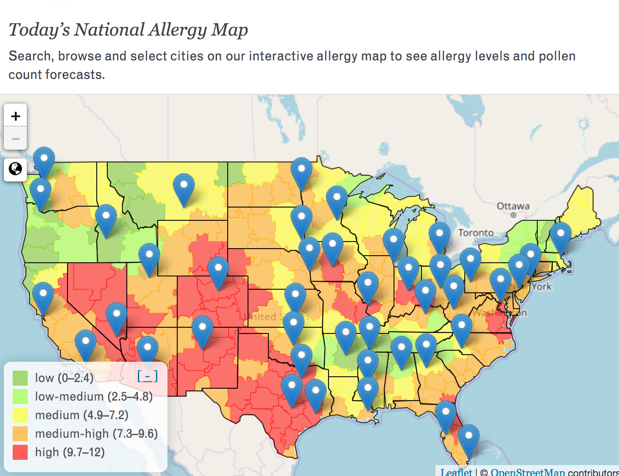
A national daily overview of pollen levels in the US
-
References
. Gilles S, et al. Pollen exposure weakens innate defense against respiratory viruses. Allergy. 2020 Mar;75(3):576-587.↩︎
-
. Kloepfer KM, et al. Increased H1N1 in‐ fection rate in children with asthma. Am J Respir Crit Care Med. 2012;185:1275‐1279.↩︎
-
. Gilles S, et al. The pollen enigma: modulation of the allergic immune response by non‐allergenic, pol‐ len‐derived compounds. Curr Pharmaceut Des. 2012;18:2314‐2319.↩︎
-
. Blume C, et al. Low molecular weight components of pollen alter bronchial epithelial barrier functions. Tissue Barriers. 2015;3:e1062316.↩︎
-
. Gilles S, et al. Pollen exposure weakens innate defense against respiratory viruses. Allergy. 2020 Mar;75(3):576-587.↩︎
-
. Keith Foster. Radio Sweden. March 29, 2020, 9:30AM. https://sverigesradio.se/sida/artikel.aspx?programid=2054&artikel=7440798↩︎
-
. https://www.mayoclinic.org/diseases-conditions/hay-fever/in-depth/seasonal-allergies/art-20048343
8. Krumholz H. Where Have All the Heart Attacks Gone? NY Times. Apr 6, 2020.↩︎







0 Comments