
We assume that exposure to toxic chemicals has an unhealthy impact on people, especially on children, and even more so on infants. We further assume exposure, in utero, while a child is still in the mother’s womb, may even more negatively affect healthy development and have lasting detrimental effects on health. Even low levels of exposure are thought to affect neurological and behavioral development in young children.1
Despite the sound logic of these assumptions, proving this true has been difficult.
A review by Ferguson et al. published in 2013 examined relevant studies published from 1992 to 2012 that linked maternal exposure to a long list of environmental chemicals seeking correlations with incidence of preterm birth. Although we assume exposure wouldn’t be healthy, Ferguson concluded, “… no consistent evidence was found for positive associations between individual chemical exposures and preterm birth.”2
Infants are frequently exposed to unwanted chemicals through mother’s milk and in the food they are fed.3,4 We don’t have a clear sense on what impact this has on their health. This absence of data doesn’t mean an absence of harm, but rather illustrates the challenge of creating ethical experiments from which we might glean data. Researchers cannot knowingly expose human infants to varying levels of toxic chemicals.
This is why a recent paper by Eyal Frank is important and has caught our attention.5 Frank had found what he calls a “natural experiment” that he then used to inform a study on the effects of pesticide exposure on infant mortality.
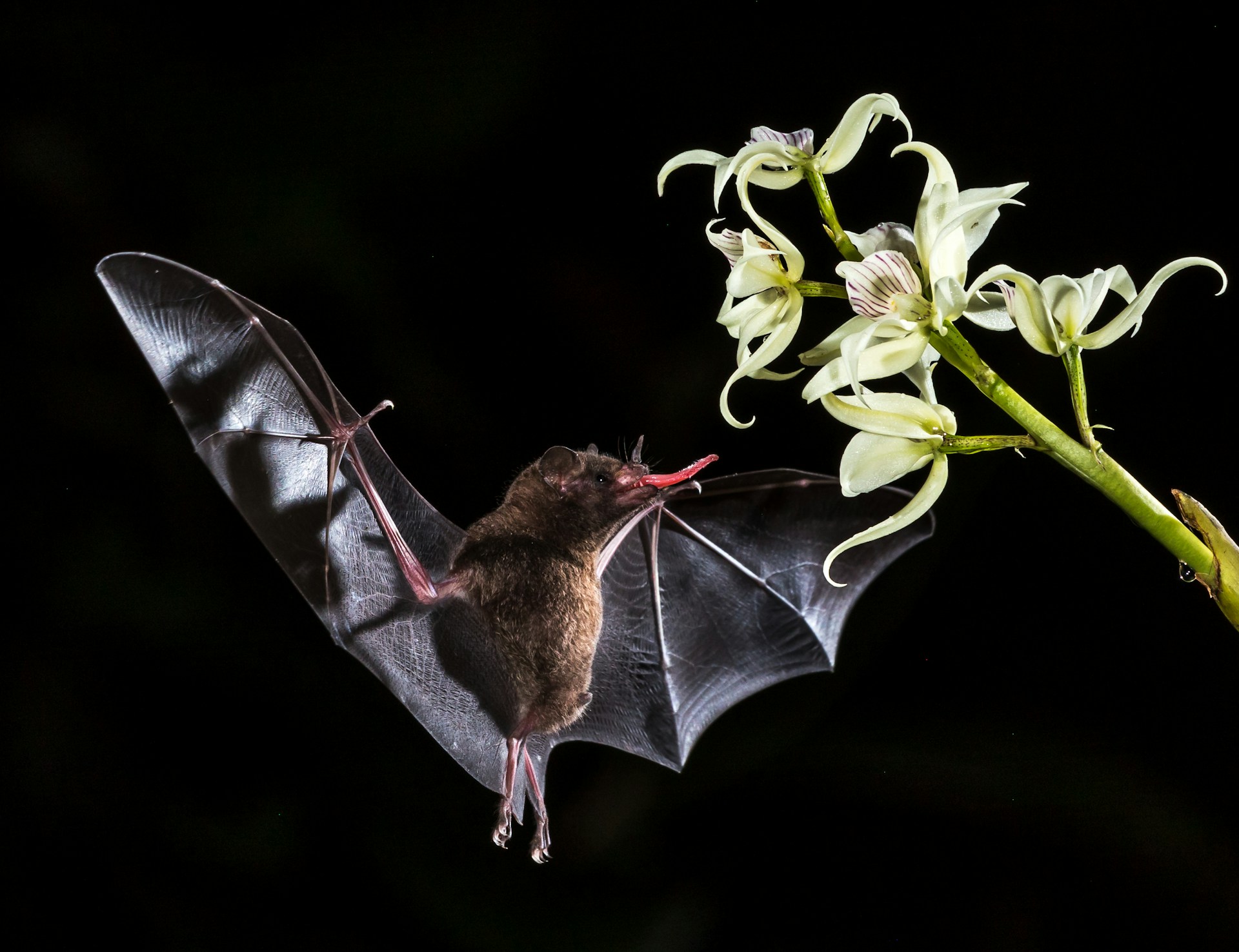
To understand how this experiment occurred, we need to go back to 2006. Sometime that year a quiet disaster occurred to our continent’s ecosystem. An unidentified person went for a walk in upstate New York while apparently wearing the same shoes they had worn when walking in Europe. Those shoes were contaminated with spores from Pseudogymnoascus destructans, a fungus that causes a disease called White Nose Syndrome (WNS). Bats in Europe, although sometimes infected, can tolerate this disease, but bats in North America have almost no resistance against it. During that winter of 2006, American bats began to die in large numbers. Bats congregate in caves to hibernate through the winter. A single infected bat can infect an entire ‘hibernaculum’ killing thousands of other bats. The first bat die-offs were reported near Albany, New York, and then soon after across northeastern America. Infected bats get restless and awaken from hibernation (perhaps to spike fevers to combat the infection). This extra activity uses up essential fat reserves needed to survive the winter. The bats are sick but in a way they die of starvation. By 2010 scientists were predicting extinctions of the most common bat species in North America.6
By 2015 nearly 5 million bats had died. “…researchers identified massive population declines, ranging from 60% to 98% for all six North American bats studied, and extensive local extinctions, … As important predators of nocturnal insects, bats are considered to be among the most overlooked, yet economically important, non-domesticated animals in North America.”7
In 2021 a study published in Conservation Biology reported that White-nose syndrome had killed over 90% of northern long-eared, little brown, and tri-colored bat populations.8
The infection is still thought to spread via footwear in particular by hikers in the wilderness. Maps of WNS die-offs suggest that the infection has spread via the Appalachian Mountain Trail that passes through the White Mountains not far from our home.9
This proximity to where we are living may be why I’m acutely aware of this problem: living in this part of the country, one becomes quite aware of the many insects whose sole goal is to bite a person. One highly appreciates any animal that eats those insects.
Eyal Frank’s study was published in JAMA in September 2024. Frank teaches Public Health at the University of Chicago and specializes in finding and analyzing what he calls “natural experiments” from ecology. He then estimates the social cost of biodiversity loss. Losing bats has been more costly than we would have guessed.10 In quantifying the economic impact of WNS, Frank came to several startling conclusions.
Frank was aware that bats eat significant numbers of insects and that scientists have predicted that as bat populations decline so would their “biological pest control effect” and farmers would need to compensate by increasing insecticide use. The disaster of WNS provided the setting for his experiment. The US Fish and Wildlife Service has closely tracked WNS spread and mapped bat dies offs. County records and EPA tracking closely monitor insecticide use and human mortality. Bat die-offs have spread to some areas but not to others in a random manner, as if by chance, and this randomization created the setting for an experimental comparison between areas where bats continue to live as part of the natural ecosystem and areas where they are suddenly absent.
Frank’s findings can be summarized in three points that are relevant to our understanding of the relationship between insecticide use and health:
- Insecticide use increases after WNS reaches a specific county. Insecticide use increased by 31% in the years following bat die-offs.
- Revenue derived from crops dropped by nearly 29% as a result of increased insecticide costs and lower crop yields.
- Infant mortality due to internal causes (not from accidents or homicides) in affected counties increased by 7.9%.
Frank is an economist whose job is to calculate the cost of things. Frank has calculated that WNS reaching our continent has been expensive. WNS is still spreading so we don’t know what the total amount or ongoing costs will be. By Frank’s calculation the decline in bat populations so far has caused agricultural losses, decreases in revenue, and increased chemical costs in the range of $27 billion dollars. Keep in mind that the total crop revenue in the US was around $190 billion per year during this time-period. There is also a value assigned to a human life, what the US government refers to as the ‘value of statistical life,” of $9.24 million per life. By Frank’s calculation the increased insecticide use has caused 1,334 additional infant deaths valued at $12.4 billion dollars. Adding these two costs together raises the total to $39.4 billion. Divide that cost by the population of the counties affected by declines in bat population, and the result is a per capita cost of $1,932 and change per county resident. These are not small costs.
As previously mentioned, the main worry related to pesticide exposure in children has been neurodevelopmental injury (think autism, ADHD, learning disabilities, and related conditions) and Frank has made no attempt to assess or price the costs of increased incidence of such possible consequences.
The increase in infant mortality is probably of greatest relevance to our clinical practices. We can say that even small increases in insecticide use, in Frank’s data, just a 31% increase, is enough to significantly increase infant mortality.
This bat tragedy has informed an experiment that we might wish never happened and certainly could never have performed ethically; Frank has provided a quantifiable measurement of the effects of pesticide use on infants in a randomized experiment. We’ve suspected and assumed infants would be harmed by insecticide exposure and this may be the first randomized experiment to prove our assumptions correct.
Could this association seen between white nose syndrome in bats and infant mortality be just a “spurious correlation” of the sort that Tyler Vignen has popularized in his book by that title and continues to post on his website https://tylervigen.com/spurious-correlations? Tyler has made an art out of finding unrelated phenomena whose fluctuations appear to mirror each other, looking like correlations of cause and effect. He illustrates these seeming correlations by placing graphs of these fluctuations side by side. In one recent comparison he compared the number of Google searches for “avocado toast” with the number of awarded Associate Degrees in Science Technologies.11 [Note: Tyler has added a new feature to his website. New graphs of recently discovered spurious correlations, are accompanied by an explanation created by artificial intelligence software for the demonstrated phenomenon. These explanations are more for humor as the proposed explanations are implausible.]
The easiest method suggested by epidemiologists to identify spuriousness is to evaluate the relationship between variables with logical reasoning and common sense. This involves understanding the variables and but still relies on guessing if there is any relationship between them. There is a mathematical tool that statisticians employ, something called the Durbin-Watson Ratio, to detect spurious correlations. This ratio is rather esoteric and I won’t attempt to explain it here.12 So, use common sense.
[Given the wide range of things the public seems capable of believing these days, I am not convinced common sense really is a reliable tool.]
I suggest that Frank’s study does pass the test and is indeed a causal series of relationships. Frank has delineated each step in his calculations showing the individual correlations along the way. Bat die-off from White Nose Syndrome is associated with greater insect damage to crops, which in turn leads to greater pesticide use which in turn leads to greater infant mortality. He has examined and ruled out a long list of potential confounders in his analysis. Perhaps, as Frank points out in his paper, “The staggered expansion of the wildlife disease supports the causal interpretation of the results. Any additional alternative explanation would need to change along the expansion path of the wildlife disease around the same timing of its expansion.” In other words, as the disease spread across the country first and the changes in insect population, insecticide use, and infant mortality followed chronologically afterwards.
If Frank’s conclusions hold true then his study has provided evidence that our assumptions that pesticides are not healthy are correct.
The question now is what do we do with this information? We might start by looking up pesticide use where our patients live and there are maps online that allow us to do this.13 That expression about horses and barn doors comes to mind as I write this. There seems to be a couple of year lag between pesticide application and when the yearly totals get graphed on such maps. We might instead look at maps of bat die-offs and know that insecticide use will increase in their wake. [see https://www.whitenosesyndrome.org/where-is-wns]
Two interventions have been proposed that may help bats survive WNS. The first is disinfecting their winter sleeping quarters with an antifungal, specifically polyethylene glycol 8000, which kills the fungal spores preventing infection.14 The other proposed intervention is ventilating the caves to lower the ambient winter temperatures. The cooler the hibernaculum, the deeper the bats drop into hibernation and the less likely they are to awaken during the winter and burn calories. The task of finding and ‘remodeling’ bat caves sounds daunting though. Both disinfection and ventilation are being tested but widespread implementation has not yet begun.
Bats that have survived WNS infection carry genetic variants that increase their ability to store fat and eventually these variants will become dominant and hopefully allow populations to recover. Bats are known for their low fecundity though and even if WNS were to be eradicated, bat population recovery will likely take many years.
Add this fungus to the list of invasive species that have disrupted our ecosystems. Invasive species are non-native species whose introduction causes economic harm, environmental harm, or harm to human health. Not all non-native species are harmful of course, but a lot are. Invasive species grow and reproduce rapidly, spreading without human help, causing major disturbances where they are present. They are invaders. They occupy niches in the ecosystem crowding out the original inhabitants. This description sounds a lot like cancer. Cancer is an invasive cell line in our bodies.
Invasive species now cost the global economy about 423 billion dollars a year.15 Estimates of what invasive species cost the US each year vary widely; from about $20 to $26 billion a year16,17 though some estimates are as high as $120 billion a year.18 None of these estimates include Frank’s recent calculations of the cost of this single invasive fungus. Biodiversity is important to maintaining the ecological balance of our world and we can often only see its value once it is lost.
In time, bat populations may bounce back. Scientists have already determined that the small percentage of bats that do survive hibernation while infected with the WNS fungus possess genetic variants that allow them to store fat more effectively. In theory these bats will pass this survival gene to their offspring and this ‘winter fat’ characteristic may come to dominate bat populations. Bats have low fecundity, so it may take many years for population levels to be restored to prior levels if they ever are.19
References
1. Liu J, Schelar E. Pesticide exposure and child neurodevelopment: summary and implications. Workplace Health Saf. 2012 May;60(5):235-42; quiz 243. doi: 10.1177/216507991206000507. PMID: 22587699; PMCID: PMC4247335.
2. Ferguson KK, O’Neill MS, Meeker JD. Environmental contaminant exposures and preterm birth: a comprehensive review. J Toxicol Environ Health B Crit Rev. 2013;16(2):69-113.
3. Hatzidaki E, Pagkalou M, Katsikantami I, et al. Endocrine-Disrupting Chemicals and Persistent Organic Pollutants in Infant Formulas and Baby Food: Legislation and Risk Assessments. Foods. 2023 Apr 19;12(8):1697.
4. Herceg Romanić S, Milićević T, Jovanović Get al. Persistent organic pollutants in Croatian breast milk: An overview of pollutant levels and infant health risk assessment from 1976 to the present. Food Chem Toxicol. 2023 Sep;179:113990.
5. Frank EG. The economic impacts of ecosystem disruptions: Costs from substituting biological pest control. Science. 2024 Sep 6;385(6713):eadg03a44a
6. Frick WF, Pollock JF, Hicks AC et al. An emerging disease causes regional population collapse of a common North American bat species. Science. 2010 Aug 6;329(5992):679-82.
7. https://www.science.org/content/article/white-nose-syndrome-has-almost-completely-wiped-out-some-north-american-bat-colonies White-nose-syndrome-has-almost-completely-wiped-out-some-north-american-bat-colonies. Science News. Feb 6, 2015.
8. https://pubs.usgs.gov/publication/70224932 Cheng TL, Reichard JD, Coleman JTH, et al. The scope and severity of white-nose syndrome on hibernating bats in North America. Conserv Biol. 2021 Oct;35(5):1586-1597.
9. https://www.dispatch.com/story/news/technology/2015/06/15/hikers-spreading-fungus-that-s/23598349007/ Lyttle, E. Hikers spreading fungus that’s killing Ohio bats. The Columbus Dispatch. June 15, 2015.
10. https://harris.uchicago.edu/directory/eyal-frank
12. https://scholarsarchive.byu.edu/cgi/viewcontent.cgi?article=3874&context=iemssconference
Fukushige M, Wago H. Using the Durbin-Watson Ratio to Detect a Spurious Regressions: Can We Make a Rule of Thumb? 1st International Congress on Environmental Modelling and Software – Lugano, Switzerland – June 2002.
13. https://earthjustice.org/feature/organophosphate-pesticides-maps August 4, 2021. Where are organophosphate pesticides used?
14. https://zslpublications.onlinelibrary.wiley.com/doi/full/10.1111/acv.12852Sewall, B, Turner G, Scafini M et al. Environmental control reduces white-nose syndrome infection in hibernating bats. Animal Conservation. Volume26, Issue 5. Oct 2023. Pgs 642-653.
15. https://www.reuters.com/business/environment/invasive-species-costs-global-economy-423-bln-per-year-un-report-2023-09-04/ Dickie G. Invasive species cost global economy $423 billion per year, UN report says. September 7, 2023. Reuters.com.
16. https://www.sciencedirect.com/science/article/pii/S0048969721063968?via%3Dihub Fantle-Lepczyk J, Haubrock P, Kramer A, et al. Economic costs of biological invasions in the United States. Sci Total Environ. 2022 Feb 1;806(Pt 3):151318.
17. https://www.invasivespeciesinfo.gov/subject/economic-and-social-impacts#:~:text=A%202021%20study%20estimated%20that,2021). USDA National Invasive Species Information Center. Economic and Social Impacts.
18. https://www.sciencedirect.com/science/article/abs/pii/S0921800904003027 Pimentel D, Zuniga R, Morrison, D Update on the environmental and economic costs associated with alien-invasive species in the United States. Ecological Economics,Vol 52, Issue 3: 15 February 2005, Pages 273-288
Chen T, Reichard J, Coleman T, et al. The scope and severity of white-nose syndrome on hibernating bats in North America. Conservation Biology








0 Comments