ed-Gaby 5-13

by | May 1, 2013

Editorial

Calcium Supplements and Heart Attacks: a Follow-Up

In 2010, a meta-analysis of 15 randomized controlled trials found that participants who received calcium supplements as monotherapy (i.e., without other nutrients) had a 30% higher incidence of myocardial infarction, when compared with subjects who received a placebo.1 When that study was published, I reviewed it in a Townsend Letter editorial and made the following points: First, the evidence was relatively weak, because it was derived from a secondary, post hoc analysis of studies (mainly osteoporosis studies) that were not designed to test the effect of calcium on heart disease risk. The increased incidence of heart attacks observed in the meta-analysis was only of borderline statistical significance (p = 0.035 to 0.038). Findings of borderline statistical significance from secondary analyses are more likely to be due to chance than are findings of borderline statistical significance from primary analyses. Second, if the reported adverse effect of calcium supplementation on the cardiovascular system is real, it might be due to calcium-induced magnesium depletion, and therefore might be preventable by coadministration of magnesium.

Recently, two other studies have been published that are relevant to the question of whether calcium causes heart disease. One of these studies suggests that giving vitamin D along with calcium might mitigate any potential deleterious effect of calcium monotherapy. The other study suggests that the reported increase in heart attacks among calcium supplement users is due at least in part to calcium-induced gastrointestinal side effects being incorrectly reported as myocardial infarctions.

The first new study was a meta-analysis of 24 randomized controlled trials in which vitamin D was given alone or with calcium. In studies in which vitamin D was given with calcium, there was a statistically significant 9% decrease in all-cause mortality compared with placebo. In trials in which vitamin D was given by itself, there was a nonsignificant 4% decrease in mortality compared with placebo.2 While this meta-analysis did not address calcium supplementation by itself and did not report the incidence of heart attacks, the results support the concept that taking calcium in combination with vitamin D is not harmful, and is probably beneficial. Moreover, since the benefit of vitamin D plus calcium was greater than the benefit of vitamin D alone, the observed reduction in mortality may be due in part to the calcium.

The second new study was conducted because of earlier reports that patients hospitalized for symptoms consistent with acute myocardial infarction (MI) are frequently confused about the final diagnosis, particularly if they are admitted to the coronary care unit. For example, in both the Women’s Health Initiative and the Nurses’ Health Study, a 32% false-positive rate was found for self-reported MI. The new study reviewed 7 randomized controlled trials that examined adverse effects of calcium supplementation. In the pooled analysis, the incidence of gastrointestinal adverse events was 43% higher in the calcium group than in the placebo group (p < 0.001). Hospital discharge summaries indicated that the number of hospitalizations for acute abdominal pain was 82% higher in the calcium group than in the placebo group (4.0% vs. 2.2%). In a pooled analysis of two studies that compared the incidence of self-reported MI with that of clinically confirmed MI, the incidence of incorrectly classified self-reported MI was higher in the calcium group than in the placebo group (1.2% vs. 0.5%; p < 0.05). Although the incidence of confirmed MI was higher in the calcium group than in the placebo group (2.4% vs. 1.6%), the difference was not statistically significant (p = 0.15).3

The question of whether calcium monotherapy adversely affects the heart remains unresolved, but the issue is probably moot for practitioners trained in nutritional therapy, because we rarely prescribe calcium by itself. The available evidence, though circumstantial, suggests that calcium is safe when used in combination with magnesium and vitamin D. It has been clearly established that adequate calcium intake is important for achieving optimal peak bone mass and for preventing osteoporosis. Magnesium and vitamin D also play a role in promoting healthy bones, so for most patients there is no reason not to administer all three of these nutrients in combination.

Alan R. Gaby, MD

Notes

1. Bolland MJ et al. Effect of calcium supplements on risk of myocardial infarction and cardiovascular events: meta-analysis. BMJ. 2010;341:c3691.

2. Rejnmark L et al. Vitamin D with calcium reduces mortality: patient level pooled analysis of 70,528 patients from eight major vitamin D trials. J Clin Endocrinol Metab. 2012;97:2670–2681.

3. Lewis JR et al. Adverse events from calcium supplementation: relationship to errors in myocardial infarction self-reporting in randomized controlled trials of calcium supplementation. J Bone Miner Res. 2012;27:719–722.

Author

  • Alan R. Gaby, MD

    Dr. Gaby received his undergraduate degree from Yale University, his M.S. in biochemistry from Emory University, and his M.D. from the University of Maryland. He is past-president of the American Holistic Medical Association and gave expert testimony to the White House Commission on Complementary and Alternative Medicine on the cost-effectiveness of nutritional supplements. He is the author of numerous books and scientific papers in the field of nutritional medicine. Dr. Gaby was professor of nutrition at Bastyr University for 9 years, and contributed to the nutrition curriculum for the University of Arizona's fellowship program in Integrative Medicine. He is the author of the textbook, Nutritional Medicine, (www.doctorgaby.com), which is being used in 37 countries and by more than 30 graduate and undergraduate nutrition programs. www.doctorgaby.com

    View all posts

Already Subscribed?

Search

Formatting updates are ongoing for older articles.

Author

Featured Articles

Where are your Clinical Trials?

It has proven to be difficult, if not impossible, to proceed to full-scale randomized controlled trials (RCTs) for most of the natural methods that cannot be patented or otherwise monopolized. 

A Renewed Focus on Self-Help for Healing

As the producer of The Moss Report, the year leading up to the Covid-19 pandemic was filled with anticipation and excitement. We had invested years of hard work and significant resources into two major projects: our feature film, Immunotherapy: The Battle Within, and...

Issue Archives

Event Calendar

  • 2026 Association of Natural Health Conference

    Douglasville Conference Center Douglasville, GA, United States

    "From Practitioner to Leader: Clinical Excellence, Business Mastery & Sustainable Practice" Discover how clinical excellence, business mastery, and sustainable systems can help practitioners grow into confident leaders and build practices designed for long-term impact. Why Attend? Three days of learning, connection, and growth designed for every stage of your practice journey. Learn from Leading Voices Gain insights from top experts in natural health, holistic wellness, and functional medicine. Hands-On Learning Participate in in-depth workshops, real-world case studies, and interactive sessions you can apply immediately. Meaningful Networking Connect with like-minded professionals, students, and exhibitors who share your passion for natural health. Practical Tools & Approaches Explore new strategies and tools to elevate both your practice and your own health journey. Who Should Attend? This conference is built for a wide community of natural health professionals, educators, and advocates - wherever you are in your journey. Licensed & Clinical Practitioners Doctors, chiropractors, acupuncturists, naturopaths, and functional or integrative medicine practitioners looking to sharpen clinical skills and grow into stronger practice leaders. Allied Health Professionals Bio-feedback technicians and other allied practitioners seeking hands-on training and the latest tools in natural and holistic care. Educators & Students Natural health educators and students entering the […]

  • Food as Medicine Global 2026

    Virtual Event

    Join health professionals, farmers, food producers, researchers, educators, nonprofit leaders, chefs, policymakers, community organizers, food advocates, public health practitioners, nutritionists, and other changemakers as we convene to share knowledge, build partnerships, and explore new possibilities for improving health, strengthening communities, and creating more equitable and sustainable food systems. This year’s program features inspiring speakers and practical examples of collaboration at the intersection of food, health, social justice, and planetary well-being. Together, we’ll explore innovative approaches to Food as Medicine, community-led initiatives, nutrition, public health, regenerative agriculture, and equitable access to healthy food. Whether you work in health care, agriculture, food production, education, research, policy, or community development, you will discover new ideas, meaningful connections, and practical strategies to advance healthier, more resilient communities. Virtual  |  Join from anywhere in the world Check out the Program: https://tinyurl.com/Food-as-Medicine-for-All

  • The Midlife Women’s Health Summit: Evidence-Based Menopause Care in the Era of Longevity Medicine

    The Ritz-Carlton, Pentagon City 1250 S Hayes St, Arlington, VA, United States
    Hybrid Event

    Menopause Care in the Longevity Era Longevity medicine is everywhere right now. Supplements, protocols, influencer clinics, patients walking in with questions about interventions their doctors have never heard of. What's missing from most of it is the evidence. The Midlife Women's Health Summit is three days on what the research actually says about menopause care when you add a longevity lens. What works, what doesn't, what's being oversold, and what to tell the patient sitting in front of you. Co-chaired by Lisa Larkin, MD, FACP, MSCP, IF, Jen Gunter, MD, FRCS(C), FACOG, DABPM, ABPMR, and Lauren Streicher, MD, FACOG, MSCP; three of the clearest voices in women's health on separating data from marketing.

    $995 – $1299

Related Posts

Medicine, The Microbiome, and Homeopathy

By Ronald Whitmont, MD – Just as we have reached a watershed moment and a “tipping point” in our understanding of global ecology and climate change, we have reached a similar critical event horizon with respect to dysfunctional medical practices; and it is time to take evasive action.

Read More

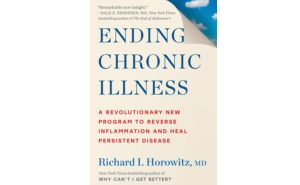
BOOK REVIEW – Ending Chronic Illness

Book Review by Patricia S. Lemer, MEd – Ending Chronic Illness is the paradigm shift you have been looking for, whether practitioner or patient. While Horowitz believes there is no one magic bullet, his multi-pronged approach provides some clear answers for your health today, as well as how to become a seasoned advocate for the future.

Read More

0 Comments

Submit a Comment