
Medical conferences/post-coronavirus, Naturopathic medicine/conferences
Elephant in the Virtual Room
By Rebecca Takemoto, Erica Joseph, LAc, ND, FABNO, and Jacob Schor, ND, FABNO
The conference planning committee of the Oncology Association of Naturopathic Physicians (OncANP) held its first meeting last night (April 14, 2020) to start planning OncANP’s tenth annual conference, scheduled for June 11-13, 2021, in Toronto. Was this an act of supreme optimism or one of pure denial? Perhaps it was just habit? Or it was continuing to do what we have been doing for years, just letting the momentum carry us forward.
We used Go-To-Meeting to gather together over dinner rather than Zoom. Does Go-To work better? Not sure I’d go that far, but we’ve always used it and who wants to break with tradition at a time like this? We spent a good part of our hour together analyzing the detailed evaluations filled out by attendees from this year’s annual conference. Our goal has been to make each conference better than the last one, and we’ve succeeded in part by listening carefully to both our critics and those with the foresight to see what will be useful to learn moving forward. We focused closely on the suggested speakers nominated by attendees and planned on doing some of the routine planning like our call for abstracts via email, in addition to deciding on a timeline for submissions.
It was only in the last few minutes that we dared talk about the elephant in the virtual room; will in-person conferences even be a thing that people do next year? This is the question that many are wondering about these past few weeks. We depend on conferences both for continuing education, for advancing our practices, and for deepening our understanding of the health of our patients. Our state, provincial, and national associations depend on conferences to generate income. Our vendors depend on conferences to meet practitioners in person and promote new products. Seeing our colleagues in person sustains those of us extroverts and those who practice in more isolated settings. Will we have conferences next year? If so, what will they look like?
For help answering these questions we reached out to Rebecca Takemoto of Syncopate Meetings and Events. Rebecca has run the American Association of Naturopathic Physicians annual conferences for twenty-one years since the conference was in its infancy. (https://www.sync-opate.com/meet-the-staff/). She has been the organizing force behind a number of other conferences put on by naturopathic groups, including Hawaii Doc Talks, NHAND, CNPA, ILANP and Integrative Dermatology. After 22 years she knows our profession well.
What Ms. Takemoto Says
Like all meeting planners and hoteliers, I’ve spent a lot of time lately thinking about what the meetings industry will look like when we all emerge from quarantine. Will we ever gather again in the same way? Will we still have jobs?
I’ve been a meeting planner for a long time—over 20 years—and seen a lot of ups and downs. As a young planner, I thought 9/11 was surely the end of conferences and I needed to be looking for a new career. In 2011, after working about five years on the incredibly complex application, my company was finally granted a GSA Schedule, necessary for government contractors. Mere months later, ‘muffin-gate’ was uncovered showing that some government agencies were spending ridiculous amounts of money on conferences, including $18 muffins. I then thought that the government would definitely stop having meetings.
People are social animals. We need each other. Nothing has shown this more fully than those Italians singing from their balconies, or New Yorkers cheering at the change of hospital shifts, (or in Colorado people coming out at night to howl at the moon) or families setting up virtual game nights via Zoom. When it comes to you naturopathic physicians, it is even more than that; if anything, you are tribal. You need each other’s company to be who you are.
I don’t see meetings coming to a complete halt. All of us have endured conference calls banging our phones against our foreheads as another dog starts barking or baby starts crying or the over-anxious person who interrupts once too often. On the flip side, we are hopefully learning a lot about what really HAS to be done in person and what can just as effectively and more efficiently be done through email or online.
With those thoughts, here are my musings on the future of meetings, and not-meetings, in the age of coronavirus.
Associations will need to diversify revenue. Aside from hotels, the biggest hit directly related to the meetings industry may well be small to midsize associations; those with a staff and regular salaries to pay; whose members are going to be less likely to pay dues; those who rely on their annual conventions and most particularly their sponsors and exhibitors for a large chunk of their annual operating budget. They are going to be in a challenging situation.
The very first calls I received when things started going downhill fast (which feels like an eternity ago already) were from these kinds of associations. Many were groups I had worked with in the past, who now have full-time planners on staff, but who realized they are going to need some outside help to strategize new or additional revenue. I’ve had no less than five of these brainstorming sessions in the last week and it all comes down to one thing: associations never should have had all of their revenue eggs in the one basket to begin with. Now is the time to figure out how to diversify. This diversification is going to vary association by association and industry by industry—but with a little old fashioned white board brainstorming (which can absolutely be done via Zoom) the smart and creative people running these organizations, and the less panicked help they might bring in for consultation, will come up with a list of ways to get their sponsors in front of their members.
In industries (like legal and medical) where tightening rules regarding sponsored content were already making even the strongest of us want to quit, this will require a little extra creativity. Do your research on what is and isn’t allowed in a virtual setting regarding sponsorship. The old adage that sponsors can support an activity, but not content gets stickier in a virtual platform. But it’s not impossible.
Focus on your goals. Every time I start with a new client, I have a conversation about goals. Sometimes (ok, most of the time) I have this conversation several times through the cycle of a meeting. It’s so easy for an organization to lose track of what their primary goals really are. Most organizations are balancing goals of revenue, membership benefit (education, community, gathering), industry information, lobbying, service/charity/goodwill, marketing and PR etc. It is going to be increasingly important to know what those goals are and to plan the event accordingly. If revenue is 99% of the goal and everything else can be accomplished in some other format, then maybe you need to come up with alternative revenue sources and not hold that annual meeting. If giving your members a platform for community engagement and networking is top priority, then you need to meet; but you might need to change the format to lessen your risk with hotels/venues. If lobbying/marketing is one of the big reasons you hold a meeting (to get some attention or to shine light on an issue), are there other ways to do that while still engaging your members? All of these questions need to be the focus of organizational boards and staff in the coming months.
Meeting Safety. If meeting planners have learned one thing (aside from how to best negotiate contract cancellations) this month, it is how to write emergency plans, safety protocols and generally, how to try and keep your attendees safe. We will all be buying huge amounts of hand sanitizers for our meetings (good sponsorship opportunity there) and asking venues to do other things to keep things clean. Our exhibitors will be thinking of new ways to safely give out samples. The venues have already implemented more strict sanitation guidelines, and those won’t change/lessen when things return to some kind of normal. But how can we encourage and implement new safety measures when 10,000 of our best friends are sitting elbow to elbow for eight hours a day? I’ve spent some time sketching new seating arrangements, thinking about what kind of sanitary furniture can be used and how to keep people from sharing quite so many germs. I was so excited, years ago, when one of my clients first agreed to move from endless rows of classroom tables to a mix of rounds and standing cocktails. We’re going to see new layouts in conference setup. I can’t wait to try something new!
Smaller Breakouts. Does your organization host 10,000 people for a city-wide convention? Would it make more sense to rotate those 10,000 people in and out of smaller venues across the city – rather than gather for four solid days in a convention center? Can you find different space so you can have a rotating slate of concurrent instead of general sessions? Do you have pockets of membership in various parts of the country? How about satellite conferences? How can we accomplish our goals of community networking, just in smaller groups of community?
Take it virtual. In the recent weeks I, along with most other planners, have become very familiar with a myriad of virtual platforms out there. We are all going to become more versed in virtual education and smart people much more tech savvy than I will create (or advance) amazing platforms to bring us together virtually when we can’t be together personally. It will be important to adapt content, to adapt slides (which already need a full overhaul!) and to adapt speaking styles, should these platforms be utilized. We have the opportunity here to build something new—not merely a video of someone on a stage speaking, with slides in the background—but something more personal. This is going to look different for every conference – but wouldn’t it be great if our attendees feel like they are truly in a discussion with (insert big name in your industry here) or being taught the intricacies of some specific practice up close and personal through overhead camera or screen sharing? With the addition of robust discussion groups and chat sessions, virtual learning can be so much more effective than it currently is.
Once again, the small to mid-size organization is going to take the biggest hit here. Many of the robust platforms which offer truly innovative virtual conferences come with a price tag well above $100K. Already faced with declining dues, sponsorship dollars and exhibit revenue, most small organizations will not be able to afford this kind of fee. More than ever, now is the time to consult with experts – an experienced planner can help you put together the right system for your event and manage it. Think seamless rather than bells and whistles.
Some organizations may find that virtual education is sufficient, and in some ways superior to in-person. What if the educational parts of the conference continue to happen virtually and groups gather together solely for community building? At Hawaii Doc Talks our motivation has always been to change the paradigm of continuing medical education for attendees, speakers, and exhibitors alike. We encourage exhibitors to recognize that their return on investment is not going to be found during the 20-minute exhibit break, but rather in the long-term relationships built with like-minded attendees. I can imagine forward-thinking associations gathering members for weekend adventures, and companies jumping at the chance to sponsor, in order to network directly with potential customers.
The savings to attendees and organizations alike when meeting in a virtual setting rather than in-person is not insignificant. Can we redistribute that budget in such a way as to host a combination of live and virtual activities and education throughout the year?
A Hybrid Solution. As we come out of quarantine, many of our attendees are going to remain cautious for the foreseeable future. Others may be the first to line up for the next plane out of town. I imagine this contrast will continue through the next year, at least. Some organizations may find that a hybrid model works best. Redesign your in-person education for a smaller group and also provide a well-executed virtual option for those who wish to stay home. A creative meeting planner is going to be able to walk you through which option works best for your group and your meeting.
Combine the virtual with the tangible. I recently spoke with a planner, Patrick Crosson with PC Events and Experiences who, along with Ladidadi XM, has developed At Home Experiences in a Box. He described this as “pairing creative fun experiences with a piece of education/training/messaging from a brand.” The idea is to send a physical package to your attendees/staff/customers, which corresponds to some education or training that happens virtually. For example, a t-shirt manufacturer might send some fun samples to customers. Then the customer watches a short educational video about the t-shirts, followed by a social media contest of customers in their new t-shirts. You get the idea.
What tangible item could you send your attendees in advance of their upcoming online training? Maybe we’re going to go back to some hardcopy content that can be followed during an online presentation. Maybe we should load everyone up with a conference bag full of goodies that would be useful/fun while watching presentations (thinking fuzzy socks and a coffee mug). Better yet, maybe it’s not a bag! The sponsorship possibilities here are endless – and surely sharing photos of “attendees” in a t-shirt or funny socks wearing a sponsor’s hat; this would bring some social media community togetherness and build relationships, even virtual ones.
This is where your marketing department (or your meeting planner) can shine! Have fun, be creative. This is a unique opportunity for us to recreate ourselves as organizations and as events. Don’t forget to start at the top—identify your goals and stick to them. Everything else should follow that mission.
Whether we are attendees, planners, organizations or all three, we are all going to need to brainstorm, be flexible, and be open to new ideas and change. Meetings will happen, but change will happen as well. It’s up to us to decide whether that change is negative or positive. In the meantime, every planner I know will continue to look for ways to make things more efficient, effective and useful, and hotels will continue to find new avenues to make guests more comfortable, even in the unchartered territory we’re coming up against.
*********
Without sounding too optimistic, (one of us takes pride in being referred to as a curmudgeon after all), we are excited to see how this landscape evolves and what new opportunities it brings for growth, education, and our ability to adapt to new circumstances. The one thing we are sure of is that sitting back and thinking momentum will carry us forward is not going to work: we need to actively steer our way forward. We live in a new world.
Erica Joseph, LAc, ND, FABNO, practices at Seattle Integrative Oncology (SIO). She received her doctorate in naturopathic medicine (2014), a master’s degree in acupuncture (2014), and a bachelor’s degree in psychology and biology (2009) from Bastyr University. Dr. Joseph currently sees patients at Providence Regional Cancer System in Olympia and Providence Regional Cancer Partnership in Everett. Seattle Integrative Oncology provides one of the few naturopathic oncology residencies in the Pacific Northwest and Dr. Joseph is passionate about training the next generation of naturopathic oncologists.
Dr. Joseph is a peer reviewer for the Journal of Alternative and Complimentary Medicine (JACM), is vice president of the Oncology Association of Naturopathic Physicians (OncANP), and is a member of the group’s conference planning committee.
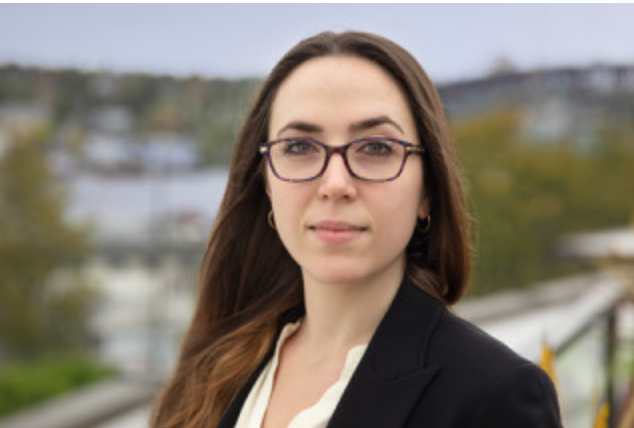
Erica Joseph, LAc, ND, FABNO

Rebecca Takemoto
Rebecca Takemoto is the owner and principal planner of Syncopate Meetings & Events, LLC based in Northern Virginia. Rebecca has been a meeting planner for over 20 years, serving a wide range of clients from small associations to large corporations. She has developed a particular love of and focus on medical education.
Over the last several years, Rebecca has broadened her practice to include consulting and training association boards of directors and corporate meetings departments. She recently developed sessions for Learnapalooza, an intensive training seminar for meeting planners, and acts as a mentor for young planners.
Rebecca studied vocal performance and pedagogy at Brigham Young University and Utah State University, where she discovered her love of events and coordination as a member of the student activity board. She has performed in many musical theater and opera productions and currently sings with the Master Singers of Virginia.
Rebecca lives in Leesburg, Virginia, a suburb of Washington, DC, with her husband and four children.






0 Comments