
Barb: contains photos
War on Cancer
by Ralph W. Moss, PhD
About 1 year ago, I was diagnosed with type 2 diabetes (T2D). At the time, I had all the classic symptoms, such as an unquenchable thirst. My blood glucose was 390! My hemoglobin A1C (a measure of the average blood glucose over the previous three months) was 12.3 (which works out to an average of 306). My fasting glucose was 164 (anything over 99 is considered abnormal).
For the past year, I have taken a reading of my blood glucose upon arising as well as several times during the day. Now, my fasting glucose score averages 82. (This morning it was 78.) By point of reference, the medical authority Richard K. Bernstein, MD, believes that 83 is the optimal normal blood sugar score for a healthy adult male. In parallel, my weight has gone from 203, before the diagnosis, to 162 – a more than 40-pound loss. My “orthodox” primary care physician recently scratched his head and declared me “cured” of diabetes. I corrected him with the proviso that if I returned to my previous lifestyle, my diabetes would almost certainly return.
I want the reader to understand that I accomplished this without the use of any pharmaceuticals for diabetes (such as insulin or metformin) and just a few basic food supplements.
So how did I accomplish this? The brief answer is that I went on a low-carbohydrate, high-fat diet. This approach flies in the face of the idea that carbohydrates are somehow “essential” nutrients. I choose my foods based on their effect on my blood sugar – in effect, I “eat to the meter.” I therefore completely eliminated sugar and other sweeteners, cut out all grains (even including, for now, whole grains), and severely limited my intake of fruit and root vegetables. I do eat other green vegetables and salad greens, with olive oil and plain vinegar dressing. All my blood and urine markers have improved and my cholesterol, although somewhat higher, is of the protective “fluffy particle” kind (pattern A), according to the “VAP” test. I feel great and yesterday went for a three-hour bicycle ride. Maybe it will work for you.
The photo on the left is from a trip to Europe not long ago. The second was taken in the summer of 2015. Judge for yourself.
(SEE ATTACHED PHOTOS)
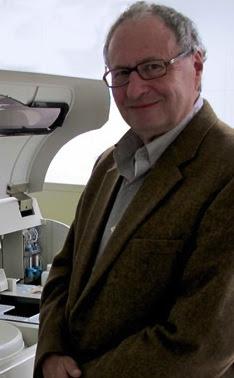
Figure 1: RWM a few years ago.
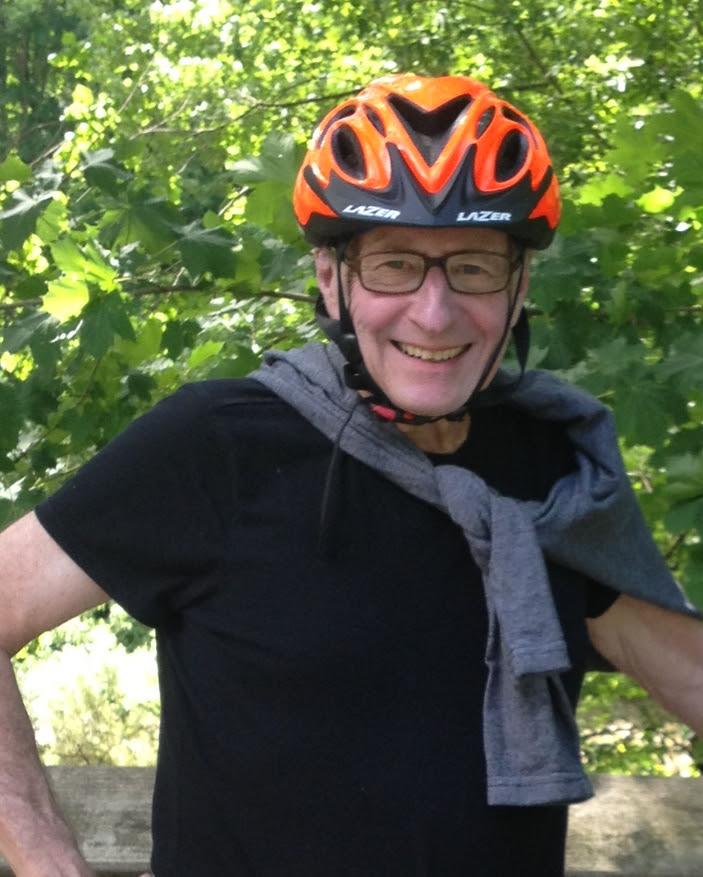
Figure 2: RWM today.
There are many ways to learn about this sort of program. For example, check out the website www.dietdoctor.com for many educational videos on this way of eating and living.
Consultations
As in the past, I am generally available for half-hour or 1-hour phone consultations on cancer treatment options. I am not a medical doctor but know about many of the resources that are available to cancer patients, either locally or in far-flung locations.
To set up an appointment, please e-mail anne@cancerdecisions.com, or call 800-980-1234 or 814-238-3367
Herbes de Provence Against Aging
God Almighty first planted a garden. And indeed it is the purest of human pleasures. It is the greatest refreshment to the spirits of man; without which, buildings and palaces are but gross handiworks. …
– Sir Francis Bacon (1561–1626)
In summer, my thoughts naturally turn to the garden. I have partial responsibility for a community vegetable garden as well as various plantings around two family houses. But, for myself, I maintain a collection of about a dozen culinary herbs. Lately, I have become intrigued by the medicinal properties of some of these aromatic plants. I have always been vaguely aware of their health-promoting aspects, but this line of thinking was stimulating by reading some of the papers of D. James Morré, PhD. Jim and his wife, Dorothy Morré, are emeriti professors of Purdue University in West Lafayette, Indiana. I recently wrote about their fascinating work on ENOX2 and the ONCOblot test. But, in parallel with this, the Morrés have been working on the topic of aging. They found that certain culinary herbs – specifically summer savory – have an extraordinary power, in the laboratory, of countering proteins associated with the aging process. In a YouTube talk, Jim Morré suggested that these herbs might even be responsible for the so-called French paradox. This is the fact that French people often eat a diet that is relatively rich in saturated fats but have a relatively low incidence of coronary heart disease (CHD).
What herbs do I grow? As I said, summer savory, but also winter savory; apple and pineapple mint; spearmint; marjoram; fennel; and of course the ever-popular quartet of parsley, sage, rosemary, and thyme. I was happily surprised to learn, on a recent visit to George Washington’s Mount Vernon, that 200 years before Simon and Garfunkel wrote their song, these were the four main herbs in our first president’s capacious kitchen garden.
Jim and Dorothy Morré came to this topic through a decade-long search for the molecular source of the biological clock. In 2003, they published their conclusions in the journal Biochemistry: “There is compelling evidence,” they wrote, that “ECTO-NOX proteins are the … drivers of the cellular biological clock” (Morré 2003). The phrase ECTO-NOX was later simplified to ENOX. This became the basis of their ONCOblot test for cancer. They also discovered an aging-related cell-surface protein (aging-related NADH oxidase or, more briefly, arNOX). ArNOX generates harmful free radicals and is shed from the cell surface. It is found in saliva, urine, perspiration and interstitial fluids. ArNOX activity, they reported, “correlates with age and reaches a maximum at about age 65 in males and 55 in females.” They then set about cloning arNOX proteins and also developing some anti-aging formulas based on arNOX inhibition (Morré 2010).
Astonishingly, some of the things that we normally have in our gardens or kitchen cabinets proved to be particularly proficient at inhibiting arNOX. This is a main subject of many of the Morrés’ scientific papers, their book on the subject, and a US Patent Application (US20120207862 A1) titled “Oral Inhibitors of Age-Related NADH Oxidase (arNOX), Compositions and Natural Sources.” The Morrés have patented a supplement formula for both skin and internal use.
The Morrés’ patented formula contains one or more of the following: basil (Ocimum basilicum), lavender (Lavandula angustifolia), marjoram (Origanum majorana), rosemary (Rosmarinus officinalis), sage (Salvia officinalis) and/or fennel seed (Foeniculum vulgare), and/or tarragon, especially French tarragon (Artemisia dracunculus).
My local plant nursery has all of these for sale for about $2 apiece. You can also buy seeds from any reputable dealer. Some of these are common indeed, but the originality of the patent lies in its scientific rationale for their use as well as the unique proprietary combination of herbs in the formula. But we can get some hint of the relative merit of these herbs from the Morrés scientific publications, especially their textbook on the topic (2012).
For testing purposes, these herbs were prepared as hot water infusions of 125 mg per mL of boiling hot water. In other words, herbal tea!
The degree of inhibition of arNOX activity was as follows:
Savory: 89%
Basil: 82%
Tarragon: 82%
Marjoram leaves: 50%
Rosemary leaves: 59%
Sage: 54%
The inhibition of harmful lipid peroxidation ranged from 70% for sage to an incredible 100% for savory (100% inhibition not being a number one see very often in a scientific paper!) Equally amazing, savory and tarragon “were effective at concentrations as low as 75 ng/mL in the assay” (Morré 2012). Needless to say, 75 nanograms is a very, very small amount. What this proves is that (as generations of French cooks would affirm) even a pinch or two of these powerful herbs can have anti-aging effects, especially if taken over a period of time.
I have grown dozens of summer savory plants on my patio. What I do not use fresh I dry or freeze for use throughout the winter. This becomes part of my “Herbes de Provence,” a mixture of dried herbs typical of the Provence region of southeast France, which I work into as many dishes as I can. I may not live forever, but it won’t be for lack of trying!
Itraconazole vs. Cancer
There is a great deal of promise of Food and Drug Administration (FDA)-approved medications repurposed for use against cancer. For example, there is increasing interest in using the approved antifungal medicine itraconazole (Sporanox) as a treatment for cancer. Let’s review the scientific basis for this idea.
If you search in the US government’s PubMed index of medical literature, you come across about 750 articles that reference itraconazole and cancer. Limiting this to clinical trials brings the total down to about 80. Of course, many of these articles refer to preventing fungal infections in cancer patients, not to the use of the drug as a cancer treatment per se. But over the years, it has been found that itraconazole also has other effects, such as having antiangiogenic activity (i.e., preventing new blood vessel growth).
According to a recent report from the Anticancer Fund in Belgium (affiliated with Reliable Cancer Therapies), “Clinical trials have shown that patients with prostate, lung, and basal cell carcinoma have benefited from treatment with itraconazole, and there are additional reports of activity in leukemia, ovarian, breast, and pancreatic cancers” (Pantziarka 2015).
At Stanford University, Daniel J. Kim and colleagues have been exploring the use of oral itraconazole as a treatment for basal cell carcinoma. The rationale behind this is that the oddly-named Hedgehog (HH) signaling pathway, which is a “crucial driver of basal cell carcinoma (BCC) tumorigenesis,” is inhibited by itraconazole. The drug has also been found to reduce BCC growth in mice.
In this phase II clinical trial, 29 patients were enrolled, of whom 19 were treated with itraconazole. The treatment was associated with two incidents of adverse effects – one case of moderate fatigue and one more serious grade 4 incident of congestive heart failure.
But overall in the 19 treated patients, itraconazole reduced cell proliferation by 45%, HH pathway activity by 65%, and the tumor area by 24%. Of 8 patients who had multiple tumors, 4 achieved partial responses, and 4 had stable disease. Tumors from untreated control patients, and from those previously treated with another drug (vismodegib), showed no significant changes in proliferation or tumor size.
The Stanford authors concluded that “itraconazole has anti-BCC activity in humans, especially in those tumors marked by the HH signaling pathway” (Kim 2014).
In 2011, Blake T. Aftab, PhD, of Johns Hopkins University, similarly wrote:
“[D]ata suggest that itraconazole has potent and selective inhibitory activity against multiple key aspects of tumor-associated angiogenesis in vitro and in vivo, and strongly support clinical translation of its use. Based on these observations, we have initiated a randomized phase II study comparing the efficacy of standard cytotoxic therapy with or without daily oral itraconazole in patients with recurrent metastatic NSCLC [non-small cell lung cancer].”
A total of 23 patients were enrolled in this study. At 3 months, 67% of the lung cancer patients on itraconazole plus the drug pemetrexed (Alimta) were progression free vs. 29% on the control arm of pemetrexed alone. Median progression-free survivals were 5.5 months (itraconazole) versus 2.8 months. Overall survival was longer in patients receiving itraconazole (median 32 months) versus control (8 months). You read that right – a 4-fold increase in median overall survival, with no differences in toxicity between the two study arms! This is definitely a drug to watch.
Itraconazole costs about $8 per 100 mg capsule over the Internet. While hardly free, it is far less costly than many “targeted” anticancer agents, which now are priced through the roof. For example, according to a statement by 100 leading hematologists/oncologists (quoted at the Harvard Law website): “Of the 12 anti-cancer drugs approved by the FDA last year, 11 were priced above $100,000. This represents a doubling of prices from a decade ago. The authors claim that these prices ‘are too high, unsustainable, may compromise access of needy patients to highly effective therapy, and are harmful to the sustainability of our national healthcare systems'” (2013).
Amen! But one has to wonder whether a relatively cheap drug such as itraconazole has any chance at all of development in the monopolistic cancer drug marketplace.
References
Aftab BT, Dobromilskaya I, Liu JO, Rudin CM. Itraconazole inhibits angiogenesis and tumor growth in non-small cell lung cancer. Cancer Res. 2011;71(21):6764–6772. doi:10.1158/0008-5472.CAN-11-0691.
The high price of drugs – and why doctors should care [blog post]. Harvard School of Law Petrie-Flom Center. April 29, 2013. http://blogs.law.harvard.edu/billofhealth/2013/04/29/the-high-price-of-drugs-and-why-doctors-should-care. Accessed June 2015.
Kim DJ, Kim J, Spaunhurst K, et al. Open-label, exploratory phase II trial of oral itraconazole for the treatment of basal cell carcinoma. J Clin Oncol. 2014;32(8):745–751. doi:10.1200/JCO.2013.49.9525.
Morré DJ, Morré DM. ECTO-NOX Proteins: Growth, Cancer, and Aging. Springer Science & Business Media; 2013.
Morré DM, Meadows C, Morré DJ. ArNOX: generator of reactive oxygen species in the skin and sera of aging individuals subject to external modulation. Rejuvenation Res. 2010;13(2–3):162–164. doi:10.1089/rej.2009.0919.
Pantziarka P, Sukhatme V, Bouche G, Meheus L, Sukhatme VP. Repurposing Drugs in Oncology (ReDO)-itraconazole as an anti-cancer agent. Ecancer. 2015;9:521. doi:10.3332/ecancer.2015.521.
For a Purdue press release on the Morrés from a dozen years ago:
Purdue researchers discover basis for biological clock. http://www.purdue.edu/uns/html4ever/030106.Morre.bioclock.html.
Resources
For the Morrés’ cancer test and treatment:
ONCOblot test: http://oncoblotlabs.com.
Capsol-T treatment: http://www.capsol-t.com.
Ralph W. Moss, PhD, is the author of 12 books on cancer-related topics. The former science writer at Memorial Sloan-Kettering Cancer Center, for 35 years Moss has investigated the validity of many cancer treatments. He currently directs the Moss Reports, a library of reports for patients on over 200 different cancer diagnoses.





0 Comments